By SHINICHI IKEDA/ Staff Writer
September 8, 2025 at 17:21 JST
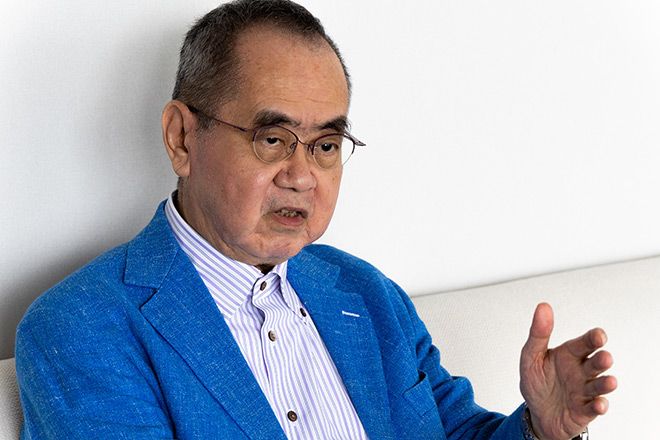 Takashi Mikuriya (Photo by Reina Kitamura)
The collapse of Prime Minister Shigeru Ishiba’s administration is just one symptom of the ailments consuming Japanese politics, political scientist Takashi Mikuriya said.
After consecutive defeats in national Diet elections, Ishiba sought to stay in power but ultimately bowed to pressure to resign from within the ruling Liberal Democratic Party.
In a recent interview with The Asahi Shimbun, Mikuriya, who is well-versed in Japanese political history since the Meiji Era (1868-1912), said Japan now faces a desolate landscape with no clear direction, and that the two largest political parties are largely to blame for this predicament.
Mikuriya, who is on close terms with politicians in both the ruling and opposition blocs, shared his thoughts on Ishiba and his nearly one year in power, and where politics in Japan is headed.
Excerpts from the interview follow:
***
Question: Prime Minister Shigeru Ishiba announced his resignation as calls for an early leadership election within the LDP intensified. What’s next?
Mikuriya: The Ishiba Cabinet was weak from the outset, and after the July Upper House election, following internal party struggles, it finally collapsed. But what lies before us now is not merely the scene of a single Cabinet collapsing.
Now, 80 years after the war, Japan’s dream of a two-party system—a goal its politics had relentlessly pursued—has finally faded.
Since the “1955 system” established by the LDP and the Japan Socialist Party, political reforms in the 1990s invested immense energy into creating a two-party system capable of alternating power.
Yet now, a desolate landscape stretches out before us, with no clear vision for the future.
Q: In the July Upper House election, the Democratic Party for the People as well as Sanseito made significant gains, advancing multi-party politics. What do you think about these developments?
A: More than multi-party growth, isn’t the deterioration of the two largest parties—the ruling LDP and the main opposition Constitutional Democratic Party of Japan—the bigger problem?
There have been times in the past when a government fell after losing an Upper House election. However, back then, influential figures within the LDP would often suggest in the final stages of the election campaign that it was time to draw a line under this administration and bring about a change.
This time, Prime Minister Ishiba kept declaring his intention to continue, and politics itself went off the rails. The LDP today lacks both the wisdom and the power structure it once possessed.
I also want to emphasize that the CDP, the second-largest party and the leading opposition party, is also in a shambles.
Even during the Diet session before the Upper House election, the CDP has been unable to leverage its position as the second-largest party and has completely failed to exercise any leadership.
The problem is not that medium-sized parties are gaining momentum, but that the largest and second-largest parties have lost their leadership.
Q: You met with Prime Minister Ishiba at the prime minister’s office on Dec. 25 last year. What did he say?
A: Yes, we sat facing each other and talked for 50 minutes.
The first thing Prime Minister Ishiba said upon entering the room was, “It’s nice and quiet here, isn’t it?”
I had met Mr. Ishiba multiple times before he became prime minister. I have visited the prime minister’s office many times and met with various people, whether under the LDP administration or the Democratic Party of Japan administration.
But I had never experienced such a quiet prime minister’s office. It is simply impossible for the office of a nation’s supreme leader to be so quiet.
Q: What do you mean by that?
A: Probably since before the war, no matter which administration was in power, the Japanese prime minister’s office was always bustling with people, ideas and information. That’s natural, right?
It’s only natural that bureaucrats from various ministries and agencies and all sorts of people would bring their ideas and ideals to the prime minister’s office to compete enthusiastically to realize them. The prime minister’s office used to be filled with such energy.
But that feeling was completely absent from the prime minister’s office at the end of last year. It felt as if the prime minister’s office had been emptied out. I believe this represents a crisis unlike any Japanese politics has ever faced before.
Q: Was there no vitality in the Ishiba Cabinet?
A: Mr. Ishiba had his own ideas and policies that he had nurtured from a young age, and surely many things he wanted to accomplish as prime minister. He is a politician who has spoken out for political reform and even left the LDP. He ran for the LDP presidency multiple times but finally became prime minister during a particularly difficult time.
At the LDP’s joint plenary meeting for both Upper House and Lower House members on Sept. 2, the prime minister himself apologized, saying he had “lost what made him ‘Ishiba.’”
Q: How will future generations evaluate the roughly one-year-long Ishiba administration?
A: After the LDP became a minority ruling party, the administration managed governance through measures unseen under previous LDP governments. Instead of switching coalition partners, the party relied initially on cooperation from the DPP and later from Nippon Ishin to get the budget proposal through the Diet.
The LDP was trying to build a new political order for a new era but hit a dead end in the process.
After the Upper House election, it failed to decisively determine its own direction and present a clear stance to the public, dragging matters out until today.
Q: Where is Japanese politics headed from here?
A: Beyond debating who will succeed Ishiba in the LDP leadership election, all politicians, experts, commentators and ordinary citizens, regardless of party size, need to consider the future political order. We need to transcend existing frameworks, positions and preconceptions to explore without taboos.
We must avoid the total collapse of Japan’s parliamentary democracy at its roots.
***
Born in 1951, Takashi Mikuriya, a scholar of the history of modern Japanese politics, is a professor emeritus with the University of Tokyo and a professor emeritus with Tokyo Metropolitan University.
His books include “Kenryoku no Yakata wo Aruku” (Strolling around mansions of power), “Nihon Seiji-shi Kogi” (Discourse on the history of Japanese politics) and “Heisei Fuunroku” (Records of the winds and clouds of the Heisei Era (1989-2019)).
INTERVIEW/ Takashi Mikuriya: Ruling bloc’s loss of majority fired off starting gun for change
December 19, 2024
Ishiba promoted from ‘intra-party opposition’ head to LDP president
September 27, 2024
Japan PM Ishiba resigns after series of bruising election losses
September 7, 2025
Ishiba intends to stay in office despite loss of seats by coalition
July 21, 2025
Japan’s Prime Minister Shigeru Ishiba resigns
September 7, 2025
Aso pushes early LDP leadership election after ‘crushing defeat’
September 4, 2025











A peek through the music industry’s curtain at the producers who harnessed social media to help their idols go global.

A series based on diplomatic documents declassified by Japan’s Foreign Ministry

Here is a collection of first-hand accounts by “hibakusha” atomic bomb survivors.

Cooking experts, chefs and others involved in the field of food introduce their special recipes intertwined with their paths in life.

A series about Japanese-Americans and their memories of World War II



