THE ASAHI SHIMBUN
December 19, 2025 at 14:52 JST
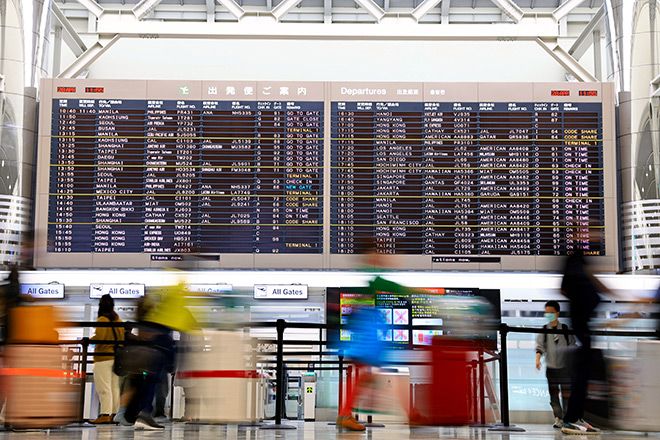 Passengers come and go in front of a flight board at Narita Airport. (Asahi Shimbun file photo)
The government and the ruling Liberal Democratic Party have begun discussions on creating a program that would require foreigners to take Japanese language and other societal instruction as part of the visa screening process.
This would provide foreign residents living in a mid- to long-term basis in Japan with fundamental societal knowledge, primarily language skills.
The goal is to prevent conflicts between foreign residents and local communities and to curb rising xenophobia by making these lessons a requirement when applying for some visa types.
The government and the LDP will continue discussing the details of the new system, tentatively named the “social inclusion program,” including which visa categories to target.
They will also discuss the structure of the proposed “pre-school,” where foreign children would acquire basic knowledge, primarily Japanese language skills, before entering Japanese schools.
In addition, they are considering creating guidelines for local governments to use when providing Japanese language education.
The LDP’s project team, which has been working on improving systems for foreign residents, is seeking to include these measures in its midterm proposal for the new program, according to several sources close to the government and the LDP.
Many European nations and the United States have social inclusion programs that require foreigners to have a certain proficiency in language skills, as well as knowledge of the rules and regulations of each society, when accepting immigrants.
On the other hand, the Japanese government doesn’t have a comprehensive policy, although it requires Japanese language proficiency for some visa categories such as the "specified skilled worker" visa.
In a proposal in July, the National Governors’ Association urged the central government to establish measures for co-existing with foreign residents in Japan.
The LDP’s project team is also expected to include in its midterm proposal measures to identify nationalities when allocating public housing or housing provided by the semi-governmental Urban Renaissance Agency.
The goal is to address the sharp increase in foreign children enrollment in some schools, which has resulted from more foreigners living in public housing.
This measure also aims to prevent the improper use of the public assistance system by foreigners, which guarantees a minimum standard of living for low-income households. This would be done by identifying the users’ nationalities and visa types through the national My Number identification cards.

LDP hopefuls push foreigner limits, but no integration plan
September 26, 2025
Japan to punish longer-term foreign residents in arrears
June 10, 2025
Foreigners object to move to revoke permanent resident status
May 22, 2024
New foreign worker program to limit transfers to urban centers
May 16, 2025
Fearing Europe-style rifts, Japan weighs tighter immigration
August 29, 2025
















A peek through the music industry’s curtain at the producers who harnessed social media to help their idols go global.

A series based on diplomatic documents declassified by Japan’s Foreign Ministry

Here is a collection of first-hand accounts by “hibakusha” atomic bomb survivors.

Cooking experts, chefs and others involved in the field of food introduce their special recipes intertwined with their paths in life.

A series about Japanese-Americans and their memories of World War II



