THE ASAHI SHIMBUN
December 10, 2025 at 17:11 JST
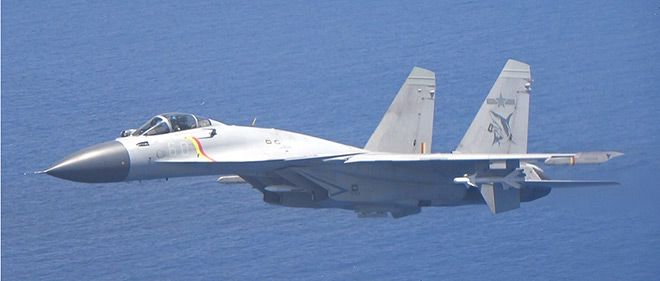 A Chinese J-15 fighter jet similar to the one which had a radar lock-on against a Self-Defense Force jet (Provided by Defense Ministry)
Government officials considered not announcing that a Chinese fighter jet had locked its radar on an Air Self-Defense Force F-15 fighter jet over international waters but feared a recurrence if not made public.
According to a number of Defense Ministry sources, the Chinese jet was about 50 kilometers from the SDF aircraft when the first radar lock-on was conducted and about 100 km for the second one.
Moreover, the two planes were at different altitudes so there was no imminent danger of a collision.
But there was a time period when the SDF jet was within missile range of the Chinese jet that locked its radar on it.
When Chinese fighter jets came within several dozens of meters of an SDF patrol aircraft in June and July, no radar lock-on was initiated.
That led to speculation that the latest incident was a new military reprisal by China that might have been linked to a comment made by Prime Minister Sanae Takaichi about a military conflict over Taiwan.
Because there was no clear danger of a collision, some SDF officers questioned whether the provocation should be made public. It had already been decided to informally protest to China and ask that a recurrence be prevented.
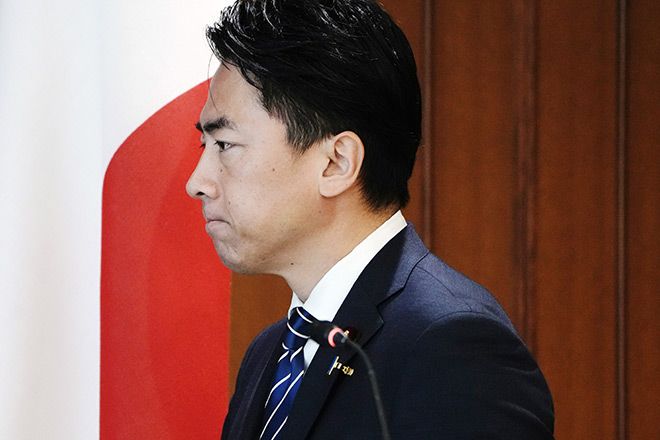
But the incident was announced because Defense Minister Shinjiro Koizumi and others felt that not publicizing the incident might lead to further problems in the future.
In the end, close to 10 hours had elapsed from the first radar lock-on before the government made its announcement.
Meanwhile, officials also tried to use the hotline between defense authorities regarding the incident, but China did not respond, sources said.
The hotline was set up in March 2023, but except for a first ceremonial exchange of greetings, it has never been used.
And the two sides are still sticking to their guns about who is at fault for the radar lock-on incident.
Chinese officials indicated that the radar lock-on was conducted in a search mode rather than a fire-control mode in which a target is designated.
But at his Dec. 9 news conference, Chief Cabinet Secretary Minoru Kihara described the act as dangerous because normally a search mode is not utilized intermittently as it was on Dec. 6.
Chinese officials also criticized the sending of SDF aircraft into airspace that China was using for a training exercise, which it said it had notified Japan beforehand.
However, at the Dec. 9 Lower House Budget Committee session, Koizumi said his ministry was not aware of such a prior notification.
A Chinese TV-affiliated internet media later on Dec. 9 released what it said was a radio exchange between the SDF and Chinese military before the radar lock-on that had a Japanese officer saying notification had been received about the training exercise.
On Dec. 10, Koizumi told reporters that the Chinese navy had informed an SDF destroyer about the start of flight exercises, but that sufficient information had not been received about avoiding any danger.
"The fundamental point about this incident is that China locked on its radar intermittently for about 30 minutes even as we were conducting the appropriate measures to prevent an airspace violation," Koizumi said.
(This article was written by Mizuki Sato, Ryo Kiyomiya and Daisuke Yajima in Tokyo and Yohei Kobayakawa in Beijing.)
Japan counters Chinese radar lock-on claims amid tensions
December 8, 2025
Japan and Australia urge calm after Chinese radar locks on Japanese jets
December 8, 2025
ASDF F-15 jet crashes in Sea of Japan; search on for 2 pilots
February 1, 2022

Chinese violation of airspace in Kyushu shocks, confuses Japan
August 27, 2024
Seoul drafted radar guidelines in 2019 targeting only SDF aircraft
August 19, 2022
Japan-China defense hotline used 1 time for ceremonial call
August 18, 2025











A peek through the music industry’s curtain at the producers who harnessed social media to help their idols go global.

A series based on diplomatic documents declassified by Japan’s Foreign Ministry

Here is a collection of first-hand accounts by “hibakusha” atomic bomb survivors.

Cooking experts, chefs and others involved in the field of food introduce their special recipes intertwined with their paths in life.

A series about Japanese-Americans and their memories of World War II



