REUTERS
December 5, 2025 at 12:55 JST
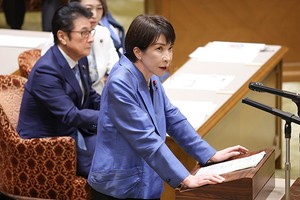
 Prime Minister Sanae Takaichi speaks in the Lower House Budget Committee session on Nov. 7. (Asahi Shimbun file photo)
As Prime Minister Sanae Takaichi was finalizing her $137 billion spending plan last month, which in recent weeks has put Japan into a standoff with investors over the outlook for government finances, a bond chart was brought to her attention.
Finance Minister Satsuki Katayama pulled up the chart on her tablet at a November 17 meeting in Takaichi’s official residence. It showed selling, which drives up long-term borrowing rates.
The prime minister’s expression turned serious, according to a person familiar with the encounter.
“The finance minister was becoming more vigilant,” the person said. “The prime minister also seemed quite concerned about the weak yen and bond-price declines.”
The person asked not to be identified because they were not authorized to speak with the media. But the concern they described was well-placed, because Takaichi is facing a challenge from the markets that she needs to fund her agenda.
At stake was not only her massive stimulus package, which will be paid for largely through borrowing, but the direction of the ailing yen - in real terms near record lows - and longer-term investor faith in Japanese assets.
Takaichi’s meeting with Katayama and other top officials marked the beginning of a shift in rhetoric aimed at soothing investor concerns, though it is too early to say whether it can steady the market in a durable way and keep bond vigilantes out of Japan.
Japan’s benchmark 10-year yield rose to its highest point since 2007 on Friday and has climbed 25.5 basis points in four weeks, the sharpest rise in nearly three years and one that has begun to send ripples through global markets.
The situation is all the more delicate because of Japan’s heavy debt - its debt-to-GDP ratio is by far the highest of any developed country - and how its bond market is in transition as buying from both the central bank and insurers dries up.
Addressing the risks, Takaichi told Parliament last week that there was no possibility of a “Truss shock,” downplaying parallels with the 2022 selloff in gilts and the pound that sank British Prime Minister Liz Truss’ plan for unfunded tax cuts.
She has also softened her previous resistance to monetary policy tightening and promised to limit extra borrowing. In addition, she has unveiled other initiatives including what some analysts have called the Japanese version of DOGE to cut wasteful government spending.
On Friday, Katayama said the government was monitoring markets and would ensure the sustainability of Japan’s public finances and maintain investor confidence.
Takaichi’s office did not respond to a Reuters request for comment on her November 17 meeting.
“Takaichi’s plan is to expand the growth potential of Japan ... but if that growth doesn’t materialise, then the only thing remaining is the huge amount of government debt,” said Toshinobu Chiba, a Tokyo-based fund manager at Simplex Asset Management.
“And that’s the problem.”
WHO’S GOING TO BUY THESE BONDS?
Takaichi, who came to power after her predecessor quit, has a reputation as a disciple of Shinzo Abe’s “Abenomics,” the massive monetary and fiscal stimulus program aimed at rescuing Japan from stagflation that kicked off more than a decade ago.
What surprised investors was how little of that was jettisoned when she took office, despite inflation running at 3% and the national debt exceeding 1.3 quadrillion yen ($8.5 trillion).
Takaichi appointed a dovish coterie of economic advisors and told Parliament last month she would water down Japan’s fiscal target to allow for multi-year spending on key growth areas.
And when an early draft of the stimulus plan was crafted by the finance ministry, she quickly turned it down because it was too modest in size, according to the Nikkei newspaper.
“What you have is, I would say, a very loose policy mix overall and basically a monetary boom,” said Ian Samson, a multi-asset portfolio manager at Fidelity International.
“I’m personally short yen because I think that’s the path of least resistance.”
Extra bond sales will also test an already fragile market, where demand - especially for long-dated paper - has traditionally been uneven from foreign investors and has been drying up for years from domestic banks and insurers.
After accounting for redemptions and decreased purchases by the Bank of Japan, net supply in the market will jump by nearly 11 trillion yen in 2026 from 58 trillion in 2025, according to Bank of America estimates.
“The problem is ... who’s going to buy these bonds?” said Sally Greig, head of global bonds at Scottish long-only manager Baillie Gifford. “We’ve still got more supply to absorb and Japan’s not the only one spending money.”
SHORT YEN
Some dealers said there had even been a small increase in short interest in bonds, particularly over the past week, though positions were small.
“The dynamics in the JGB market are more indicative of a lack of buying interest, rather than outright selling,” said Daiki Hayashi, head of Japan market sales and marketing at J.P. Morgan in Tokyo.
Bets against the yen, however, may start to pick up, despite Takaichi’s preference for a stronger currency and a recent escalation of intervention warnings, traders say.
“There would definitely be interest to look at shorting the yen if we can move to between 153 and 154 (per dollar),” said Patrick Law, head of APAC fixed-income, currencies and commodities trading at Bank of America in Hong Kong.
The yen traded at 155 per dollar on Friday and has slid some 5% versus the dollar since Takaichi was appointed as leader of Japan’s ruling party in early October.
To be sure, positioning in the market is not clear because data has been delayed by the U.S. government shutdown, and there remain a number of forecasts for a stronger yen.
Morgan Stanley, for example, expects the yen to hit 140 per dollar in the first half of 2026 and chief Asia and emerging-market equity strategist Jonathan Garner said yields were rising as part of a healthy reflation of the economy.
And that still makes for a difficult moment to step into the bond market.
“Investors, including pensions and banks, still have a big capacity to buy more JGBs,” said J.P. Morgan’s Hayashi, particularly around the details of the government’s bond-issuance plan. “What they need is greater transparency.”
“Until this is clarified, I think it will likely remain difficult for investors to buy JGBs aggressively.”

Japan’s next finance minister could unsettle yen bears
October 22, 2025
Japan’s stocks zoom, yen slumps as Takaichi win dims BOJ hike bets
October 6, 2025
Yen falls to one-week low after Takaichi elected as Japan PM, dollar firms
October 22, 2025
BOJ chief to hold first bilateral meeting with PM Takaichi
November 18, 2025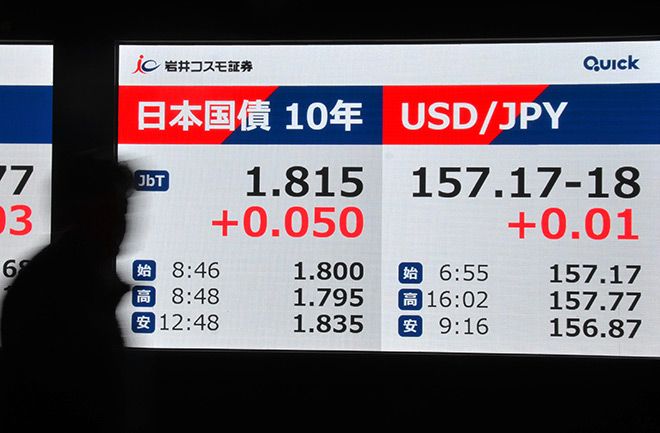
Japan hints at intervention as fiscal worries fuel yen sell-off
November 21, 2025
Japan’s markets gird for leadership vote with stocks, bonds on edge
October 3, 2025








A peek through the music industry’s curtain at the producers who harnessed social media to help their idols go global.

A series based on diplomatic documents declassified by Japan’s Foreign Ministry

Here is a collection of first-hand accounts by “hibakusha” atomic bomb survivors.

Cooking experts, chefs and others involved in the field of food introduce their special recipes intertwined with their paths in life.

A series about Japanese-Americans and their memories of World War II



