THE ASAHI SHIMBUN
October 29, 2025 at 14:21 JST
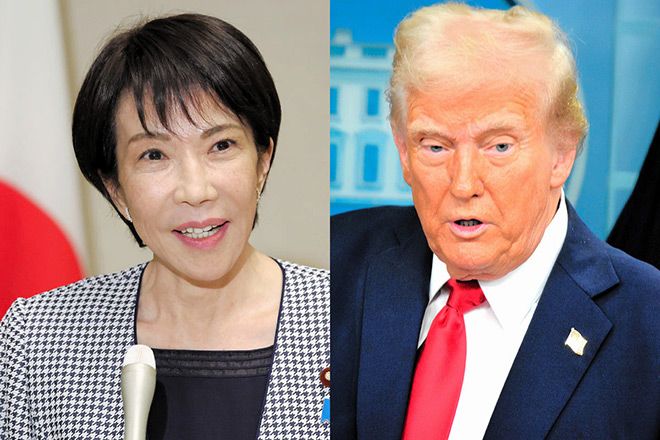
 Prime Minister Sanae Takaichi and U.S. President Donald Trump hold the signed economic documents at the State Guest House, Akasaka Palace, in Tokyo on Oct. 28. (Pool)

Prime Minister Sanae Takaichi told U.S. President Donald Trump that Japan is determined to bolster its national security capabilities and raise its defense spending, but the president made no demands specifying numerical targets.
At their first summit in Tokyo on Oct. 28, the two leaders agreed to further reinforce the deterrence and response capabilities of the Japan-U.S. alliance.
Takaichi, who took office on Oct. 21, said she wants to work with Trump to build a “new golden age of the Japan-U.S. alliance.”
“We are an ally at the strongest level,” the U.S. president said.
During the summit, Takaichi emphasized that Japan will take the initiative in strengthening and spending more on its defense capabilities.
Before the meeting, there were concerns within the Japanese government that the U.S. side might demand specific targets for increased defense spending.
However, Takaichi told reporters after the talks, “There was no exchange with numbers in mind.”
In her policy speech to the Diet on Oct. 24, the prime minister announced plans to raise the defense budget to 2 percent of gross domestic product within the current fiscal year, two years ahead of schedule.
She also laid out plans to revise three key national security documents earlier than planned for possible further increases in defense spending.
At the outset of the meeting, Trump noted that Japan is significantly enhancing its military capabilities and expressed appreciation for Japan’s procurement of U.S.-made defense equipment, such as fighter jets and missiles.
Takaichi and Trump confirmed that Japan and the United States will further promote trilateral security cooperation with South Korea and the Philippines as well as the quadrilateral framework involving Australia and India.
Without referring to China, they also reaffirmed their opposition to any unilateral attempts to change the status quo by force or coercion while underscoring the importance of peace and stability across the Taiwan Strait.
On the economic front, the two leaders signed two joint documents: one confirming the swift and sustained implementation of the Japan-U.S. tariff agreement and the other establishing a Japan-U.S. framework to secure supplies of critical minerals and rare earths.
The latter document also covers efforts to strengthen economic security measures across a broad range of fields, including key technologies such as artificial intelligence and industrial sectors like shipbuilding.
“Not just about rare earths, both Japan and the United States are overly dependent on a specific country,” Takaichi, a former minister in charge of economic security, told reporters after the meeting. “We will work to diversify our procurement sources.”
(This article was written by Sotaro Hata and Ryo Kiyomiya.)
Tokyo braces for summit with Trump under heavy security
October 27, 2025
Japan says it plans to tell Trump it will build up military, upgrade security strategy
October 22, 2025
Japan signals defense budget surge ahead of Trump visit
October 22, 2025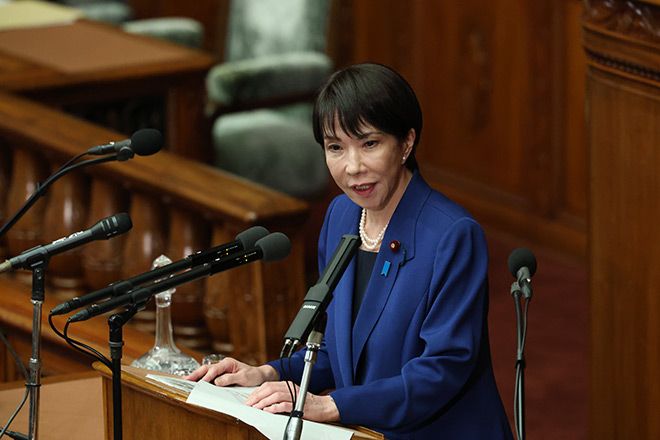
Takaichi pledges to build strong economy with fiscal stimulus
October 24, 2025
Japan’s Takaichi faces early test of defense ambitions with Trump visit
October 24, 2025
Takaichi eyes hitting defense budget target this fiscal year
October 23, 2025











A peek through the music industry’s curtain at the producers who harnessed social media to help their idols go global.

A series based on diplomatic documents declassified by Japan’s Foreign Ministry

Here is a collection of first-hand accounts by “hibakusha” atomic bomb survivors.

Cooking experts, chefs and others involved in the field of food introduce their special recipes intertwined with their paths in life.

A series about Japanese-Americans and their memories of World War II



