October 21, 2025 at 07:00 JST
 Hajimu Masuda in Tokyo on April 13 (Photo by Ryuichi Kanari)

Many narratives about World War II have emerged during the 80 postwar years, but one important question has not been discussed sufficiently, according to a historian.
Masuda Hajimu (family name Masuda), a scholar of modern history of Japan who is based in Singapore, said it is crucial to investigate why so many ordinary people enthusiastically and positively supported the war.
In a recent interview with The Asahi Shimbun, Masuda said he believes that the answer to that question could help us understand what is currently unfolding around the world.
Excerpts of the interview follow:
***
Question: Why did you study the reasons for Japan’s rush into the war?
Masuda: Because I thought a question that should be inquired into had yet to be given proper consideration.
Typical accounts of World War II history often portray ordinary people as passive beings who were dragged into the war by military authorities. It’s as if ordinary people merely endured the war that came and went like a typhoon.
What is missing is the presence of people who quite positively supported the war. As a result, the simple fact that many people were supporting and even glorifying the war becomes obscured.
While research focusing on such people have increased in recent years, I chose to focus on the “charms” that the war had for ordinary people.
Q: The “charms”?
A: Yes. Many people at the time fervently embraced the war and totalitarianism. I wanted to think about the “charms” of war and totalitarianism instead of just criticizing those people.
The reason Japan plunged into war cannot be grasped just by tracking politics and diplomacy since these two things were not carried out in a vacuum but instead operated inside a “magnetic field” of the times.
To understand that magnetic field, I have tried to find out what ordinary people wanted and what they fought over under the banners of war and totalitarianism.
Q: How did you learn about the feelings of ordinary people back then?
A: I relied heavily on personal diaries, letters, and readers’ contributions to newspapers and magazines to reveal a picture of that time. I have looked into synchronic patterns among those who shared the same feelings.
It’s like a mosaic. The fragments alone don’t tell you anything, but they present an image when brought together in large quantities.
What emerged was a picture of people who didn’t necessarily support the war in itself but wanted to express their support for it because of other functions of it in their everyday lives.
Then, through gathering the fragments, I could see a different sort of “war,” which was going on, which had been fought among people continuously, and which began to proceed more smoothly when coupled with the “logic” of national security and patriotism.
Q: Could you explain some of those fragments?
A: There is a young man so earnest that he writes his New Year’s resolutions in his diary: “Endurance, diligence, effort.”
His dream was to become a manly soldier, but he failed the examination to become a Grade One conscript.
Yet, from that point on, his diary entries become more and more belligerent.
He rejoices over the start of the war against the United States in 1941. He writes that he is determined to do his best at carrying out his duty at home. And he sounds most proud when he receives higher marks at his workplace.
Support for the war was, for him, more like an expression of his desire to be a proper, manly man.
Another case involves a woman who served as principal at a Tokyo elementary school. She described in a round-table talk in 1931 her experience of a passer-by shouting at her when she was walking down the street: “Hey! Why are you wearing those Western clothes? Women like you jeopardize our national security!”
That episode shows that people could use the logic of national security to criticize what they had always found unpleasant.
Similar things happened in business circles, too.
For instance, in a business magazine, the president of a railroad company proudly declared “Our Wartime Readiness.”
That said, what his company actually did was only things like holding mass morning assemblies, having workers come to work on time, and initiating a company-wide cleaning campaign.
That means the moment the war began, the logic of wartime made it possible to enforce discipline that had been difficult to achieve in peacetime.
Q: Your study goes as far back as the Taisho Period (1912-1926). Why is that?
A: The Taisho Period was an “era of liberation,” when many people sought to break free from societal expectations and fixed models.
Women began pursuing lifestyles other than those of being a good wife and wise mother. Men began putting on cologne.
Labor movements and Koreans’ rights movements also became more active.
Simultaneously, resentment against such a trend of emancipation began to smolder.
By the late 1910s, more people felt that “everything is in disarray.” They were irritated by, for example, men who weren’t like men and women who weren’t like women.
If we don’t recognize this undercurrent, it’s difficult to understand the background of the surge behind public support for war following the Manchurian Incident in 1931. For it provided the energy for what erupted later as war fever.
The point at issue was the spread of individualism that emphasized being true to oneself, as well as diversity as a result of it. It was problem because many thought conventional ideals were being shaken.
For those irritated by things like this, democracy and parliamentary politics were the main culprits undermining harmony because they respected individuality, approved diversity, and thereby promoted conflict.
Then, I could see people who were hoping to overcome “malfunctions” of that sort through war and totalitarianism, thereby rehabilitating a society exhausted by competition and conflicts, as well as divides and disparities, and thus bringing back a sense of unity and harmony.
Q: That’s the mosaic that reflects the era when Japan rushed into the war, based on a multitude of individual accounts that you have touched on earlier, right?
A: Yes. each account may be trivial, but collectively, they create a swell that comprises a magnetic field of the times.
Seen in this way, we can see the current of the times shifting from an “era of liberation” through an “era of tightening” to an “era of fighting.”
When I look at contemporary wars after the coming of mass society in the late 19th century, I rarely can state clearly who had taken the initiative, whether the government or society.
Is it because wars break out that ideals of manliness and womanliness are demanded, forcing everyone to cooperate with the nation’s war efforts?
Or is it because these ideal norms crumble everywhere that crises are periodically invoked to tighten control and restore them, thereby necessitating nations’ wars?
Gathering these small accounts reveals it's not merely a one-way action where the state is the main actor and people are just dragged in it.
There is an old Japanese term “Kotodama,” which literally means the “miraculous power of words.” Once spoken, words begin to take on a life of their own, even if you didn’t really mean them in their literal sense.
Indeed, when countless words circulating in society accumulate, they form “public opinion” that policymakers can no longer ignore. Their choices become restricted.
In considering Japan’s path to war, I endeavored not only to examine politics and diplomacy but also to study the society where people's desires gathered together, thereby trying to integrate both perspectives.
Q: Do you mean policymakers were affected by public opinion?
A: Yes. Take, for example, the Manchurian Incident, which was plotted by the Kwantung Army of the Imperial Japanese Army.
If we view this as the starting point of the “Fifteen Years’ War” (1931-1945), we end up taking on the military-centric understanding that the military dragged Japan into the war.
But that makes you prone to overlook the fact that this happened at the height of the “era of liberation,” which quite a few had already seen as the moments when society was disintegrating and ideals were rapidly breaking up.
The Manchurian Incident occurred exactly at that moment, and those irritated by social change jumped at the opportunity.
Although the government had initially adopted a policy of non-escalation in a cabinet decision, it could not back down in the face of war fever gripping the entire nation.
Tracing events this way, we can see how the path to war was forged through interactions between policymakers and ordinary people.
Q: What about the influence of news media?
A: It was extremely significant. This is particularly evident from the Marco Polo Bridge Incident in July 1937 (that triggered the Second Sino-Japanese War) through the fall of Nanjing later in that year.
Nationwide newspapers used dramatic photos in their front-page articles and stirred up excitement in their readers. Meanwhile its prefectural news sections ran dozens of head shots of local fallen soldiers every day, turning their deaths into grand stories and thus appealing to readers’ emotions.
Circulations soared dramatically.
Q: What are the problems in portraying ordinary people as passive beings?
A: It makes them appear as monolithic victims, stopping us from thinking further. Moreover, this view of history continues to influence the present, too.
Even when considering contemporary politics and society, we tend to perceive ourselves through the same framework of passivity, and this makes us unaware of the crucial roles we play.
The path to war is a human-made one. That’s precisely why I wanted to have another look at it from the viewpoint that many people supported it.
Q: Do you think that “tightening,” as a backlash to liberation, is still taking place in many parts of the world?
A: Absolutely. I have named the struggle between people’s “liberation” and “tightening” as “social warfare.”
The advantage of this perspective is that it allows us to reexamine Japan’s experience in a universal, contemporary and comprehensive way.
Because the struggle between liberation and tightening exists in every society and every era, we can connect Japanese history to world history.
Moreover, this perspective allows us to comprehensively grasp politics and society together by considering not only the actions of those in power but also ordinary people.
Viewed from this angle, the rise of the Sanseito party in Japan, the re-election of President Donald Trump in the United States, and the public support for President Vladimir Putin in Russia all seem to have underlying social warfare as their backdrop.
When we alter how we view history, the way we see the present and the future will change, as well. That’s why it’s so important to diversify frames of reference on history.
If we realize that during pivotal moments in the past, ordinary people weren't merely passive victims tossed around by the times, I believe it will change how we approach our present and future.
(This article is based on an interview by Ryuichi Kanari.)
***
Born in 1975, Masuda Hajimu, an associate professor in the Department of History at the National University of Singapore, is a scholar of modern history of Japan and the 20th-century history of Asia. He was awarded the 2021 Osaragi Jiro Rondan Prize for his book “Hitobito no naka no reisen sekai: Souzou ga genjitsu to naru toki” (The Cold War World among Ordinary People: When Imagination Became Reality). Masuda recently published “Hitobito no shakai senso: Nihon ha naze senso heno michi wo ayundanoka” (Ordinary People’s Social Warfare: Why Japan Marched to War). The English version is currently in preparation to be published from Harvard University Press.

Ishiba statement tries to address Japan’s failure to avoid war
October 10, 2025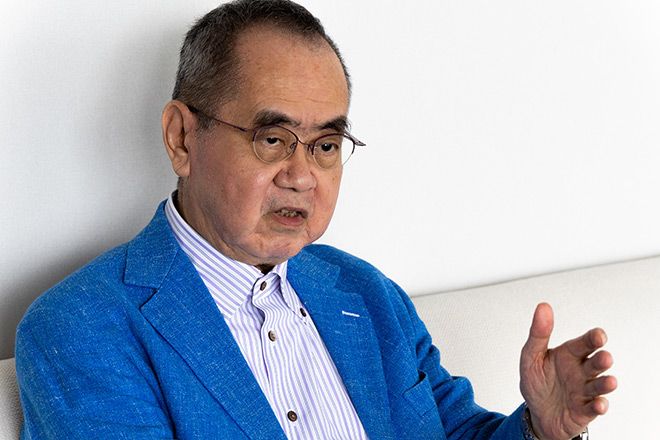
INTERVIEW/ Takashi Mikuriya: Under current politics, Japan faces desolate, rudderless future
September 8, 2025
INTERVIEW/ Wieland Wagner: Japanese must weigh merits of emperor system vs. democracy
November 2, 2024
VOX POPULI: Russia’s Ukraine invasion echoes Japan’s 1931 path to ruin
March 3, 2022
Film sheds light on settlers’ sex deal with Soviets in Manchuria
July 27, 2025










A peek through the music industry’s curtain at the producers who harnessed social media to help their idols go global.

A series based on diplomatic documents declassified by Japan’s Foreign Ministry

Here is a collection of first-hand accounts by “hibakusha” atomic bomb survivors.

Cooking experts, chefs and others involved in the field of food introduce their special recipes intertwined with their paths in life.

A series about Japanese-Americans and their memories of World War II



