THE ASAHI SHIMBUN
September 26, 2025 at 16:44 JST
 The Japan–Africa Baseball and Softball Foundation, a Tokyo-based general incorporated foundation, hosts a seminar in Nigeria to train coaches. (Provided by Shinya Tomonari)
The city of Imabari in Ehime Prefecture endured a monthlong onslaught of complaints and criticism over a misunderstanding.
Designated as a “hometown” for Mozambique under a Japan-Africa friendship initiative, the city received 2,400 phone calls and 3,500 emails by Sept. 24 from people who wrongly believed the program was intended to promote immigration to Japan.
Graffiti saying “no immigration,” “scrap it” and “oppose African immigrants” was found twice in city hall restrooms, prompting the city to file a vandalism report with police.
The three other Japanese municipalities in the Japan International Cooperation Agency’s hometown initiative experienced similar problems.
JICA, which also faced protests, canceled its “Africa Hometown” initiative on Sept. 25.
“Our city didn’t demand the withdrawal of the (initiative), but I believe it was a reasonable decision,” said Takehito Watanabe, Imabari’s tourism division chief. “Our staff were physically and mentally exhausted, so we want to resume normal operations starting tomorrow.”
Despite JICA’s announcement, things are still far from normal.
Feelings of disappointment linger while concerns have risen that the cancellation will be viewed as a “success story” by Japanese xenophobes and discourage future international exchange efforts.
NO VICTORY
Under the JICA initiative designed to foster exchanges in human resources, the Japanese cities would accept interns from Africa under the premise that they would return home after the program’s conclusion.
But after the initiative was announced in August, false claims that “immigrants will flood in” spread online, sparking a wave of protests.
“We took immediate steps to correct the misunderstanding, but the confusion persisted,” JICA President Akihiko Tanaka said at a news conference on Sept. 25. “It began to affect the daily operations of local governments, so we decided to withdraw the initiative.”
Tanaka acknowledged that the terms “designating” and “hometowns” likely resulted in erroneous views that the program was connected to immigration.
He also rejected claims on social media that JICA’s retraction represented “a victory” for the protesters.
“I have absolutely no sense that we yielded to confusion based on a misunderstanding,” he said.
‘PAINFUL DECISION’
A senior official at the Foreign Ministry, which was involved in the initiative, said internal discussions on the confusion included cautious opinions that withdrawing the project could give anti-immigration activists “a sense of success” based on misinformation.
However, the ministry concluded that it would be best to halt the hometown initiative.
“Unless the project’s very substance is completely scrapped, the local governments won’t be able to sustain themselves,” the official said. “It was a painful decision.”
JICA emphasized that it “does not engage in initiatives to promote immigration” and remains committed to fostering international exchanges with local governments.
“Japan is a country that finds it difficult to maintain peace without connections to the world,” Tanaka said. International exchanges “are a long-term investment to earn the trust of the Japanese people.”
CITIES STRAINED, FATIGUED
After JICA’s announcement on Sept. 25, the mayors of the four “hometown” cities issued a joint statement pledging continued efforts toward municipal development.
Behind the scenes, staff were overwhelmed.
In Sanjo, Niigata Prefecture, designated as Ghana’s hometown, Mayor Ryo Takizawa announced the cancellation of a Ghanaian government delegation’s visit to the city, as well as various surveys and planning projects related to the JICA project.
The city was already implementing an agreement whereby Japanese students would serve as regional revitalization cooperation corps members within the city and then become overseas cooperation corps members in Ghana in 2026.
However, the agreement effectively ended following JICA’s announcement.
“We will continue pursuing international goodwill and mutual understanding,” Takizawa said.
By the evening of Sept. 25, Sanjo city had received around 9,000 calls and emails about the program. On Aug. 25, pranksters temporarily altered the city hall label on an online map to “Ghana City Hall.”
The city formally asked JICA and the central government to investigate the spread of misinformation and review the future direction of the hometown project.
In Nagai, Yamagata Prefecture, designated as Tanzania’s hometown, criticism from the public disrupted operations.
At one point, the flood of protests was so intense that phone lines at city hall became unusable.
As of Sept. 22, more than 1,000 protest calls and 3,000 emails had been received.
Most demanded that the city “withdraw the hometown designation” or simply “opposed immigration.”
Even when city officials attempted to clarify the situation, callers repeated their positions and some made remarks that could be deemed racist.
Nagai has maintained exchanges with Tanzania since serving as the host town for Tanzanian athletes at the 2021 Tokyo Olympics.
Nagai Mayor Shigeharu Uchiya said the city intends to continue its exchanges with Tanzania, with which it shares a deep friendship.
OTHERS AFFECTED
News of the cancellation disheartened Shinya Tomonari.
“This has nothing to do with immigration. It’s just sad,” said Tomonari, 61, who serves as executive director of the Japan–Africa Baseball and Softball Foundation, a Tokyo-based general incorporated foundation that promotes youth development through baseball in eight African countries.
His organization is set to facilitate exchanges between local communities in Nigeria and the city of Kisarazu, Chiba Prefecture, for three years starting next year.
Kisarazu was designated as Nigeria’s hometown by JICA.
The foundation’s sports-related program is part of an exchange program separate from JICA’s hometown designation.
Seeking to deepen understanding of Africa, Tomonari’s organization had finally been selected for a JICA program, on its third attempt.
The JICA hometown designation led to a flood of protests and inquiries at the Kisarazu government.
“Will immigrants come in droves?” the city was asked.
“I want the hometown designation completely revoked,” others said.
According to Kisarazu officials, the city since the end of August has received about 9,000 phone calls and more than 4,000 inquiries via its website about the hometown program.
Tomonari said he feels the criticism has also been directed at people like him who work with the city to manage exchange programs.
He said he is worried that citizens who misunderstand the situation—thinking things like “immigrants are coming”—might lead to discriminatory stares at Nigerians and others visiting Japan.
“I hope people stop the hate against foreigners,” he said.
IMMIGRANT DESIGNATION?
Shunsuke Tanabe, a political sociology professor at Waseda University who studies Japanese attitudes toward foreigners, expressed concern that JICA’s withdrawal “has provided a ‘success story’ to xenophobic movements based on false information.”
He cautioned that similar incidents could occur if people believe they can force cancellations through baseless protests, potentially shrinking other international exchange programs.
Tanabe also pointed out a deeper issue: Japan has already accepted many foreigners as de facto immigrants, yet the Japanese government has avoided formally recognizing them as such.
“There is a growing need to discuss relations with foreigners and formulate clear policies,” he said.
(This article was compiled from reports written by Azusa Kato, Minori Oshita, Yasushi Yamazaki, Yasushi Horie, Kohei Watanabe and Chika Yamamoto.)

Review eyed as anger continues for Japan-Africa ‘hometown’ plan
September 16, 2025
Japan scrambles to refute claims it is bringing in a ‘flood’ of Africans
August 26, 2025
JICA to scrap Japan-Africa ‘hometown’ plan amid protests
September 25, 2025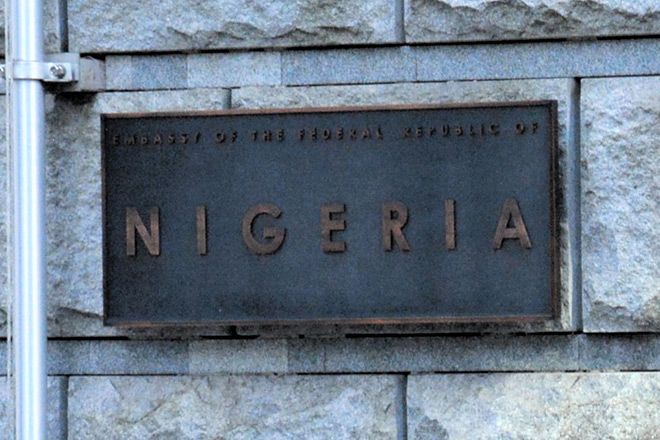
After confusion, Nigeria deletes ‘special Japanese visa’ claim
August 28, 2025
Chinese loans to Africa plummet to near two-decade low--study
September 19, 2023











A peek through the music industry’s curtain at the producers who harnessed social media to help their idols go global.

A series based on diplomatic documents declassified by Japan’s Foreign Ministry

Here is a collection of first-hand accounts by “hibakusha” atomic bomb survivors.

Cooking experts, chefs and others involved in the field of food introduce their special recipes intertwined with their paths in life.

A series about Japanese-Americans and their memories of World War II



