THE ASAHI SHIMBUN
September 16, 2025 at 18:08 JST
 A protester holds a placard demanding the cancellation of the African hometown program during an Aug. 28 demonstration at the Japan International Cooperation Agency (JICA) in Tokyo’s Chiyoda Ward. (Chika Yamamoto)

Despite repeated government clarifications, the uproar caused by misinformation about Japan’s immigration policy continues to rage, including acts of vandalism and calls to dismantle the nation’s international aid agency.
In the face of such criticism, the government said it will review the initiative of the Japan International Cooperation Agency (JICA) to promote Japan-Africa friendship.
The JICA program is intended to foster international partnerships and exchanges by designating Japanese municipalities as “hometowns” for African nations.
But the program was mistakenly perceived as a Japanese government scheme to bring in a large number of immigrants through the issuance of special visas.
Three weeks have passed since the initial storm of protests spread over social media.
But with the controversy showing no signs of dying down, Chief Cabinet Secretary Yoshimasa Hayashi once again clarified the government’s position at a news conference on Sept. 16.
The JICA project “envisions accepting interns (from Africa), but the training is for a limited time, and it is based on the premise that they will return to their home countries after it ends,” Hayashi said. “It is not a promotion of immigration.”
He added, “We are moving forward with discussions involving JICA, the Foreign Ministry, and each local government to reach a swift conclusion on the future of this project.”
HOW IT ALL BEGAN
The issue originated at the Ninth Tokyo International Conference on African Development (TICAD 9), held in Yokohama.
On Aug. 21 at the conference, JICA announced the “JICA Africa Hometown” project between four Japanese cities and four partner countries in Africa.
However, the plan went awry after the appearance of an article in The Tanzania Times carrying the headline, “Japan dedicates Nagai city to Tanzania.”
Nagai in Yamagata Prefecture was partnered with Tanzania. And, based on the newspaper article, online posters said: “Nagai will become a part of Tanzania.”
The Nigerian president’s office also issued a mistaken statement, saying the Japanese government had named Kisarazu, Chiba Prefecture, as “the hometown for Nigerians willing to live and work,” and that Japan “will create a special visa category.”
Critical posts spread like wildfire on social media.
“Japanese cities and towns have been handed over to Africa,” one post said. Several posters warned, “A flood of immigrants is coming.”
The Foreign Ministry clarified that “no special visas are being considered,” and the Nigerian president’s office deleted its statement.
FLOOD OF COMPLAINTS
But the four designated Japanese cities have continued to be inundated with angry phone calls and emails.
The Kisarazu city government on Sept. 11 said it was still receiving nearly 200 phone calls a day.
The city posted another official statement on its website, saying it has no plans to promote immigration or accept interns.
Imabari in Ehime Prefecture, partnered with Mozambique, has on multiple occasions found graffiti written in permanent marker, including “No Immigrants” scrawled on stall doors in women’s restrooms at city hall.
Ryo Takizawa, mayor of Sanjo in Niigata Prefecture, said at a news conference on Sept. 10 that the city had so far received about 7,000 opinions and inquiries about its partnership with Ghana.
On Aug. 25, the name of Sanjo City Hall on an online map was temporarily changed to “Ghana City Hall.”
Takizawa also said a planned visit by Ghanaian government officials, scheduled for late September, had been canceled.
According to JICA officials, a delegation from Ghana’s agriculture and trade ministries was supposed to visit Sanjo from Sept. 26 to Oct. 12 to tour agricultural facilities and local companies.
However, JICA decided to call off the visit while it re-evaluates the future of the “hometown” program.
The Sanjo city government on Aug. 29 formally requested that JICA, along with the central government, investigate how the false information was released.
In Nagai’s case, the city said the confusion arose because The Tanzania Times’ headline used the English word “dedicate” instead of “designate,” giving the impression the Japanese municipality was being “given away.”
Through JICA, the city requested a correction on Aug. 25. By Aug. 27, the newspaper had changed the word to “designate.”
But angry calls and emails keep pouring in, with messages like, “Stop the exchange with Tanzania,” “Withdraw from the hometown designation,” and “JICA and the Foreign Ministry are lying.”
A Nagai city official pleaded, "We want people to understand that the hometown designation is not an immigration policy.”
The official added that the city has no plans to stop its exchange programs with Tanzania because of the incident.
“It is extremely regrettable that false information is spreading,” Yamagata Governor Mieko Yoshimura said at a news conference on Aug. 29.
She called on the Foreign Ministry and JICA to communicate the facts properly.
Regarding the opposition to international exchanges, the governor said, “I find it very disappointing.” She urged people to “think calmly and with a long-term perspective, not based on temporary emotions.”
JICA UNDER FIRE
On Aug. 28, a crowd of nearly 100 people, from teenage students to office workers in suits, gathered in front of JICA’s headquarters in Tokyo, demanding the dismantlement of the agency.
Holding placards that read, “The African hometown plan must be scrapped,” and waving Japanese flags, they chanted, “Use our taxes for the Japanese people” and “Don't increase immigrants.”
They repeatedly shouted, “‘kaitai’ (dismantle).”
A JICA official argued that the public’s negative sentiment is not solely due to the “hometown” program, noting that criticism against the agency had been growing since U.S. President Donald Trump proposed dismantling the U.S. Agency for International Development (USAID), the U.S. equivalent of JICA.
Furthermore, critical posts about Japanese aid to developing countries have been increasing on social media, and political parties demanding stricter immigration controls made significant gains in the July Upper House election, the official said.
The confusion over the hometown program is not an isolated incident.
When Indian Prime Minister Narendra Modi visited Japan in late August, Prime Minister Shigeru Ishiba posted on X about their visit to Indian train operators training with East Japan Railway Co. (JR East).
This quickly led to the false rumor that “Indians will be driving Japan’s Shinkansen bullet trains.”
Similarly, when the Japanese government announced a private investment target of “10 trillion yen in India over 10 years,” misinformation spread that this was a massive taxpayer-funded handout.
Foreign Ministry officials had to stress to reporters, “It’s not that the government is providing the money.”
In response to these events, the Foreign Ministry plans to strengthen its systems for detecting the spread of misinformation and improve the way overseas embassies and consulates monitor communications from local governments.
(This article was compiled from reports written by Azusa Kato, Chika Yamamoto, Haruka Suzuki, Yasushi Yamazaki and Toru Saito.)

Japan scrambles to refute claims it is bringing in a ‘flood’ of Africans
August 26, 2025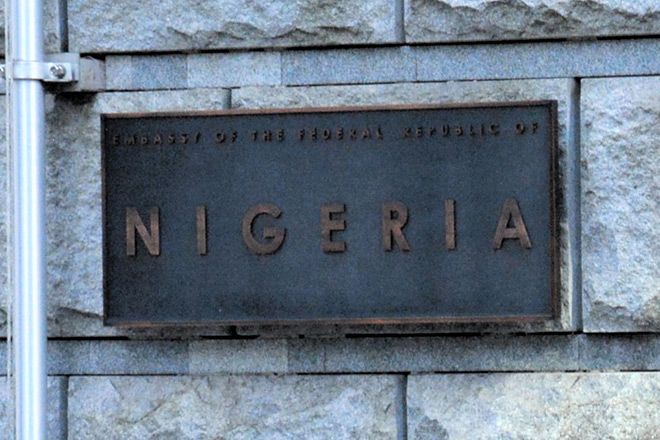
After confusion, Nigeria deletes ‘special Japanese visa’ claim
August 28, 2025
Fearing Europe-style rifts, Japan weighs tighter immigration
August 29, 2025
Japan to invest $30 billion in Africa to develop human resources
August 28, 2022
False postings on X about typhoon, heavy rain irk Tokyo officials
September 16, 2024











A peek through the music industry’s curtain at the producers who harnessed social media to help their idols go global.

A series based on diplomatic documents declassified by Japan’s Foreign Ministry

Here is a collection of first-hand accounts by “hibakusha” atomic bomb survivors.

Cooking experts, chefs and others involved in the field of food introduce their special recipes intertwined with their paths in life.

A series about Japanese-Americans and their memories of World War II



