THE ASAHI SHIMBUN
August 13, 2025 at 15:21 JST
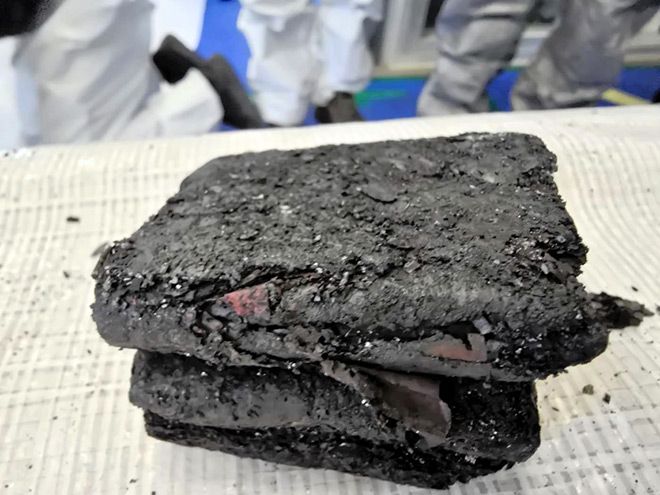
 A waste processing facility in Tokyo was destroyed in May by a fire caused by improperly discarded lithium-ion batteries. (Provided by Takatoshi Co.)

A recent spate of fires caused by lithium-ion batteries that were improperly discarded prompted the industry ministry on Aug. 12 to add three product categories to items required to be recycled.
The new government policy will require manufacturers and importers of power banks, mobile phones and heated tobacco devices to collect and recycle their used products, starting in April 2026.
Under the new rules, companies manufacturing or importing the targeted items will be legally obligated to establish systems for collection and recycling.
Businesses that fail to comply may face warnings or fines. While consumers will not be penalized, they will be encouraged to return used products to retailers or municipal collection centers.
Widely used in a range of electronic devices, lithium-ion batteries can ignite or explode if damaged or mishandled. Improper disposal has led to thousands of incidents across the country.
In one high-profile case, a fire broke out in a waste management facility near Tokyo’s Haneda Airport on May 23. The blaze disrupted airport operations, temporarily forcing the closure of one of its four runways.
An investigation revealed that the fire was likely caused by three lithium-ion batteries that had been crushed in a shredder.
The facility, owned by Takatoshi Co., remains closed, and its restart could take more than a year and cost billions of yen.
The company's president, Megumu Takahashi, reported that staff routinely discovered hundreds of discarded batteries each month and had already been dealing with small fires several times a month.
According to the Environment Ministry, there were more than 21,000 cases of fires or smoke incidents at waste facilities nationwide caused by lithium-ion batteries in fiscal 2023--an average of 60 incidents per day.
Current recycling laws cover items such as personal computers and rechargeable batteries. However, power banks and batteries embedded in devices have so far fallen outside regulatory requirements.
The government also is considering adding other small electronics, such as handheld fans, to the list in the future.
In addition, manufacturers of cordless vacuum cleaners and electric shavers may be required to redesign products to allow for easier battery removal.
Reiko Futagi, a senior official at the Tokyo Industrial Waste Association and a former victim of a battery-induced fire at her company, stressed the importance of consumer awareness.
"Unless users understand the risks, improper disposal will continue," she warned, urging improved communication and labeling at the point of purchase to prevent accidents.
(This article was compiled from reports by Satoshi Shinden and Keitaro Fukuchi.)





A peek through the music industry’s curtain at the producers who harnessed social media to help their idols go global.

A series based on diplomatic documents declassified by Japan’s Foreign Ministry

Here is a collection of first-hand accounts by “hibakusha” atomic bomb survivors.

Cooking experts, chefs and others involved in the field of food introduce their special recipes intertwined with their paths in life.

A series about Japanese-Americans and their memories of World War II