By SAORI KURODA/ Staff Writer
July 31, 2025 at 18:23 JST
 Lawyers supporting former followers of the former Unification Church speak at a news conference in Tokyo on July 30. (Saori Kuroda)

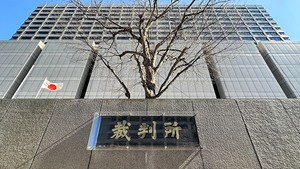
A Tokyo court has approved the provisional seizing of land housing the former Unification Church’s Japanese headquarters, a key step toward allowing former followers to reclaim large donations made to the religious group.
A legal team that supports victims of the Family Federation for World Peace and Unification's fund-raising tactics announced the development at a news conference on July 30.
The Tokyo District Court issued the ruling on July 18 in response to a request by 10 women in their 50s to 80s who are former members of the religious organization.
The women claim to have collectively lost 227 million yen ($1.52 million) to the former Unification Church, through what they describe as exploitative donation extraction practices.
The court order prevents the organization from selling its property in Tokyo’s Shibuya Ward, effectively freezing the asset while legal proceedings are ongoing.
However, activities at the headquarters may continue as usual.
The land, located in the upscale Shoto district, is estimated to have roughly the same value as what the 10 women are seeking in damages.
The women’s legal team warned of a growing risk that the group could hide or transfer assets, since the government-ordered dissolution of the church could be finalized as early as this year.
“Given the high risk of asset concealment, securing the land where the headquarters stands—a symbol of the organization—is highly significant,” lead attorney Susumu Murakoshi said at the news conference.
The seizure order is part of a broader legal campaign.
Since 2023, the legal team has been engaged in collective negotiations and mediation with the church, involving roughly 200 victims and total compensation claims amounting to 6 billion yen.
The Tokyo District Court issued a dissolution order against the religious group in March, citing its alleged harm to public welfare.
The case is currently under review at the Tokyo High Court. If the dissolution order is upheld, the group could lose its legal status as a religious organization and its ability to retain property.
This raises concerns that the group may try to move its assets to affiliated entities beforehand.
The church has expressed regret over the court’s provisional seizure order, arguing that it has been sincerely cooperating in mediation talks.
Church President Tomihiro Tanaka said the organization will consider accepting the seizure or depositing a court-designated amount to avoid it.
The church, long known for its manipulative financial practices, came under renewed scrutiny following the 2022 assassination of former Prime Minister Shinzo Abe, who had political ties to the group.
The suspected killer claimed that his family was financially ruined by the church, which his mother, a devoted follower, made major donations to.

Lawyers urge court to dissolve Unification Church
September 5, 2023
State eyes court order to dissolve the Unification Church
September 3, 2023
Court orders Unification Church demise over donations
March 25, 2025
Insiders: Orders to dissolve had limited effects on Aum, Myokakuji
October 16, 2023
Court: Church’s civil wrongs may be considered violations of law
March 27, 2024
Compensation to church victims no closer after dissolution order
March 26, 2025














A peek through the music industry’s curtain at the producers who harnessed social media to help their idols go global.

A series based on diplomatic documents declassified by Japan’s Foreign Ministry

Here is a collection of first-hand accounts by “hibakusha” atomic bomb survivors.

Cooking experts, chefs and others involved in the field of food introduce their special recipes intertwined with their paths in life.

A series about Japanese-Americans and their memories of World War II



