By KEN SAKAKIBARA/ Correspondent
July 22, 2025 at 15:28 JST
 Japan’s chief trade negotiator with the United States, Ryosei Akazawa, speaks to reporters on July 21 in Washington. (Ken Sakakibara)
WASHINGTON—Japan’s chief trade negotiator with the United States has dismissed concerns that his government’s latest electoral setback would weaken Tokyo’s position in ongoing tariff negotiations with Washington.
Speaking to reporters here on July 21 during his eighth visit for the trade talks, Ryosei Akazawa emphasized the importance of national interest over domestic political outcomes.
“This is a negotiation about our national interest,” Akazawa said. “Whether we win or lose an election is fundamentally unrelated to this process.”
His remarks follow Japan’s Upper House election on July 20, in which the ruling coalition led by his Liberal Democratic Party lost its majority.
The development raised questions about the administration’s political leverage in critical international negotiations.
Akazawa is expected to hold talks with U.S. Treasury Secretary Scott Bessent.
The bilateral talks have intensified ahead of an Aug. 1 deadline set by President Donald Trump, who has announced plans to impose a 25 percent tariff on Japanese goods if no agreement is reached.
Akazawa signaled optimism, stating that both sides share a mutual desire to strike a deal before the deadline.
“There is a strong will on both the Japanese and American sides to come to some form of agreement,” he said.
Bessent, appearing earlier on CNBC, sidestepped questions about whether the Japanese election results would impact trade negotiations.
“Our priorities are not the internal workings of the Japanese government,” he said. “Our priorities are getting the best deal for the American people.”
Akazawa kept his tone diplomatic in responding to Bessent’s comments.
“He is, after all, a Cabinet member of the ‘America First’ Trump administration,” he noted. “It’s only natural that he would say that.”
“We aim to find a common ground that protects the interests of both nations,” he added.
Talks have stalled over Japan’s request for the reduction of tariffs on automobile exports, a sector that has long been a source of tension in U.S.-Japan trade relations.
Trump has repeatedly called the current trade balance unfair, in particular regarding cars and agricultural products.

Ishiba plans next step after ‘frank and constructive’ talks with Trump
April 17, 2025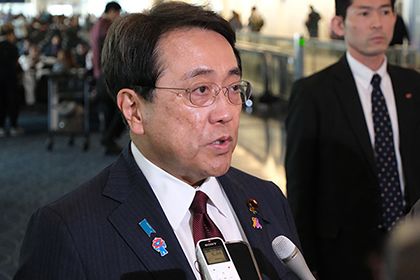
Trump reports 'big progress' in tariff talks with Japanese officials
April 17, 2025
ANALYSIS-Yen, BOJ's rate policy may remain focus in Japan-US trade talks
April 26, 2025
Trump jumps in on tariff talks with Japanese officials
April 17, 2025
Ishiba ally to negotiate tariff exemptions from U.S. counterparts
April 11, 2025
Japan Finance Minister Kato ‘deeply concerned’ over Trump tariff impact
April 18, 2025











A peek through the music industry’s curtain at the producers who harnessed social media to help their idols go global.

A series based on diplomatic documents declassified by Japan’s Foreign Ministry

Here is a collection of first-hand accounts by “hibakusha” atomic bomb survivors.

Cooking experts, chefs and others involved in the field of food introduce their special recipes intertwined with their paths in life.

A series about Japanese-Americans and their memories of World War II



