March 7, 2025 at 14:21 JST
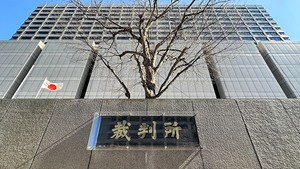
 The Supreme Court in Tokyo’s Chiyoda Ward (Asahi Shimbun file photo)
The Supreme Court has acquitted two former top executives of Tokyo Electric Power Co. (TEPCO), which operates the crippled Fukushima No. 1 nuclear power plant, absolving them of criminal liability for the 2011 catastrophic triple meltdown.
In its March 5 decision, the court ruled that a major tsunami, capable of causing a severe accident at the Fukushima plant, was not foreseeable. This judgment, delivered in the stringent context of a criminal trial requiring airtight proof, falls short of being thoroughly persuasive.
Although this verdict resolves the issue of criminal liability for the nuclear disaster, it is crucial to reaffirm that TEPCO retains substantial responsibilities, including compensating victims, decommissioning the reactors and maintaining a safety-first approach in its nuclear activities.
The top court upheld the acquittal of two defendants, Ichiro Takekuro and Sakae Muto, finding them not guilty of professional negligence resulting in death and injury related to the March 11, 2011, accident.
The court dismissed an appeal from court-appointed prosecutors who challenged the lower court's decision to acquit the two individuals, thereby confirming their exoneration.
The central question was whether the utility's former management could have anticipated a tsunami exceeding 10 meters. The court-appointed attorneys noted that by 2008, TEPCO's field operations had assumed the possibility of a maximum tsunami of 15.7 meters, based on a long-term national seismic evaluation.
A plan to implement protective measures against such a towering tsunami had been established. Although these plans were presented at meetings attended by the defendants, the execution of these measures was subsequently delayed.
However, the Supreme Court's decision indicated that the long-term seismic evaluation lacked substantial factual support and solid evidence, and it failed to provide reliable information clearly demonstrating the realistic possibility of a tsunami exceeding 10 meters.
Acknowledging that halting operations at the Fukushima No. 1 plant prior to the earthquake was the only viable method to prevent the accident, the lower courts noted that the long-term evaluation did not possess enough reliability to warrant a mandated shutdown in anticipation of such a tsunami.
The Supreme Court upheld this perspective.
In criminal trials, where the state aims to penalize individuals, the presumption of innocence is a principle and it is a matter of course that stringent proof is necessary.
Bu the trial commenced following a prosecution inquest panel's review, which twice determined that the executives should stand trial.
This backdrop prompts further scrutiny on whether the trial adequately addressed the accountability for an unprecedented disaster and whether the explanations offered were thoroughly convincing.
At its core, natural disasters such as earthquakes are inherently unpredictable. In situations that could lead to devastating consequences such as a nuclear accident, it is imperative to utilize the most current knowledge and, when opinions vary, to prioritize safety in implementing preventive measures.
For example, using the same long-term evaluation, the Japan Atomic Power Co.’s Tokai No. 2 nuclear plant had been proactive in enhancing tsunami countermeasures, including waterproofing essential facilities to mitigate accident risks.
The top court decision underscores the risk perceptions that were prevalent during an era dominated by the myth of nuclear safety. The acquittal of individual executives should not lead to overlooking TEPCO's responsibilities or the critical lessons from the accident.
Those in the nuclear industry must adhere to stringent safety standards, ensuring that complacency has no place in their operational ethos.
--The Asahi Shimbun, March 7









A peek through the music industry’s curtain at the producers who harnessed social media to help their idols go global.

A series based on diplomatic documents declassified by Japan’s Foreign Ministry

Here is a collection of first-hand accounts by “hibakusha” atomic bomb survivors.

Cooking experts, chefs and others involved in the field of food introduce their special recipes intertwined with their paths in life.

A series about Japanese-Americans and their memories of World War II



