By MAKI OKUBO/ Senior Staff Writer
June 27, 2023 at 06:00 JST
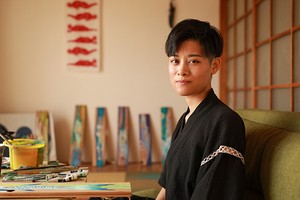
 “What’s important is not how you look related by blood,” says Sachiko Ishizuka, in Tokyo’s Chuo Ward on May 1. “I think it should be a relationship in which you and your parents can both feel that it will remain unchanged no matter what happens.” (Photo by Maki Okubo)
Sachiko Ishizuka was 23 years old when she got the shock of her life. It was when she learned that her father, who was suffering from a genetic disease at the time, was not biologically related.
Her mother went on to tell her that she was conceived through sperm donation at a university hospital in Tokyo but had no idea who the donor was.
Ishizuka, now 44, felt she had been deceived by her parents and her whole life was based on a lie.
She couldn’t shake off the thought and found herself crying all the time. She left home soon after that.
Artificial insemination using donated sperm has been legal in Japan since 1948.
It is believed that more than 20,000 children have been born in Japan through artificial insemination using sperm from donors.
While doing research, Ishizuka found out that members of a health ministry committee were discussing the issue.
But she also learned that the committee members found no fault with artificial insemination using donated semen because donors were kept anonymous and children were not informed about the treatment.
Ishizuka began to harbor deep resentment toward society and medical professionals for underestimating the issue.
“It’s all about getting mothers pregnant and letting them have children,” Ishizuka said. “I was annoyed by such irresponsibility.”
She set up a website to share her thoughts while working for a company.
Ishizuka also received criticism from online users who said she should be thankful to her parents.
In 2005, Ishizuka founded a self-help group with two others who were also born through donated sperm because they needed a forum to talk about the issue.
While national debate on the issue has made little progress, Ishizuka and others founded Donor Link Japan late last year.
The group aims to help connect individuals born through donated sperm with their donor fathers, as well as their half-siblings with the same donors but different mothers.
“You never know how important it is for people like us to know our origins, and how much we seek the information,” she said. “We want people to listen to us more.”










A peek through the music industry’s curtain at the producers who harnessed social media to help their idols go global.

A series based on diplomatic documents declassified by Japan’s Foreign Ministry

Here is a collection of first-hand accounts by “hibakusha” atomic bomb survivors.

Cooking experts, chefs and others involved in the field of food introduce their special recipes intertwined with their paths in life.

A series about Japanese-Americans and their memories of World War II



