THE ASAHI SHIMBUN
December 18, 2025 at 12:54 JST
 Prime Minister Sanae Takaichi at a news conference on Dec. 17 (Takeshi Iwashita)
Prime Minister Sanae Takaichi reaffirmed her policy of seeking dialogue with China amid the intensifying confrontation with Beijing sparked by her remarks about Japan responding to a Taiwan contingency.
“Communication is important exactly because there are pending issues and challenges,” Takaichi told a news conference after the close of the extraordinary Diet session on Dec. 17. “We remain open at all times to dialogue with China.”
Takaichi reiterated that her Diet remarks in November do not change the government’s long-standing position, adding that Japan will patiently and persistently explain it to China and the international community.
“China is an important neighbor for Japan, and we need to build a constructive and stable relationship,” she said.
Speaking about the compilation of the initial budget proposal for the next fiscal year, Takaichi emphasized her commitment to pursuing growth-oriented policies.
“We will build a strong economy through strategic fiscal spending,” she said.
Takaichi said she intends to promote “crisis management investment,” a framework for joint public-private investments in areas such as economic security, to drive economic growth.
At the same time, she underscored fiscal discipline, mindful of growing market concerns about worsening fiscal conditions, as evidenced by rising long-term interest rates.
“We will set clear priorities across the overall budget and ensure it can secure market confidence,” she said.
Touching on the supplementary budget for the current fiscal year, which was passed during the extraordinary Diet session, Takaichi said her administration has been able to present a certain direction toward achieving a strong economy and robust diplomacy and security.
“What is needed is not excessive austerity that weakens national strength but proactive fiscal policy that strengthens it,” she said.
Takaichi’s Liberal Democratic Party and its junior coalition partner, Nippon Ishin (Japan Innovation Party), agreed on Dec. 16 to abandon plans to pass a bill to reduce the number of Lower House seats by 10 percent during the extraordinary Diet session.
At the Dec. 17 news conference, Takaichi said the government aims for passage during the ordinary Diet session next year by seeking the understanding of opposition parties.
Turning to the management of her administration, which falls short of a majority in the Upper House, the prime minister said, “Our determination to work for the nation and its people based on the coalition agreement with Nippon Ishin remains unwavering.”
As for the possibility of expanding the coalition to include other parties, she refrained from commenting, saying it also depends on the intentions of the other side.
Asked about the possibility of dissolving the Lower House for a snap election, Takaichi said, “With a mountain of tasks that must be tackled right in front of us, I have no time to even think about dissolution.”

Takaichi zeroes in on cost of living, scraps cash handout
October 22, 2025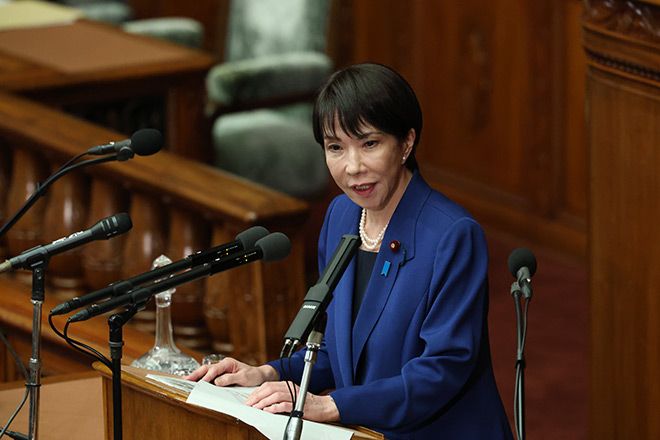
Takaichi pledges to build strong economy with fiscal stimulus
October 24, 2025
Economic, diplomatic fears rise with Japan in political limbo
October 14, 2025
Takaichi to become Japan’s first female prime minister
October 4, 2025
3 independents join LDP bloc to reach Lower House majority
November 28, 2025
Supplementary budget bill likely to pass Diet with DPP support
December 10, 2025








A peek through the music industry’s curtain at the producers who harnessed social media to help their idols go global.

A series based on diplomatic documents declassified by Japan’s Foreign Ministry

Here is a collection of first-hand accounts by “hibakusha” atomic bomb survivors.

Cooking experts, chefs and others involved in the field of food introduce their special recipes intertwined with their paths in life.

A series about Japanese-Americans and their memories of World War II



