By MASAFUMI KAMIMURA/ Staff Writer
December 11, 2025 at 18:07 JST
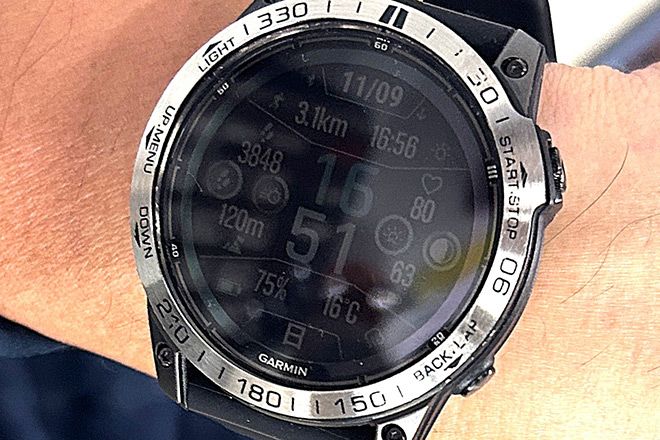 The GPS watch that recorded a hiker's movements when he was attacked by a brown bear on Mount Rausu in Hokkaido’s Shiretoko Peninsula on Aug. 14 (Masafumi Kamimura)


At a wake in northern Japan, an acquaintance of the deceased revealed a secret to the bereaved parents.
Their son and his girlfriend planned to marry, but he was killed in a bear attack before he could deliver the happy news to them.
The information added another layer of shock and sadness for the parents.
The acquaintance, the last person to see their son alive, on Mount Rausu in Hokkaido, was the one who had told them about the brown bear attack.
They had to travel to Japan’s northernmost main island from the Kansai region to identify the mutilated remains of their son.
The parents also received their son’s GPS watch, which gave an indication of what he went through in his final, harrowing moments.
But they agreed to share the horrific details to The Asahi Shimbun, motivated by their wish that “we don’t want another victim like our son.”
DRAGGED INTO THE BRUSH
Shinobu Sota, 60, and his wife received their son’s watch from Hokkaido police.
The device uses satellite signals to log routes and distances, and it can monitor heart rates.
It showed erratic movements around 11 a.m. on Aug. 14, when their son and the acquaintance were descending from the 1,661-meter summit of Mount Rausu in Hokkaido’s Shiretoko Peninsula.
The son was about 200 meters ahead of his friend near an area known as the “560-meter rocky peak.”
The acquaintance told Sota that at that point on the mountain, he suddenly heard a “terrible voice” that didn’t sound like the son.
As the acquaintance moved closer, he heard a sound from down the slope.
He called out, “Are you OK?”
A cry came back, pleading for the acquaintance to “help me.”
The friend rushed down the slope and saw a brown bear dragging the man into bushes.
The acquaintance tried to use bear repellent spray he was carrying, but it was ineffective. It was not a model designed for brown bears, and only a small amount remained inside.
He never saw his hiking companion again.
BODY CARRIED IN MORNING
According to the GPS watch, the son suddenly deviated from the hiking trail and went down a forested slope.
In an area of thick brush, the watch trembled minutely and then repeatedly circled and passed over the same spot.
The watch also showed that the son’s heart stopped beating about 100 to 130 meters from the trail. It is believed he died there.
The watch remained in the same spot all night.
However, it began to move again at around 9 a.m. the next morning, traveling several hundred meters through the brush.
This suggests the brown bear had been dragging the man’s body.
AFTERMATH AND DISCOVERY
Later on Aug. 15, a search and rescue team found a mother bear dragging the body of the man in her mouth. She was with two cubs.
Hunters on the team killed the three bears.
Also on that day, the man’s parents arrived in Shari town, where the attack occurred.
Officials explained to them that a “do-manju” (earth mound) was found about 100 meters from where the bears were killed.
Brown bears have a habit of burying and hiding food they cannot finish, and traces of the man’s remains were uncovered in the mound.
BODY UTTERLY TRANSFORMED
At the Shari Police Station, an officer led the parents to their son’s ravaged body wrapped in a body bag.
“You may see him now, but please look only at his face. It would be better not to see below the neck,” the officer said.
However, the father, Sota, remained there alone and asked police to open the bag.
All the dirt had been removed from the body, Sota said.
After the body was returned to the parents on Aug. 16, they held a wake at a funeral hall in the town.
Only three people attended: the parents and the acquaintance.
From the hall, the parents spoke remotely to their son’s girlfriend for about two hours.
At the “farewell gathering” held on Sept. 21, about 200 friends attended. The mourners described him as “positive and hardworking,” and said he had earned eveyone’s respect.
The son was a company employee living in Tokyo.
During his student years, he belonged to an outdoor club where he participated in activities like mountaineering and cycling.
An avid climber, he had conquered such peaks as the difficult Gendarme (3,163 meters) on Mount Oku-Hotakadake in the Northern Alps and Mount Kinabalu (4,095 meters) in Malaysia.
Mount Rausu was his 46th of Japan’s 100 Famous Mountains.
However, his well-trained body “had become so thin” by the brown bear, Sota recalled.
A FATHER’S PLEA
The attack occurred when the Shiretoko brown bear countermeasures liaison council, comprising national and local government bodies, was considering a “voluntary restriction on the use of the hiking trail” on Mount Rausu.
This was because brown bears exhibiting problematic behavior had been appearing on trails there.
After the bear mauling was reported on Aug. 14, false information circulated online, such as claims that the son was attacked because he was “trail running” in light gear.
In truth, the son was moving at his normal brisk pace, but he was not running.
Shiretoko, a World Natural Heritage Site, is one of the world’s most densely populated brown bear habitats. It is also Japan’s most advanced field for brown bear research.
The bear that attacked the man had an identification code of “SH,” for which there were extensive monitoring records. The bear had been sighted almost every year since 2014.
Sota questioned why authorities allowed the bear to roam in the area despite the repeated sightings.
“Why was it left alone?” he asked. “A brown bear is not a pet.”
He said the only way to have prevented the incident was to close the hiking trail or kill the bear.
“If some kind of measure is not taken, the exact same thing will happen again,” he said.
Sota reflected on the ripple effect of the tragedy: “His girlfriend, who dreamed of a happy marriage, saw her life shattered. The same goes for his climbing companion. And for our family.”

Hiker found dead after bear attack on Mount Rausu in Hokkaido
August 15, 2025
Dog-killing bear ‘RT’ killed after 4 years of terror in Hokkaido town
August 7, 2022
Mountain climber attacked by bear falls off cliff to his death
December 16, 2022
Fed by tourists, brown bears in Shiretoko lose fear of humans
August 8, 2025
With no salmon, brown bears starve, cubs die in Shiretoko
September 25, 2023













A peek through the music industry’s curtain at the producers who harnessed social media to help their idols go global.

A series based on diplomatic documents declassified by Japan’s Foreign Ministry

Here is a collection of first-hand accounts by “hibakusha” atomic bomb survivors.

Cooking experts, chefs and others involved in the field of food introduce their special recipes intertwined with their paths in life.

A series about Japanese-Americans and their memories of World War II



