By AMANE SHIMAZAKI/ Staff Writer
December 12, 2025 at 07:00 JST
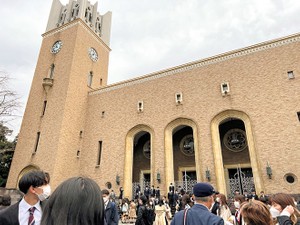
 A university entrance exam venue in February 2022 (Asahi Shimbun file photo)
Only four of 120 private Tokyo universities and colleges exempt applicants from paying an admissions confirmation deposit often required regardless of whether they actually enroll, according to a study.
The findings, released Nov. 18 by the nongovernmental organization "Entrance deposit research project," revealed that these institutions allow new students to split enrollment fees into installments or defer payments, among other options.
The aim is to reduce the financial burden on young people, as they often have no choice other than paying this fee, even to colleges and universities they end up not attending.
Although the education ministry previously issued a notice urging private schools across Japan to lighten the economic load of “double payment” for those accepted, there have been no significant changes.
“The current circumstance could not only seriously impact household budgets but also drive students to the point of having no choice but to give up taking entrance exams,” said a representative of the citizen group in reference to the study.
The NGO consists primarily of young people who hope to create a society where anyone can choose their future path on their own, regardless of their financial situation.
The study results are based on whether the applicant guidelines of the 120 private universities and colleges in the capital include descriptions of refunds, deferrals, installment payments or other specialized measures regarding enrollment fees.
JUGGLING DATES
According to an estimate by the education ministry, 150,000, or 23.5 percent, of all higher education applicants pay these enrollment confirmation fees to schools they eventually decline to attend.
The NGO believes that enrollment confirmation fees paid by applicants who later decide not to enroll total to as much as 35.5 billion yen ($228 million); the estimate factored admissions deposits costing 240,000 yen on average as well as the education ministry’s prediction concerning enrollees.
Students in Japan are expected to make admission deposits to confirm their intent to enroll after successfully passing entrance exams.
This system means applicants may end up paying fees to schools they do not ultimately attend due to varying timing of payment deadlines and acceptance announcements at each institution.
For example, applicants may find themselves in a situation where the payment deadline for one of their backup choices falls before their top pick announces if they were accepted.
With this in mind, the education ministry in June issued a notice requesting college and university heads to show due consideration, such as allowing payments in installments.
The ministry appears to be expecting schools to create dedicated frameworks where individuals who ultimately decline an admission offer can pay only part of the deposit or later receive a refund.
Since the Supreme Court issued a landmark ruling in 2006 on burdensome enrollment costs, it has become common practice for these fees to be nonrefundable.
The top court then determined they represent reasonable “compensation for successful applicants to secure the status to enroll at universities and colleges” in the future, and that school operators are not obligated to give back the deposits.
Educational institutions seemingly believe the same based on a joint survey by The Asahi Shimbun and the Kawaijuku Educational Institution.
The poll, held over the summer, asked colleges and universities nationwide about their views on enrollment deposits concerning individuals who chose not to attend after being accepted. Results cover the 612 usable responses of the 777 schools contacted.
The most common view, at 62 percent, was that the fees “should not be returned” at all. They noted, for example, that the deposits are essential for admission procedures for all successful applicants, even if some ultimately decide to study elsewhere.
Seventeen percent thought the deposits “should be paid back only under certain conditions.”
Respondents who approved of “partial refunds” accounted for 12 percent and just 6 percent considered “full refunds” appropriate.

70% of new type ‘professional universities’ under-enrolled
May 28, 2025
Online university enrolling up to 5,000 students will start in 2025
June 2, 2023
Enrollment quotas not met at 53.3% of private universities
August 31, 2023
Junior colleges pushed to close, impacting rural area students
April 27, 2025
Junior highs test for new students based on dance, drama prowess
March 6, 2025













A peek through the music industry’s curtain at the producers who harnessed social media to help their idols go global.

A series based on diplomatic documents declassified by Japan’s Foreign Ministry

Here is a collection of first-hand accounts by “hibakusha” atomic bomb survivors.

Cooking experts, chefs and others involved in the field of food introduce their special recipes intertwined with their paths in life.

A series about Japanese-Americans and their memories of World War II



