THE ASAHI SHIMBUN
November 6, 2025 at 16:52 JST
 Miyagi Governor Yoshihiro Murai speaks at a news conference at the prefectural government office in Sendai on Nov. 5. (Ryo Oyama)
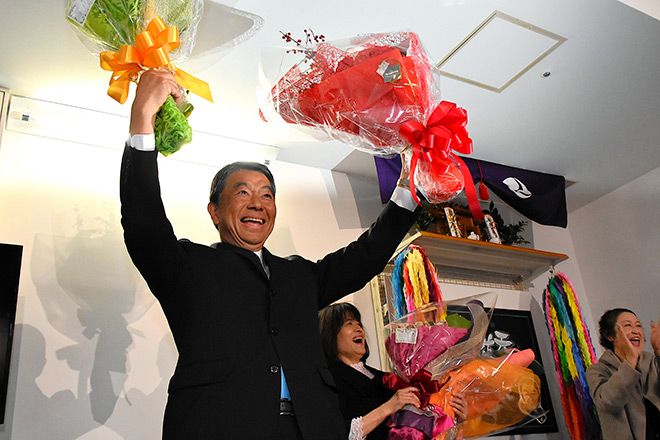
Fresh off winning a sixth term, Miyagi Governor Yoshihiro Murai is eager to establish an organization to “fact-check” information after being the target of a misinformation campaign.
The move is aimed at combating rampant online disinformation spread during election campaigns, such as seen in the Miyagi prefectural gubernatorial race.
However, the proposal highlights a long-standing concern: the validity of governments and political parties as arbitrators of the truth, as experts question how best to address the issue.
FIGHTING DISINFORMATION
During the campaign in the Miyagi governor's election held on Oct. 26, false and misleading information spread on social media.
For example, posts claiming Murai was promoting a private mega-solar project, a venture he has clearly stated he opposes, were widely circulated.
At a news conference on Oct. 27, Murai said that he “suffered from false information during the election campaign.”
He further disclosed that he had instructed senior prefectural officials to consider creating an organization “for the prefecture to conduct fact-checks from a third-party standpoint.”
At another news conference on Nov. 5, when asked if independence could be guaranteed, the governor said, “I am staying away from it; officials are discussing it while consulting with various parties, such as lawyers and the prefectural police.”
When asked if it would constitute an abuse of administrative power, he said, “I want to consider it carefully, including the fact that such opinions exist.”
He also said that if it is ultimately judged too difficult for the prefecture to undertake, he would ask the central government instead.
POLITICAL PARTIES JOIN THE TREND
Measures against false and misleading information online are being examined by an expert panel at the communications ministry.
When “promoting fact-checking” was included in the panel’s draft of countermeasures in September, a series of concerns were voiced over "official fact-checking."
The final text explicitly stated that “the independence of fact-checking organizations from government, public institutions and other bodies should be ensured.”
Meanwhile, political parties have increasingly embraced fact-checking.
In 2021, Osaka Ishin no Kai opened a social media account named “Fact-checker.”
It targeted posts critical of the party or the administration regarding its response to the COVID-19 pandemic, among other issues.
In June, ahead of the Tokyo metropolitan assembly election, Komeito introduced “AI fact-checker,” software developed by another party, Team Mirai.
The Democratic Party for the People presented answers to questions about its policies that arose on social media as “Policy fact-checks” on a special website for the July Upper House election.
In a report summarizing the Upper House election, the Liberal Democratic Party wrote that it would “establish a system to conduct fact-checking on a routine basis to respond to opposition party claims and to disinformation and misinformation that spreads online.”
INDEPENDENCE QUESTIONED
In response to these moves, the nonprofit organization FactCheck Initiative Japan (FIJ) issued a statement saying that “the use of the term ‘fact-checking’ by political parties goes against internationally established principles.”
Citing the principle of “non-partisanship and fairness” in the code of the International Fact-Checking Network (IFCN), it stated that such activities “should be clearly distinguished from third-party fact-checking.”
Murai has stressed that the envisioned prefectural organization would operate from a “third-party, neutral standpoint.”
However, Shiro Segawa, project professor at the University of Tokyo and chairman of FIJ, sees it differently.
“As long as the prefecture is involved in its establishment, even if it is in the form of outsourcing, the prefecture’s intentions can easily influence it. Its independence and third-party nature would be deemed low,” he said.
Kenta Yamada, a professor of constitutional law at Senshu University, said, “Fact-checking is not something that public institutions or politicians should be doing in the first place.”
He added, “Public authorities are the target of fact-checking. If they become the ones doing the checking and deciding what is correct or incorrect, it could lead to the manipulation of information.”
He also worries about how information deemed “incorrect” would be handled.
“If it is deleted, or if penalties are imposed on the person who posted it, it would endanger freedom of expression,” he said.
(This article was written by Shiori Tabuchi and Ryo Oyama.)
Miyagi governor re-elected after smeared by ‘false information’
October 27, 2025
How Taiwan beat back disinformation and preserved the integrity of its election
January 30, 2024
Hyogo governor candidates battle each other, false info online
November 15, 2024
Japanese group joins Meta to fact-check social media posts
September 3, 2024
Asahi guidelines to check veracity of social media posts in elections
June 16, 2025
Miyagi halts Muslim burial site plan amid pushback
September 19, 2025










A peek through the music industry’s curtain at the producers who harnessed social media to help their idols go global.

A series based on diplomatic documents declassified by Japan’s Foreign Ministry

Here is a collection of first-hand accounts by “hibakusha” atomic bomb survivors.

Cooking experts, chefs and others involved in the field of food introduce their special recipes intertwined with their paths in life.

A series about Japanese-Americans and their memories of World War II



