THE ASAHI SHIMBUN
November 6, 2025 at 17:46 JST
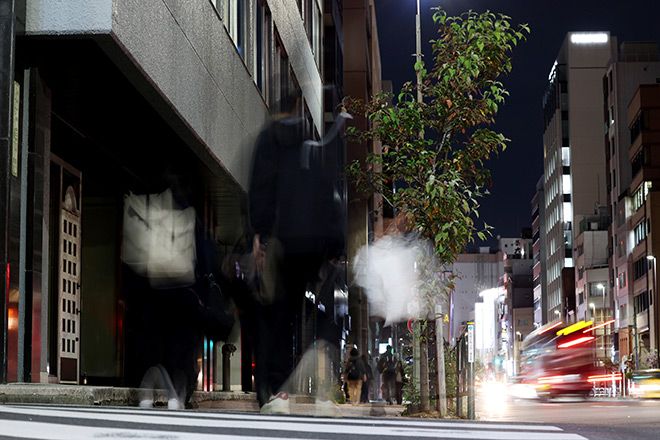 People walk in front of the building housing the massage parlor in Tokyo’s Bunkyo Ward after a police raid on Nov. 4. (Wataru Sekita)

In a case that has shocked even hardened investigators, a 12-year-old Thai girl abandoned by her mother was rescued after being forced to work at a “massage parlor” in Tokyo, police sources said.
Authorities took the girl into protective custody following her three-month ordeal, and the Metropolitan Police Department is treating the case as potential human trafficking.
Masayuki Hosono, 51, the massage shop’s manager, was arrested on Nov. 4 on suspicion of employing the girl in violation of the Labor Standards Law’s minimum working age provisions.
According to the investigative sources, the establishment in the capital’s Bunkyo Ward employed several Thai women and offered sexual services beyond massages for an additional fee.
The girl, who does not speak Japanese, came to Japan for the first time in late June with her mother, who is around 30.
Her mother left Japan in mid-July, abandoning the girl, and her whereabouts are unknown.
The two had entered the country on a short-term stay visa often issued for tourism purposes with a maximum 15-day period.
The girl was forced to work at the shop while living in a room rented by the management. She was given only a meager amount of money for food, the sources said.
The case came to light in mid-September, when the girl visited the Tokyo Regional Immigration Services Bureau to seek help.
Authorities are working to support her eventual return home, prioritizing her psychological well-being.
Police suspect an intermediary organization was involved and plan to investigate communications between the mother and the shop’s management.
“I never imagined something like this could be happening in Japan,” a senior investigator told The Asahi Shimbun.
Another said, “I cannot recall a case of human trafficking this egregious.”
On Nov. 5, a day after investigators raided the shop, a man living nearby said, “I cannot believe no one noticed that such a young child was there even though it was so close.”
In Thailand, the girl was attending a junior high school in a northern region known as “Little Switzerland” for its lush nature and cool climate, the sources said. She lived with her grandparents while her mother repeatedly engaged in migrant work, often overseas.
According to what the girl told police and other authorities, after she arrived at the airport in Japan, she went straight to the building housing the massage parlor.
Her mother told her to work there and taught her daughter how to provide sexual services to male customers, the sources said.
The girl slept in a room in the building with her mother that night, but her mother was gone the next morning.
With no one to turn to, the girl stayed in a kitchen space provided by the shop’s management and continued serving customers at the shop.
When she contacted her mother via social media saying she wanted to eat, the shop manager gave her a small amount of cash.
Her mother repeatedly promised to come and get her, but she visited her daughter only once.
The girl asked other foreign nationals around her for help to return to Thailand, but they warned her that she would be arrested because her visa had expired.
After talking to the girl, the Tokyo Regional Immigration Services Bureau contacted the MPD’s division that handles illegal sex businesses, which led to the investigation.
Under the U.N. Protocol to Prevent, Suppress and Punish Trafficking in Persons adopted in 2000, human trafficking is defined as acts such as transferring people through violence or other means for purposes that include prostitution and forced labor.
If the victim is under 18, such acts are considered trafficking even without coercive means.
According to Japan’s council to promote human trafficking countermeasures, which comprises the Cabinet Office, the National Police Agency and the Ministry of Health, Labor and Welfare, the highest annual number of victims protected by the government was 117 in 2005.
The figure dropped to 17 in 2009 but has been rising in recent years.
In 2024, there were 66 victims, 57 of whom were women. By nationality, 58 were Japanese, and the remaining eight were from the Philippines or Indonesia.
Forty-one victims were under 18.
In recent years, 60 to 90 percent of victims have been Japanese.
CRITICISM PERSISTS
Japan has long faced international criticism over human trafficking.
Although the government signed the U.N. protocol in 2002, its countermeasures were considered lagging behind other countries.
The Criminal Code was revised in 2005 to create the crime of human trafficking, which punishes acts of selling or buying people.
Last year, the government decided to introduce a new training and employment system for foreign workers to replace the Technical Intern Training Program, which has been criticized as a “hotbed of human rights violations” both at home and abroad.
Regulations have also been tightened on malicious host clubs that have forced female customers into prostitution to pay off their debts to the businesses.
Criticism of Japan’s efforts persists, however.
A report published by the U.S. State Department in 2025 said Japan imposes “insufficient” penalties, such as suspended sentences and fines, on many convicted offenders.
The report pointed out that despite identifying hundreds of children exploited in the sex industry, Japanese authorities have failed to thoroughly investigate signs of trafficking.
In 2022, the U.N. Human Rights Committee also expressed concern that Japanese penalties for trafficking-related crimes were not commensurate with the gravity of the offenses.
According to a U.N. report compiled in 2024, about 74,000 victims of human trafficking were identified worldwide in 2022. The report included data from different years in some countries.
Females, including children, accounted for 61 percent of the victims. More than 60 percent of the female victims were forced into sexual exploitation such as prostitution.
Men were often coerced into forced labor or criminal activities such as fraud.
The International Labor Organization estimated in 2021 that there were 27.6 million victims of forced labor, including sexual exploitation.
(This article was written by Natsuno Otahara, Kaho Matsuda and Jin Hirakawa.)











A peek through the music industry’s curtain at the producers who harnessed social media to help their idols go global.

A series based on diplomatic documents declassified by Japan’s Foreign Ministry

Here is a collection of first-hand accounts by “hibakusha” atomic bomb survivors.

Cooking experts, chefs and others involved in the field of food introduce their special recipes intertwined with their paths in life.

A series about Japanese-Americans and their memories of World War II



