By EMIKO ARIMOTO/ Staff Writer
November 17, 2025 at 07:00 JST
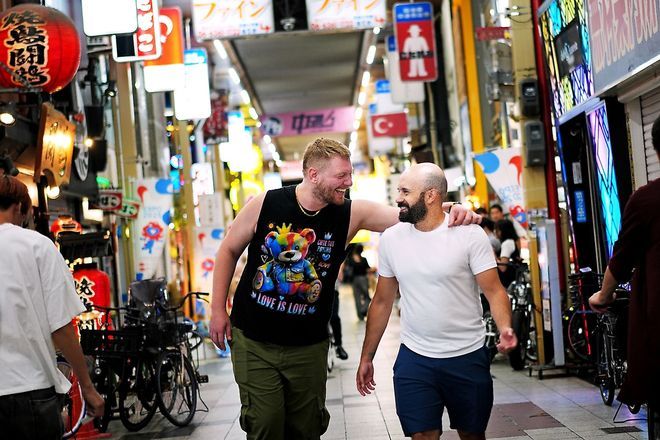 Canadians Guillaume, left, and John stroll through the Doyamacho district in Osaka’s Kita Ward on Sept. 13. (Emiko Arimoto)
OSAKA—A bar called Eagle Osaka was jam-packed with revelers speaking in various languages, including a Canadian couple who marveled at the safety of Japan.
It is one of the largest gay bars in western Japan, and it is increasingly attracting inbound LGBTQ travelers.
The global LGBTQ tourism market was worth about $218 billion (33 trillion yen), according to a survey conducted in 2018 by a European consulting firm.
Expecting the market to expand, the Osaka Convention and Tourism Bureau in 2019 opened a website to provide information on restaurants, events and other local topics that may be of interest to LGBTQ travelers.
In 2024, the bureau hosted an international general meeting in Osaka to promote comfortable travels for sexual minorities.
The gay Canadian couple, Guillaume and John, both 37, were on their first trip to Japan when they visited Eagle Osaka on a Friday night in September.
They had spent two weeks traveling to Tokyo, Mount Fuji, Kyoto and elsewhere, and described Japan as “very safe, (with) good food and a lot of culture. The people were very polite, very organized and very respectful of each other.”
After they left the bar, they strolled through a nearby shopping district with happy looks on their faces.
“With the environment increasingly improved, it seems like the number of inquiries about inbound LGBTQ tourists has grown by about five times,” said Shintaro Koizumi, an adviser to the bureau.
Koizumi offers training programs for hotel operators, travel agencies and municipal and prefectural governments around the country on preparing for and catering to the needs of LGBTQ travelers.
For example, according to Koizumi, it is important not to change a double-bed room to a twin-bed room in bookings without confirming the intention of the same-sex couple.
He also advises businesses to listen carefully to transgender customers about how they want to use bathing and toilet facilities. It is important that they clearly understand what can and what cannot be done.
“What’s important is to eliminate prejudice and create an environment where anyone, LGBTQ or not, can spend quality time,” he added.

Asia’s first Gay Games to kick off in Hong Kong, fostering hopes for wider LGBTQ+ inclusion
November 2, 2023
Thailand’s LGBTQ+ community hopeful as marriage equality bill is set to be discussed in Parliament
December 20, 2023
20 years after return to Japan, abductee can’t tell whole story
September 18, 2022
Moritomo couple lose final appeal, head to prison on fraud convictions
January 13, 2023










A peek through the music industry’s curtain at the producers who harnessed social media to help their idols go global.

A series based on diplomatic documents declassified by Japan’s Foreign Ministry

Here is a collection of first-hand accounts by “hibakusha” atomic bomb survivors.

Cooking experts, chefs and others involved in the field of food introduce their special recipes intertwined with their paths in life.

A series about Japanese-Americans and their memories of World War II



