THE ASAHI SHIMBUN
September 19, 2025 at 17:34 JST
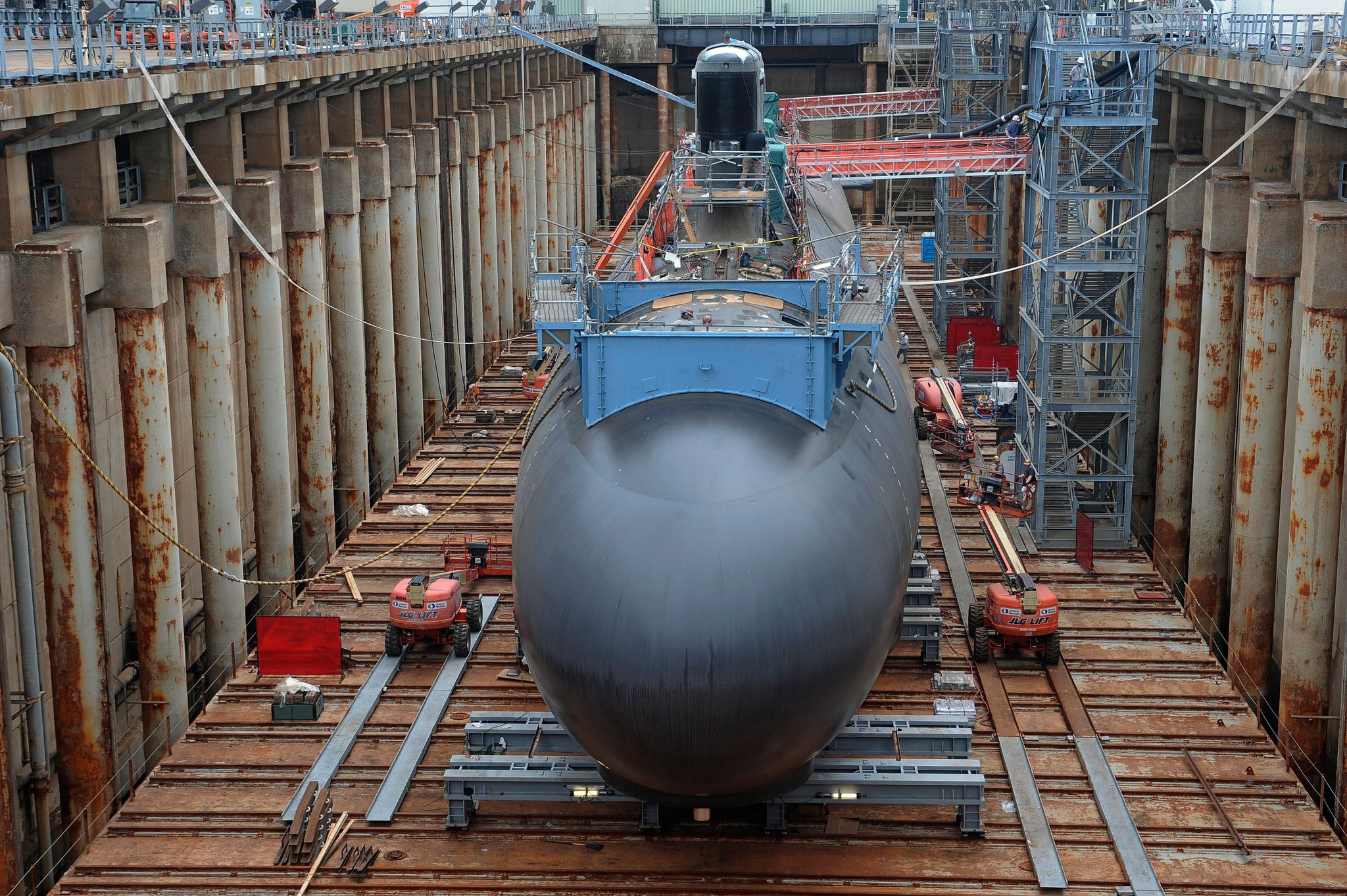
 A Maritime Self-Defense Force submarine (Asahi Shimbun file photo)
A Defense Ministry panel implicitly called for exploring nuclear propulsion for the Maritime Self-Defense Force’s state-of-the-art submarines that would be armed with vertical launching systems for counterstrike capabilities.
In a report submitted to Defense Minister Gen Nakatani on Sept. 19, the expert panel said VLS-equipped submarines should be capable of conducting “extended-range and long-duration navigation and submersion” while carrying long-range missiles.
The expert panel on fundamental reinforcement of defense capabilities emphasized the need to pursue research and technological development that includes “consideration of utilizing next-generation propulsion systems” without being constrained by conventional precedents.
Past discussions at the panel suggest that “next-generation propulsion systems” refer to compact nuclear reactors and other technologies, although the report did not mention nuclear propulsion.
Should Japan decide to introduce nuclear-powered submarines, questions could arise about consistency with the nation’s commitment to the peaceful use of atomic energy.
The panel also suggested the need to review current restrictions on arms exports.
Under the implementation guidelines for the Three Principles on Transfer of Defense Equipment and Technology, arms exports are limited to five purposes: rescue, transportation, vigilance, surveillance and minesweeping.
“It is necessary to broaden the scope of transfers by taking current realities into account and gaining public understanding,” the report said.
While exports to countries under invasion are currently limited to nonlethal equipment, the panel suggested that restrictions may be lifted when dealing with friendly nations that share common values with Japan, saying, “One possible approach is not to impose such limits.”
The proposal is expected to spark fierce debate because it would enable exports of lethal weapons to countries engaged in combat.
Touching on the current Defense Buildup Program, which sets total defense spending at 43 trillion yen ($290.7 billion) through fiscal 2027, the panel called for additional efforts, saying that further enhancement of deterrence and response capabilities is urgently needed in light of changes in the security environment.
The panel also recommended greater flexibility in the coverage period and review cycle of the Defense Buildup Program, hinting at the need for an accelerated revision.
The report warned that there is a high likelihood that China, Russia and North Korea will coordinate with one another in the event of a contingency in East Asia.
It referred to moves by NATO member states to raise defense spending targets to 5 percent of gross domestic product in response to demands from the Trump administration, which espouses an “America First” agenda.
“This should be seen as a structural transformation of the United States, and it may not prove to be a transient phenomenon,” the report said.
The expert panel was established in February 2024 based on the National Defense Strategy and other documents adopted by the government at the end of 2022.
It is chaired by Sadayuki Sakakibara, honorary chairman of Keidanren (Japan Business Federation).
The panel’s 17 members also include Shinichi Kitaoka, professor emeritus at the University of Tokyo; Kazuhisa Shimada, former vice defense minister; Shinsuke Sugiyama, former ambassador to the United States; Satoshi Morimoto, former defense minister; and Toshikazu Yamaguchi, president of the Yomiuri Shimbun Holdings.
The Defense Ministry plans to advance deliberations on fundamentally reinforcing Japan’s defense capabilities based on the panel’s report.
(This article was written by Taro Ono and Mizuki Sato.)
Republicans, Democrats alike exhort Trump: Keep security pact with Australia and U.K. alive
August 12, 2025
Nuclear submarine plan aims to give Australia strategic edge to deter China
March 10, 2023
Former Australian leader says submarine deal protects U.S.
November 10, 2021
China’s intensifying nuclear-armed submarine patrols add complexity for U.S., allies
April 4, 2023
Australia aims to protect, promote critical technologies
November 17, 2021











A peek through the music industry’s curtain at the producers who harnessed social media to help their idols go global.

A series based on diplomatic documents declassified by Japan’s Foreign Ministry

Here is a collection of first-hand accounts by “hibakusha” atomic bomb survivors.

Cooking experts, chefs and others involved in the field of food introduce their special recipes intertwined with their paths in life.

A series about Japanese-Americans and their memories of World War II



