By RYUICHIRO FUKUOKA/ Staff Writer
August 23, 2025 at 07:00 JST
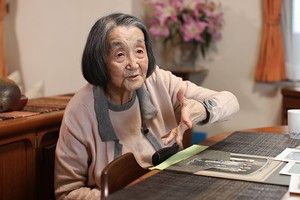
 Reiko Kanazawa, who serves as the seventh-generation "okami" proprietress of Nadaman's main restaurant Sazanka-so in Tokyo's Chiyoda Ward, poses for a photo on March 28. (Ryuichiro Fukuoka)


One day last year in early fall, an "okami" proprietress at Sazanka-so was approached by a regular customer who talked about a rumor that the revered "ryotei" would close its doors.
When asked about the Japanese-style restaurant's closure, the okami, Reiko Kanazawa, 53, smiled and replied evasively that she was unaware of the matter.
In reality, however, she had heard about the possibility.
"I kept trying to forget about it," she recalled. "I focused on dealing with customers at hand and tried to look away from the harsh reality."
Sazanka-so is the main restaurant of Nadaman Co., the operator of one of the ryotei restaurants that are representative of the country.
Situated in the garden of a luxury hotel close to the Nagatacho district in Tokyo, Japan's political nerve center, it is visited by many political and business dignitaries night after night.
VENUE OF G-7 SUMMIT BANQUET
The history of Nadaman dates to 1830 when Nadaya Mansuke opened a restaurant in Osaka.
Its cuisine offerings have been beloved by Natsume Soseki (1867-1916) and many other literary giants, as well as government and business leaders.
Sazanka-so is also renowned for hosting an official banquet during the Group of Seven summit in Tokyo in 1986, serving Prime Minister Yasuhiro Nakasone, U.S. President Ronald Reagan and other VIPs.
The restaurant chain operator became a household name when the chief of Nadaman's culinary department at the time served as the second Japanese Iron Chef on "Iron Chef," a cooking TV show that aired from 1993 to 1999.
But things began to go off the rails from about 10 years ago, according to several sources.
One of the triggers was when Asahi Breweries Ltd. acquired a majority of shares in Nadaman in 2014 and made it a wholly owned subsidiary later.
Asahi has had close ties with Nadaman since its predecessor as it delivers almost all the beers served at the restaurant chain's outlets.
At the time, Asahi explained it was aiming to gain knowledge in managing ryotei and develop more effective sales proposals for its beers.
It seemed Nadaman had its own motive.
Masayuki Kusumoto, the then-president and owner of Nadaman who was also a member of the founding family, left no heir to succeed him when he passed away in 2020.
It was rumored among employees that he was worried about the future of the company and decided to leave it in the hands of Asahi.
UNEXPECTED CHANGES
Nadaman's transition from an unlisted company ruled by the founding family to a company affiliated with a large listed company was well-received by some employees.
However, the acquisition led to unexpected changes in the kitchen, several chefs said.
One of them is executive chef Fumito Suzuki, 57, who joined Nadaman about 30 years ago and oversees the entire culinary operation.
When he was younger, there were at least 50 chefs working at each restaurant run by Nadaman.
They worked hard from early morning to late at night, battling with each other for prep chores to improve their skills.
"That was how it was to be trained at a ryotei," he recalled.
But the "company was very much in the tradition of the Showa Era (1926-1989)," as described by a source, and faced the changing times as it had to follow the government's work-style reforms.
Things have changed greatly over the past decade, according to Tetsuya Kamimura, 63, a former executive chef at Nadaman, who acts as an adviser to the company.
At around 9 p.m., the head chef at each restaurant started telling young chefs to go home while the head chef and other staff in managerial positions, as well as part-time workers, continued cooking and started clearing up the place.
Only a generation ago, young chefs practiced cooking "dashimaki-tamago" (Japanese rolled omelet) and thinly peeling radishes after the opening hours.
But after Nadaman came under the umbrella of Asahi, Nadaman, which followed the traditional apprenticeship-based training system, had no choice but to prioritize compliance as part of the work-style reforms.
Chefs were obliged to respect the Labor Standards Law, under which the general rule is to work eight hours a day.
The change itself was necessary to protect employees.
But there was also an unexpected aftermath.
Young chefs left Nadaman in droves to work at traditional "kappo" restaurants and other privately owned eateries, saying that they wanted to be free from the time constraints and receive more training.
The number of chefs working at Nadaman decreased from about 600 to 300, and the restaurant operator faced a chronic staff shortage.
The company's sales gradually decreased after peaking in the late 2000s.
As Japan's economy was dealt a severe blow in the wake of a global financial meltdown and the 2011 Great East Japan Earthquake and tsunami, companies cut down their social expenses and shifted from using Nadaman to entertain clients.
The company suffered "critical damage," as a source put it, during the COVID-19 pandemic that started affecting Japan in early 2020.
With emphasis laid on social distancing to guard against the spread of the novel coronavirus, people shied away from dining out.
Nadaman posted a net loss for five consecutive years until the business year ending in December 2023.
In July 2024, Asahi's parent company, Asahi Group Holdings Ltd., announced the sale of Nadaman after revising its business portfolio.
UNDER NEW MANAGEMENT
The management rights of Nadaman were acquired by a company that was in its 13th year in the restaurant industry at the time.
In fall 2024, shortly after it completed the acquisition, Shinji Nagao, the president of Onodera Holdings Co., attended a meeting with about 100 young employees from its group companies and asked whether they were aware of Nadaman.
Only one raised a hand.
Nagao, 46, strongly felt it was a pressing issue to raise the profile of the restaurant chain among young people.
Onodera Group Co. was originally founded in Hokkaido in 1983, serving hospital meals and operating other businesses.
The company made inroads into the restaurant industry with Sushi Ginza Onodera, a luxury sushi bar that opened in Tokyo in 2013. It currently operates 21 eateries in and outside Japan.
The sushi chain operator has bought the first bluefin tuna in the inaugural auction of the year at the Toyosu wholesale market in Tokyo for five straight years, paying around 200 million yen ($1.33 million).
The group has had a successful experience in launching a new business.
In 2021, it opened a "high-end" conveyor-belt sushi restaurant in Tokyo's posh Omotesando district.
"All employees were opposed to the rotating sushi joint at first," Nagao said, citing that they were concerned it could hurt the image of the exclusive sushi restaurant that costs at least 30,000 yen per customer.
But the new sushi bar attracted the attention of social media users and influencers for its convenience.
It not only became popular among young people, it also helped boost the recognition of its main restaurant in the Ginza district and increase sales by several times.
TARGETING SOCIAL MEDIA GENERATION
Onodera Group intends to adopt the same strategy for Nadaman.
In March, Nadaman opened its first “tonkatsu” (deep-fried pork cutlet) restaurant in Kyoto.
It also started making deliveries through Uber Eats, which would have been previously unthinkable, according to a source.
Nagao also asked the head chef of each location to develop a signature dish.
They came up with "chawan-mushi" (steamed egg custard) prepared with foie gras and truffle sauce, "kakuni" (braised pork) made with the top-shelf Tokyo-X pork and other new offerings.
The official website showcases Instagrammable photos to promote the dishes and appeal to the social media generation.
Nadaman also revised its cost structure, getting quotes for ingredients from suppliers and taking other measures.
Onodera-led reforms are embraced by some employees as a necessary step for improvement, according to a Nadaman chef.
But others are concerned that the new changes could alienate longtime patrons and spoil the name of the long-established restaurant.
Nagao brushes aside such opinions.
"If you choose to maintain the status quo, you can only go downhill," he said.
NEXT GOAL
Sazanka-so was on the verge of being demolished last autumn because of property rights issues arising from changes in the management rights.
But Nagao and others talked relevant parties out of the decision, saying that it was essential in rebuilding Nadaman.
Sazanka-so was awarded two stars by the prestigious Michelin Guide between 2011 and 2014.
But it has received a no-star rating since 2015.
Restaurant staff did not care about the honor when Sazanka-so was given its first star, a veteran chef recalled.
But things are different now.
Even high-end ryotei restaurants are affected by Michelin ratings and online reviews when attracting diners.
There are also new luxury Japanese restaurants popping up in town.
Now, when chefs and okami get together, they encourage each other, saying: "Let's get a Michelin star again."

Chef trainees learn on the job, serving dishes at lower prices
May 2, 2024
Michelin Guide Tokyo awards three stars to Sezanne
November 7, 2024
TASTE OF LIFE/ Bolognese sauce: Chef goes against convention, browns meat, amazes Italians
September 14, 2023
Michelin-starred sushi chef in Paris honors vow to dying husband
June 13, 2025







A peek through the music industry’s curtain at the producers who harnessed social media to help their idols go global.

A series based on diplomatic documents declassified by Japan’s Foreign Ministry

Here is a collection of first-hand accounts by “hibakusha” atomic bomb survivors.

Cooking experts, chefs and others involved in the field of food introduce their special recipes intertwined with their paths in life.

A series about Japanese-Americans and their memories of World War II



