THE ASAHI SHIMBUN
February 5, 2025 at 17:45 JST
 Penpa Tsering, the political leader of the Central Tibetan Administration (Takashi Ishihara)

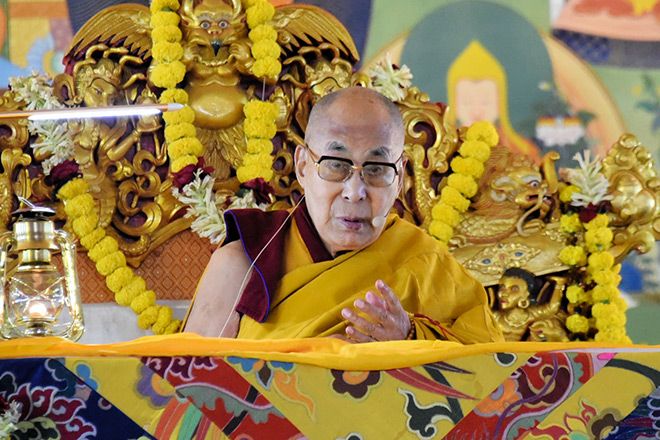
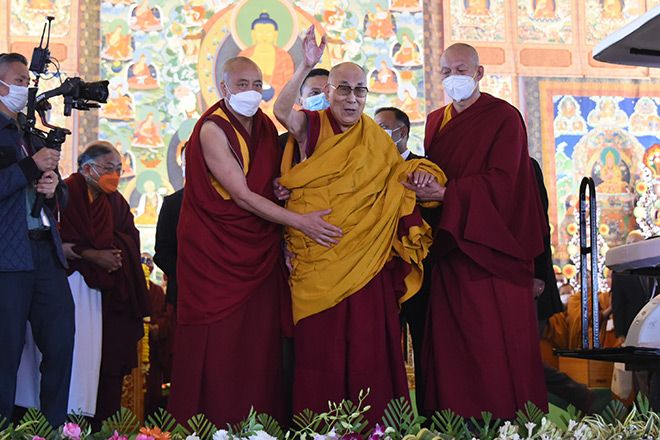
NEW DELHI—Speculation is focusing on who will succeed the 14th Dalai Lama, Tibet’s spiritual leader, who turns 90 in July.
The head of Tibetan Buddhism, who is in exile in the northern Indian city of Dharamshala, has said he will disclose his intention about his successor around the time he reaches that milestone age.
In a recent interview with The Asahi Shimbun, Penpa Tsering, the political leader of the Tibetan government in exile, said all options remain on the table about the succession.
In a break from the past, a woman may succeed the incumbent Dalai Lama, or the successor may be designated even before his death, Tsering said.
The following are edited excerpts from the interview conducted in New Delhi on Jan. 21.
* * *
Question: In Tibet, 126 people were killed and many injured in a powerful earthquake in January.
Tsering: The actual situation is unclear because information about Tibet is limited. There have been no reports about damage from aftershocks.
Reconstruction of collapsed housing will be a challenge.
China has called Tibet a socialist paradise. But we know that 157 Tibetans self-immolated between 2009 and 2022, most of them between the ages of 17 and 34.
I have told the international community that people don’t burn themselves to death in a real paradise.
Chinese authorities have been strengthening controls over Tibet, making it extremely difficult to pass on Tibetan culture and language.
Tibet is being deprived of freedom and their identity as Tibetans is being destroyed.
Many people have moved to the United States and European countries. We are visiting countries to maintain contact with those people.
Q: Are you continuing dialogue with the Chinese authorities?
A: Even after dialogue was halted in 2010, we have had informal channels of contact. But there has been nothing particularly worth mentioning.
We have kept the back channels open from a long-term perspective. If a more sensible leadership appears in China, we have to take that opportunity.
Q: What is the policy about selecting the Dalai Lama’s successor?
A: His Holiness (the 14th Dalai Lama) recently said he had a dream in which he will live to be 110 years old and beyond. We all believe that this Dalai Lama will live long.
We intend to celebrate his 90th birthday with exhibitions, film screenings and other programs around the world.
All the options are open about the selection of his successor. There is a possibility of issuing a statement on his birthday, but His Holiness said it is too early at the moment.
When he was asked whether it could be a female Dalai Lama, he said, “Why not?” There is also a possibility that somebody will be appointed before his demise.
We are also reaching out to governments of countries as well as Buddhist organizations to confirm what they think about the issue.
Q: How do you plan to deal with the United States under the second Trump administration?
A: It took time for the first Trump administration to appoint the special coordinator for Tibet. The budget related to Tibetan issues was also reduced.
It is difficult to predict what will happen in the second administration, but we have to keep working with the White House, the Congress and the State Department to receive continued support.
We need to discuss a broad range of issues such as politics, security and human rights.
Q: How do you see relationships with India, where the Tibetan government in exile is located, and Japan?
A: We would not exist without the benevolence of the Indian government and the Indian people. India, which shares deep historical relationships, has been a great patron of the Tibetans.
But countries including India and the United States will not set aside their national interests for the sake of Tibet.
We have to understand these realities and our expectations have to be realistic.
In Tokyo, an international conference to discuss measures to support Tibetans will be held around early June, and I am visiting with other officials.
His Holiness has visited Japan many times and helped build good relations with many individuals and organizations. We expect that the relationship will become more institutionalized.
(This article is based on an interview by Takashi Ishihara, chief of The Asahi Shimbun’s New Delhi Bureau.)

Interview: Tibet exile leader hopes to resume China talks
June 18, 2021
RPT-As the Dalai Lama turns 89, exiled Tibetans fear a future without him
July 7, 2024
Hundreds of Tibetans march on New Delhi streets asking China to leave Tibet on uprising anniversary
March 11, 2024
China says to uphold leadership of Communist Party in Tibet
May 24, 2021
Exiled leader tells U.S. Congress Tibet faces ‘slow death’ under China
March 29, 2023











A peek through the music industry’s curtain at the producers who harnessed social media to help their idols go global.

A series based on diplomatic documents declassified by Japan’s Foreign Ministry

Here is a collection of first-hand accounts by “hibakusha” atomic bomb survivors.

Cooking experts, chefs and others involved in the field of food introduce their special recipes intertwined with their paths in life.

A series about Japanese-Americans and their memories of World War II



