By KOHEI WATANABE/ Staff Writer
April 18, 2024 at 07:00 JST
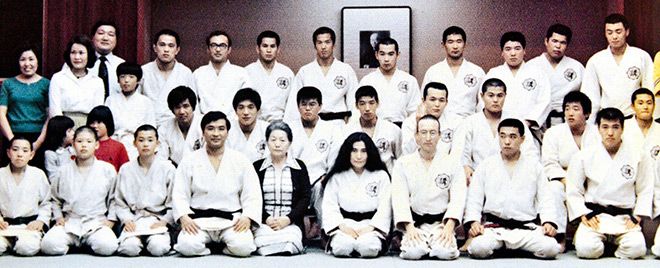
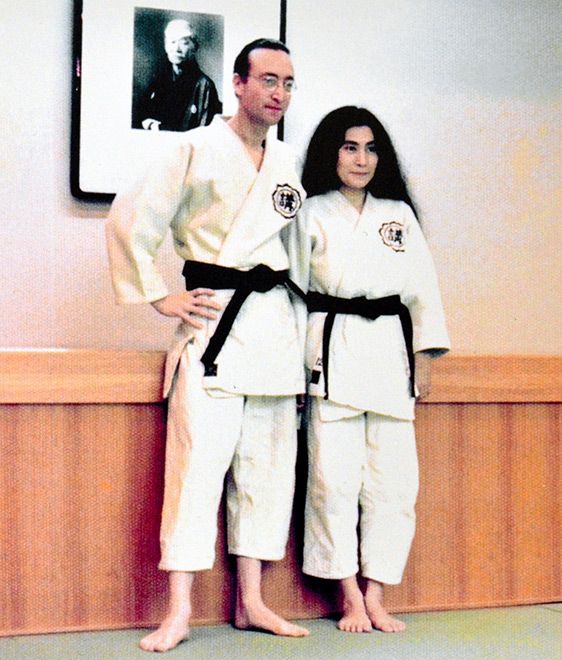
 Dressed in judo attire, John Lennon and Yoko Ono sit in “seiza” style on their heels in the now-defunct Kodo Gakusha judo school in Tokyo’s Setagaya Ward in 1977. (Provided by Noriko Kitada)
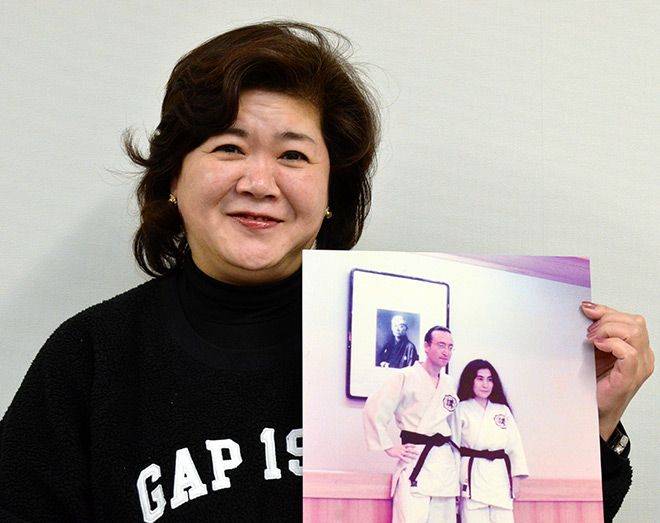
“John Lennon is coming to my house today,” Noriko, a fifth-grader living in Tokyo, told her teacher one day in 1977 even though the visit was supposed to be secret.
The teacher just gave short shrift to the girl, saying, “That can’t be true.”
But it was.
Noriko nervously mumbled “Nice to meet you,” which she had just learned, as she greeted the British musician at the entrance to her home.
“Thank you,” the Liverpudlian said, his face betraying no surprise as he stood with his feet aligned and his hand outstretched for a handshake.
Lennon was wearing his signature “granny” glasses, with his long hair tied in a ponytail.
In those days, Lennon was living fulltime in New York with Yoko Ono and the couple’s son, Sean, then 2 years old. The Beatles had split up and Lennon was relishing his role as a “househusband,” baking bread and raising Sean while taking an extended break from the music scene.
Now on a visit to Japan, he told his wife he wanted to experience judo as a way to immerse himself in Japanese traditional culture.
Noriko’s house was attached to a judo dojo because her father was a martial arts master.
Lennon’s visit was arranged at short notice because her father was close to Ono’s younger brother. Lennon was visiting Japan in a private capacity, so the visit to the dojo was not publicized.
When he was escorted into the tatami mat dojo, Lennon was eager to try on judo attire. Ono translated.
Noriko’s mother was surprised to see him don “judogi” over his underwear.
When she told him that it was a no-no in judo, Lennon stripped naked without hesitation and put on the white outfit.
A judogi designed for junior high schoolers fitted his slender frame.
Although Lennon was a first-timer, he wore a black belt for the session where around 30 people, Noriko’s father and junior and senior high school students, were waiting for him.
In judo, it is customary for all practitioners to sit in “seiza” style on their heels and bow before a training session.
Lennon also bent both his knees and sat ramrod straight on the tatami mats.
IMPRESSED BY COURTESY
Noriko sensed the atmosphere in the dojo was different than usual, probably because everyone was nervous in the presence of someone so famous.
Lennon might well have been feeling awkward, too.
He performed “zarei” (seated bow), but was out of synch with the others. The musician raised the index finger of his right hand and asked to try it one more time.
Lennon made five or so requests for a do-over until everyone was in synch with each other.
He then placed his hands, both aligned parallel to each other, on the tatami, and slowly lowered his head.
His movement was quiet and beautiful, Noriko thought.
Later, Lennon remained standing and watched the 90-minute training session, in the middle of which he joined a free-style “randori” sparring with a junior high school student. For about two minutes, he moved lightly and looked happy.
Noriko, who was learning ballet at the time, was fascinated by Lennon. He moved so gracefully that he appeared to be dancing.
He said he was impressed by the beauty of zarei and enthused about how wonderful judo was.
After the session, Noriko’s mother served homemade dishes to the star. He clearly enjoyed the “yaki-onigiri” crispy grilled rice balls and miso soup, telling her that they were “oishii” (delicious).
When he was asked for autographs, he smiled and said he was more than happy to oblige.
Lennon signed 40 autographs for the students at the dojo. A junior high schooler who was a fan of the Beatles was so happy he shed tears of joy.
Lennon must have enjoyed the experience because he returned to the dojo two weeks later with Sean.
With no training session held, Noriko played with the boy in the vacant dojo. His father looked on with a benign smile.
Before leaving the dojo, Lennon expressed his gratitude and promised to return.
Noriko, utterly charmed by Lennon whom she now regarded like a favorite uncle, beamed at the thought she could see him again.
Three years later, in December 1980, Lennon was gunned down by a crazed fan.
Noriko sobbed when she heard the news.
She thought then that his killer, Mark David Chapman, would have been over the moon to have received the autograph that Lennon gave to her family three years earlier, and perhaps the tragedy could have been averted.
Noriko found it so painful to think about Lennon that she couldn’t bear to listen to his songs anymore.
NEW BEATLES SONG
Noriko Kitada is now 57 years old.
She started practicing judo when she was a junior high school student and won the bronze medal at the Seoul Olympics when she was a university senior.
She currently serves as manager of a women’s judo club at Nihon University to train young judoka.
Although the time she spent with Lennon was only brief, she treasures those moments.
“He was very kind to me even though I was such a small child,” she said. “I think it was all the more reason he could spread important messages across the world.”
In November 2023, “Now and Then,” the first Beatles’ music in 27 years, was released based on a cassette recording of an unfinished song by Lennon.
In it, he sings, “Now and then, I miss you.”
After learning that the recording had been shelved for nearly three decades until it was completed by his surviving bandmates, Kitada started listening to his songs again.
In “Imagine,” Lennon asks listeners to envision a world without borders and religion where people live as one.
Kitada likes to think Lennon was inspired by the spirit of “Jita Kyoei,” a principle formulated by judo founder Jigoro Kano which advocates the importance of mutual harmony and cooperation.
“I think, now more than ever, that a message of peace and love must be spread across the world,” the judoka said. “He was a person who thought about what was right as a human and acted with courage. That’s the path I want to take.”

Ex-SDF member, victim of sexual abuse, fights on as judo teacher
March 25, 2023
A new exhibition aims to bring Yoko Ono’s art out of John Lennon’s shadow
February 14, 2024
Style of eyeglass frame Lennon wore at death soon back on sale
December 22, 2020
Tag of Japanese soldier killed on Iwojima sent home from U.S.
January 22, 2023
From Beatles to U2, ‘rock’ book shows life work of photographer
May 31, 2021













A peek through the music industry’s curtain at the producers who harnessed social media to help their idols go global.

A series based on diplomatic documents declassified by Japan’s Foreign Ministry

Here is a collection of first-hand accounts by “hibakusha” atomic bomb survivors.

Cooking experts, chefs and others involved in the field of food introduce their special recipes intertwined with their paths in life.

A series about Japanese-Americans and their memories of World War II



