THE ASAHI SHIMBUN
December 30, 2025 at 17:13 JST
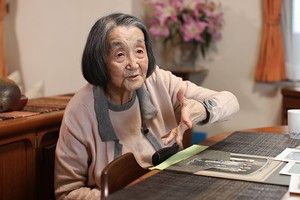
 Tetsuzo Fuwa, former chair of the central committee of the Japanese Communist Party, in Sagamihara, Kanagawa Prefecture, on Sept. 22, 2017 (Asahi Shimbun file photo)
Tetsuzo Fuwa, a former leader of the Japanese Communist Party who pushed a “complete revision” of the party platform, died on Dec. 30, JCP officials announced. He was 95.
Fuwa, who was born Kenjiro Ueda, became head of the JCP secretariat at the age of 40 and was called “the prince of the communist party.”
Aiming to expand the party’s influence and attract unaffiliated voters, he promoted a “flexible line.”
In 2000, Fuwa removed words such as “vanguard party” and “socialist revolution” from the party rules and worked to change its image from a “revolutionary party” to a “people’s party.”
In 2004, he revamped the party’s platform, including an acceptance of the emperor system and the Self-Defense Forces.
He wrote many papers and books and continued to be the JCP’s ideological linchpin.
Fuwa joined the party in 1947 before graduating from the University of Tokyo’s Faculty of Science.
He was first elected to the Lower House from the former Tokyo No. 6 district in 1969.
In 1970, when Kenji Miyamoto assumed the post of chairman of the executive committee, Fuwa gained the post of head of the secretariat.
In 1982, he became chairman of the executive committee.
Fuwa normalized party relations with the Communist Party of China in 1998, which had been severed 32 years earlier in the Cultural Revolution.
In 2000, Fuwa took the post of central committee chairman and promoted future party leader Kazuo Shii, then 46, to chairman of the executive committee.
Fuwa was elected 11 times before retiring from the Lower House in 2003.
Because of his smile and personality, the foreign media sometimes called Fuwa the “Smiling Communist.”

EDITORIAL: JCP needs more than leadership change to gain public support
January 19, 2024
Noda appoints 2 younger lawmakers as CDP executives
September 24, 2024
Vietnamese president resigns, criticized for major scandals
January 18, 2023
Shii steps down as Communist Party head after 23 years
January 18, 2024
CDP approves new executive lineup of 6 men and 6 women
December 7, 2021
EDITORIAL: Only radical reform will keep JCP politically relevant
July 16, 2022







A peek through the music industry’s curtain at the producers who harnessed social media to help their idols go global.

A series based on diplomatic documents declassified by Japan’s Foreign Ministry

Here is a collection of first-hand accounts by “hibakusha” atomic bomb survivors.

Cooking experts, chefs and others involved in the field of food introduce their special recipes intertwined with their paths in life.

A series about Japanese-Americans and their memories of World War II



