REUTERS
December 19, 2025 at 17:40 JST
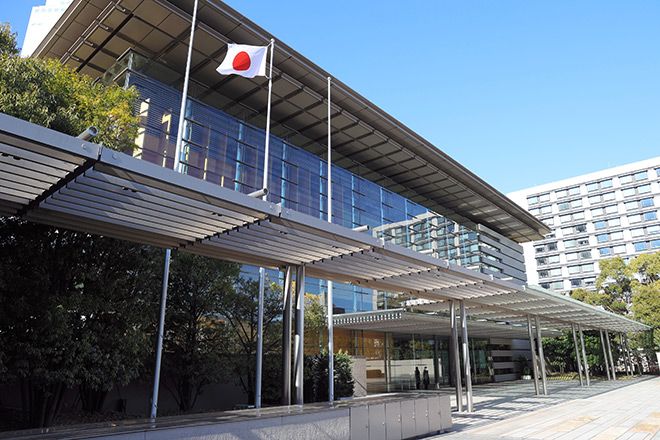
 Chief Cabinet Secretary Minoru Kihara meets reporters in Tokyo on Nov. 19. (The Asahi Shimbun)
Japan reaffirmed its decades-old pledge never to possess nuclear weapons on Friday after local media reported that a senior security official suggested the country should acquire them to deter potential aggressors.
The unnamed official said Japan needed nuclear weapons because of a worsening security environment but acknowledged that such a move would be politically difficult, public broadcaster NHK and other outlets reported, describing the official as being from Prime Minister Sanae Takaichi's office.
At a regular press briefing in Tokyo, Chief Cabinet Secretary Minoru Kihara said Japan's nuclear policy had not changed, but declined to comment on the remarks or to say whether the person would remain in the post amid calls from opposition leaders for the official to be removed. There is a growing political and public willingness in Japan to loosen its three non-nuclear principles not to possess, develop or allow nuclear weapons into its territory, a Reuters investigation published in August found.
While it remains a highly sensitive subject in the only country to have suffered atomic bombings, doubts over the reliability of U.S. security guarantees under President Donald Trump and growing threats from nuclear-armed neighbors China, Russia and North Korea have re-ignited the debate.
Some lawmakers within Takaichi's ruling party have said the United States should be allowed to bring nuclear weapons into Japan on submarines or other platforms to reinforce deterrence. Takaichi last month stirred debate on her own stance by declining to say whether there would be any changes to the three principles when her administration formulates a new defense strategy next year.
"Putting these trial balloons out creates an opportunity to start to build consensus around the direction to move on changes in security policy," said Stephen Nagy, a politics professor at the International Christian University in Tokyo.
Beijing's assertiveness and growing missile cooperation between Moscow and Pyongyang are "creating the momentum to really change Japan's thinking about security," he added.
Taro Kono, a senior ruling-party lawmaker and former defense and foreign minister, said on Friday that Japan should not shy away from a broader debate on the pros and cons of acquiring nuclear weapons.
Discussions about acquiring or hosting nuclear weapons have long been taboo due to the bombings of Hiroshima and Nagasaki at the end of World War II and the country's pacifist Constitution adopted after its defeat. Nihon Hidankyo, a group of atomic bomb survivors that won the Nobel Peace Prize last year for efforts to achieve a nuclear-free world, said in a statement that it "can never tolerate such a remark."
Such talk also risks drawing ire from neighboring countries, including regional security rival China. "Should the information prove accurate, the situation would be extremely grave," Guo Jiakun, a Chinese foreign ministry spokesperson said at a regular briefing when asked about the Japanese official's reported comments.
"For some time now, Japan has persistently pursued erroneous actions and rhetoric on military security matters."
Relations between Tokyo and Beijing have soured since Takaichi last month said a Chinese attack on Taiwan that also threatened Japan could trigger a military response. China claims the democratically governed island.
Senior official: Japan should possess nuclear weapons
December 19, 2025
Japan’s Takaichi faces early test of defense ambitions with Trump visit
October 24, 2025
Takaichi declines to confirm stance on ‘3 non-nuclear principles’
November 12, 2025
Takaichi’s stance on ‘3 non-nuclear principles’ angers survivors
November 21, 2025
Japan won't join U.N. meeting on nuclear weapons ban, citing support for U.S. deterrence
March 3, 2025
Japanese, U.S. ministers discuss deterrence under nuclear umbrella
July 29, 2024













A peek through the music industry’s curtain at the producers who harnessed social media to help their idols go global.

A series based on diplomatic documents declassified by Japan’s Foreign Ministry

Here is a collection of first-hand accounts by “hibakusha” atomic bomb survivors.

Cooking experts, chefs and others involved in the field of food introduce their special recipes intertwined with their paths in life.

A series about Japanese-Americans and their memories of World War II



