By SAORI KURODA/ Staff Writer
November 20, 2025 at 16:34 JST
 A photo of Shin Arjun Bahadur, a Nepalese man who died after he was restrained by Japanese police, is shown at a news conference in Tokyo in March 2023. (Kyota Tanaka)
The Tokyo High Court on Nov. 19 awarded 39 million yen ($247,000) in damages to the family of a Nepalese man who died in police custody, a nearly fortyfold increase from the 1 million yen in the initial award by a lower court.
The high court ordered the Tokyo metropolitan government to pay the increased amount, saying that it more equitably reflects the award that would be given under the Japanese compensation law.
The case centers on Shin Arjun Bahadur, 39, who was arrested in 2017 by Tokyo police on suspicion of possessing another person’s credit card.
The following day, Shin was placed in a detention room where he was restrained for about two hours with nylon belt handcuffs binding his wrists and ankles. He suddenly lost consciousness and was later pronounced dead.
In 2023, the Tokyo District Court acknowledged that Shin’s death was caused by prolonged and excessive pressure from the restraints, ruling that police officers acted illegally by failing to transport him to a hospital.
However, the court limited damages to 1 million yen, reasoning that Nepal’s compensation laws cap payouts to foreign nationals at around 100,000 yen, with a few exceptional cases reportedly awarding up to 10 times that amount.
The decision was based on the “principle of reciprocity” in Japan’s compensation law, which stipulates that claims involving foreign victims largely depend on how their home countries would treat Japanese nationals in similar circumstances.
The initial ruling drew criticism from Shin’s lawyers, who argued the payout cap amounted to unreasonable discrimination. They appealed, insisting that compensation should reflect the same standards applied to Japanese citizens.
In the Nov. 19 ruling, the high court overturned the lower court’s limitation, stating that strict reciprocity in compensation is impractical and inconsistent with human rights principles.
The court found that repeatedly tightening the restraints, which restricted Shin’s blood circulation, was itself unlawful.
It concluded that Nepalese nationals are entitled to equal protection under Japan’s compensation law, ordering the metropolitan government to pay damages covering lost future earnings and emotional distress totaling about 39 million yen.
However, the claim against the national government was dismissed, as in the first trial.
Attorney Ryutaro Ogawa, representing Shin’s family, welcomed the ruling.
“The high court delivered a fair judgment, compared to the district court’s baseless decision to impose a cap not provided for in the law,” Ogawa said.
He added that the judges themselves experienced the pain caused by the tightened restraints during the appeal, which may have helped them recognize the illegality of the police’s actions.
Nepal man’s life worth $7,000? Ruling called discriminatory
June 4, 2023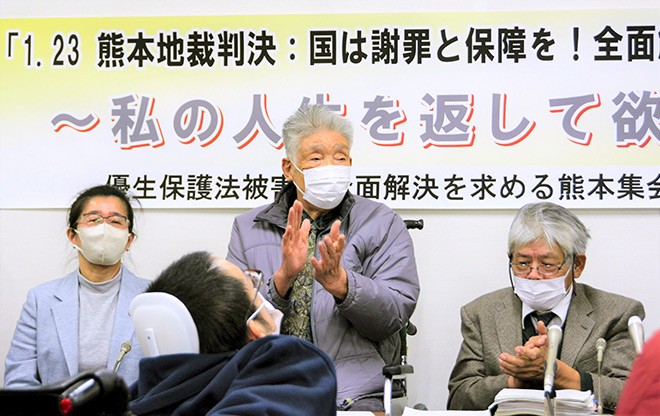
Kumamoto court rules in favor of victims of forced sterilization
January 24, 2023
Dead yakuza boss referred to prosecutors for donating homes
October 20, 2022
Lawsuit to seek 600 million yen in state redress for Hakamata
August 19, 2025
Protesters of U.S. military helipads in Okinawa win defamation suit
September 2, 2021
High court orders Japan to pay damages for sterilizations
February 22, 2022





A peek through the music industry’s curtain at the producers who harnessed social media to help their idols go global.

A series based on diplomatic documents declassified by Japan’s Foreign Ministry

Here is a collection of first-hand accounts by “hibakusha” atomic bomb survivors.

Cooking experts, chefs and others involved in the field of food introduce their special recipes intertwined with their paths in life.

A series about Japanese-Americans and their memories of World War II



