By MICHIKO YOSHIDA/ Staff Writer
November 18, 2025 at 07:00 JST
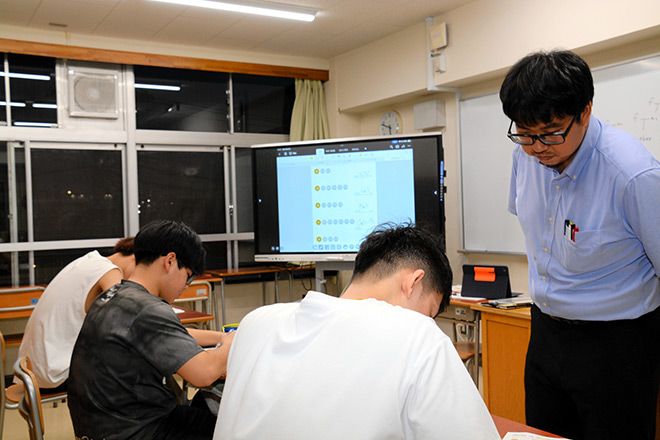 As a Japanese teacher looks on, foreign students work on questions at a night class at Bunka Junior High School in Tokyo’s Sumida Ward in September. (Michiko Yoshida)

Night schools have provided lifelines to children of Japanese returning from overseas after World War II, working adults, retirees and others who were unable to complete their compulsory education.
Now, these night classes are helping foreign nationals or children of parents from abroad grow accustomed to life in Japan and carve out their futures in the country.
The classes play a crucial role in providing Japanese skills and basic education to students who speak limited Japanese.
Demand for night schools had shrunk as Japan’s economy expanded and more children completed their mandatory education.
The number of such schools nationwide plunged to 31 in 2014 from more than 80 in 1955.
But the downward trend was reversed after a law was enacted in 2016 requiring local governments to provide opportunities at venues such as night schools to people who have not finished junior high school.
As of April this year, 62 night schools were available in Tokyo, Hokkaido and 30 other prefectures.
Students with foreign roots make up more than 60 percent of those enrolled at night junior high schools.
At Bunka Junior High School in Tokyo’s Sumida Ward, 31 people, aged 15 to 80, attend night classes, and 28 are either foreign-born or have parents from abroad.
MORE THAN LANGUAGE
“How much money does each illustration show?” a teacher asked students taking a Japanese lesson at the school one evening in September. “Please write down your answer.”
His three recently enrolled students--one from Myanmar and two from China--wrote their answers in hiragana on their workbooks that showed illustrations of Japanese coins.
Manab Khatri, a 17-year-old from Nepal who has been living in Japan since 2022, said his Japanese skills have progressed thanks to the lessons at the school.
“I can write and read better than before,” he said. “I want to become a physical education teacher and teach in Japan.”
Yodo Arai, a supervisor at the secretariat of Sumida Ward’s board of education, stressed the importance for people with international roots to have an adequate command of Japanese.
“What we teach them first is Japanese skills, which is essential to make a living in this country,” he said.
Besides giving Japanese lessons, teachers provide courses in their areas of expertise.
Makoto Hattori, a math teacher, described the night school students as “highly motivated.”
But he added that their math proficiency varies widely, and he prepares handouts tailored to the level of the individual learner.
Naoshi Arikawa, deputy principal of the school, expressed his gratitude for the teachers’ dedication.
“Their passion keeps our school going,” he said.
ONE FOR EACH PREFECTURE
Established under the 1947 school education law, government-supported night junior high schools provide free classes taught by licensed instructors five evenings a week.
When enrollees complete all the required courses, they receive a junior high school diploma, which is compulsory in Japan.
Any person aged 15 or older who has not finished junior high school education or had limited educational opportunities in the past can register for night classes, regardless of their nationality.
Some night schools hold sports day events and organize school trips so that students can bond with each other.
Some of the students attend classes after finishing their day jobs.
A 2024 education ministry survey found that 1,256 of 1,969 enrollees attending night schools are foreign nationals. Of them, 40 percent said they want to improve their Japanese conversation skills.
The education ministry aims to set up one night junior high school in each of the nation’s 47 prefectures, as well as one in each of the 20 cities with a population of 500,000 or more.
The ministry is also working on guidelines for Japanese language instruction at night schools, expecting demand to grow.
Yasutaka Sekimoto, a member of Yakan Chugaku to Kyoiku wo Kataru Kai, a private education-related group that supports night junior high schools, said such institutions have traditionally provided invaluable opportunities for people unable to receive education due to limited resources, refusal to attend school and other reasons.
“Children of Japanese returning from China after the war learned Japanese skills at night schools,” he said. “Night schools serve as the last bastion for people of foreign descent who aim to work in Japan after going to high school and college.”





A peek through the music industry’s curtain at the producers who harnessed social media to help their idols go global.

A series based on diplomatic documents declassified by Japan’s Foreign Ministry

Here is a collection of first-hand accounts by “hibakusha” atomic bomb survivors.

Cooking experts, chefs and others involved in the field of food introduce their special recipes intertwined with their paths in life.

A series about Japanese-Americans and their memories of World War II



