THE ASAHI SHIMBUN
October 27, 2025 at 17:07 JST
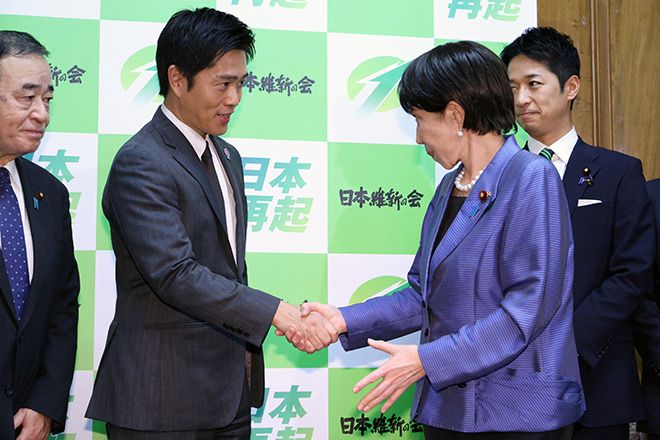 Liberal Democratic Party President Sanae Takaichi is congratulated by Hirofumi Yoshimura, leader of coalition partner Nippon Ishin (Japan Innovation Party), at the Diet on Oct. 21 following her selection as prime minister. (Takeshi Iwashita)
The newly inaugurated Cabinet of Prime Minister Sanae Takaichi received a robust approval rating of 68 percent, buoyed by strong support from the younger voters, an Asahi Shimbun survey showed.
It was the third-highest initial rating for a Cabinet since Junichiro Koizumi’s in 2001.
Although new Cabinets have traditionally received strong first ratings, the Takaichi Cabinet’s figure dwarfed those of her predecessors: 46 percent for Shigeru Ishiba and 45 percent for Fumio Kishida.
Only 19 percent expressed disapproval for the Takaichi Cabinet, according to the nationwide telephone survey conducted on Oct. 25 and 26.
Approval was especially strong among younger demographics, reaching 86 percent among those in their 30s and topping 70 percent among those in their 50s or younger.
Those aged 70 and older gave a 54-percent approval rating.
The most cited reason for approval was the Cabinet’s policies, chosen by 37 percent. This was followed by the perception that it is better than other possible Cabinets.
The third and fourth most cited reasons were the leadership of Takaichi and the leadership of her Liberal Democratic Party, respectively.
Takaichi’s rise as Japan’s first female prime minister was welcomed by 85 percent of respondents, while only 7 percent viewed it negatively.
However, opinions were split on whether her leadership would advance gender equality, with 45 percent expecting progress, compared with 41 percent who remained skeptical.
Even among those who welcomed her political achievement, only half expect tangible changes on gender issues.
Takaichi’s conservative stance was appreciated by 57 percent of respondents, while 25 percent expressed disapproval.
Again, support concerning her nationalist views and traditional values varied by age. Eighty percent among those in their 30s approved, compared with 40 percent among those aged 70 and older.
ECHOES OF ‘ABENOMICS’
Her economic policies drew optimism from 65 percent of respondents, surpassing the initial expectations for previous Cabinets: 35 percent for Ishiba’s and 42 percent for Kishida’s.
The economic policy approval figure reached 63 percent in 2013, after the second Cabinet of Shinzo Abe embarked on its “Abenomics” policies, characterized by bold monetary easing and aggressive fiscal stimulus.
Economic optimism for Takaichi, who will likely follow the Abenomics path, surpassed the level of the package’s creator.
The formation of a new coalition between the LDP and Nippon Ishin (Japan Innovation Party), replacing the previous LDP-Komeito alliance, was viewed positively by 59 percent of respondents and negatively by 20 percent.
However, skepticism remains over political reform, with only 23 percent believing the LDP can change its culture tainted by political money scandals. A much larger 69 percent believe the party cannot change.
Takaichi appointed LDP lawmakers implicated in recent fund-raising scandals to key government and party positions, while effectively shelving reforms to rules on corporate and organizational donations--measures that had been pushed by Ishin.
The ruling parties each gained support from the previous survey conducted in September, with the LDP rising by 4 percentage points to 30 percent and Ishin increasing by 3 points to 5 percent.
Support for the far-right Sanseito party fell by 4 points to 4 percent, while figures for other opposition parties remained mostly unchanged.
The main opposition Constitutional Democratic Party of Japan held steady at 5 percent, while the Democratic Party for the People dropped 1 point to 6 percent.
Komeito, Reiwa Shinsengumi and the Japanese Communist Party all remained at 2 percent, and the Conservative Party of Japan stayed at 1 percent.
(Kazuaki Isoda also contributed to this article.)

Ishiba Cabinet gets relatively low approval rating of 46%
October 3, 2024
Survey: 54% of voters OK with Ishiba staying as prime minister
August 18, 2025
Survey: Kishida Cabinet approval rating climbs by 4 points to 26%
April 22, 2024
Survey: 51% of voters want an administration not led by LDP
January 20, 2025
Survey: Public prefers Ishiba or Koizumi in LDP election
August 26, 2024
Survey: Ruling LDP’s approval rating slides to record low 19%
June 17, 2024










A peek through the music industry’s curtain at the producers who harnessed social media to help their idols go global.

A series based on diplomatic documents declassified by Japan’s Foreign Ministry

Here is a collection of first-hand accounts by “hibakusha” atomic bomb survivors.

Cooking experts, chefs and others involved in the field of food introduce their special recipes intertwined with their paths in life.

A series about Japanese-Americans and their memories of World War II



