By SACHI MATSUMOTO/ Staff Writer
October 23, 2025 at 18:29 JST
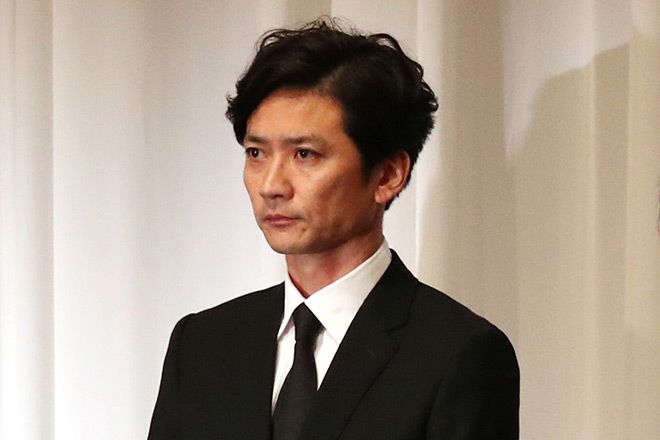 Taichi Kokubun in May 2018 (Asahi Shimbun file photo)

Entertainer Taichi Kokubun filed a human rights complaint against Nippon Television Network Corp. on Oct. 23 over its decision to remove him from a program following allegations of harassment.
Kokubun, a former member of now-disbanded idol group TOKIO, cited procedural issues in the petition submitted to the Japan Federation of Bar Associations.
“Nippon TV’s response lacked balance and has caused serious human rights violations against Kokubun,” his lawyer said at a news conference in Tokyo on the same day.
Nippon TV announced on June 20 that Kokubun had committed multiple compliance violations and would be removed as a regular cast member from variety show “The! Tetsuwan! Dash!!”
Kokubun’s complaint said the network failed to follow proper procedures for such an action.
It also says Kokubun was placed in a position where he could not publicly explain his side of the story, a violation of his rights that led to a public backlash against him.
According to the petition, Kokubun was summoned to Nippon TV on June 18 under the pretext of attending a meeting for “The! Tetsuwan! Dash!!” and being introduced to a new producer.
However, he was instead questioned about compliance violations.
The company’s compliance officers and lawyers asked him about several reported harassment incidents. Kokubun admitted to the ones he recognized.
Immediately afterward, an executive in charge of the TV program asked Kokubun to resign from the show, which Kokubun reluctantly accepted, according to the petition.
The petition states that Nippon TV did not explain which specific facts led to the determination that he had violated compliance rules.
He was unable to provide a public explanation because he had been instructed not to disclose the types or details of the violations discussed during the investigation, the petition said.
The petition further argues that Nippon TV understood that the severity of the disciplinary action would affect his career as a public figure. But the broadcaster’s investigation was conducted with a predetermined conclusion of “dismissal” and focused solely on the company’s risk management rather than objective facts.
Nippon TV released a statement in response to Kokubun’s complaint.
“It is deeply regrettable that, in the middle of discussions, information that could potentially lead to the identification of the content of exchanges and the individuals involved was suddenly and unilaterally made public and a news conference was held,” it said. “We strongly protest this.”
The company also rejected Kokubun’s claim that the procedure for his dismissal was improper.
“The decision was made after conducting a hearing with Kokubun and confirming his acknowledgment and the facts of the matter. The claim is a complete factual misunderstanding,” the statement said.
Lawyer Masaru Komoda, representing Kokubun, said at the news conference that the celebrity had first consulted him around July, when he appeared deeply distressed.
He has since calmed down and is reflecting seriously on his actions, including undergoing compliance training to deepen his understanding, Komoda said.
On June 20, when Nippon TV announced the removal of Kokubun from the variety show, Nippon TV President Hiroyuki Fukuda responded to media inquiries about the situation but declined to provide details, citing “privacy protection reasons.”
Fukuda did not disclose the nature or timing of the harassment incidents, whether there were victims, or how they related to the TV program.
Kokubun posted an apology on his agency’s official website on June 20, stating, “The root of everything lies in my lack of awareness of the position I’ve held over the years, my naivete, arrogance and inadequate behavior.”
To review its response to the incident, Nippon Television Holdings Inc. established a governance evaluation committee in July, comprising external lawyers.
In its interim report released on July 28, the committee concluded that Nippon TV Holdings and Nippon TV’s response was “appropriate for the case.”
This view was upheld in the final opinion report published on Sept. 29.

TV host Kokubun steps down after misconduct surfaces
June 20, 2025
TBS to terminate TV program with scandal-hit Masahiro Nakai
January 21, 2025
Filipino activists want Marcos son out of presidential race
November 3, 2021
Fuji TV leaders to resign, say they lack awareness of human rights
January 27, 2025





A peek through the music industry’s curtain at the producers who harnessed social media to help their idols go global.

A series based on diplomatic documents declassified by Japan’s Foreign Ministry

Here is a collection of first-hand accounts by “hibakusha” atomic bomb survivors.

Cooking experts, chefs and others involved in the field of food introduce their special recipes intertwined with their paths in life.

A series about Japanese-Americans and their memories of World War II



