By SHUN NAKAMURA/ Staff Writer
October 2, 2025 at 18:15 JST
 The Saitama prefectural assembly building (Asahi Shimbun file photo)
SAITAMA—A Saitama prefectural assembly member came under fire after saying at an Oct. 1 session that “foreigners have no fundamental human rights” in Japan.
Masahide Moroi, 56, later said his wording was insufficient due to time constraints, and that he may ask that the remark be stricken from the official record.
The statement came as Moroi was questioning Saitama Governor Motohiro Ono.
Citing examples of crimes involving foreign nationals, Moroi pressed the governor on his stance toward public safety.
“Regardless of nationality or ethnicity, we will work firmly on public safety,” Ono said.
Moroi countered: “(Foreigners) are legally positioned differently from Japanese people. Fundamental human rights do not exist for foreigners.”
The governor immediately replied, “I do not share the view that foreigners do not have fundamental human rights.”
In an interview with The Asahi Shimbun, Moroi clarified the remark.
“(Foreigners) have fundamental human rights as human beings, but if you ask whether they enjoy the same rights as Japanese people, that’s not the case,” he said. “I ran out of time for questions, and my wording was insufficient.”
Moroi, an independent with a political base in Hanyu city, is currently serving his fifth term in the prefectural assembly.
His remark was criticized by various caucuses within the assembly.
“It is exceedingly lacking in discernment for a prefectural assembly member,” Takumi Tamura, leader of the Liberal Democratic Party caucus, said.
Noriko Shiroshita, head of the Japanese Communist Party caucus, noted that Moroi last year had voted in favor of a prefectural ordinance that guarantees fundamental human rights for all, regardless of race or nationality.
She said his remark to Governor Ono represents a direct contradiction.

Yamagata adopts ‘laugh once a day’ ordinance to promote health
July 7, 2024
Nippon Ishin gains fourfold increase in seats outside Osaka
April 11, 2023
Shizuoka chief to resign after offending factory workers, farmers
April 3, 2024
Tamaki seeks global support in anti-base fight at U.N. council
September 20, 2023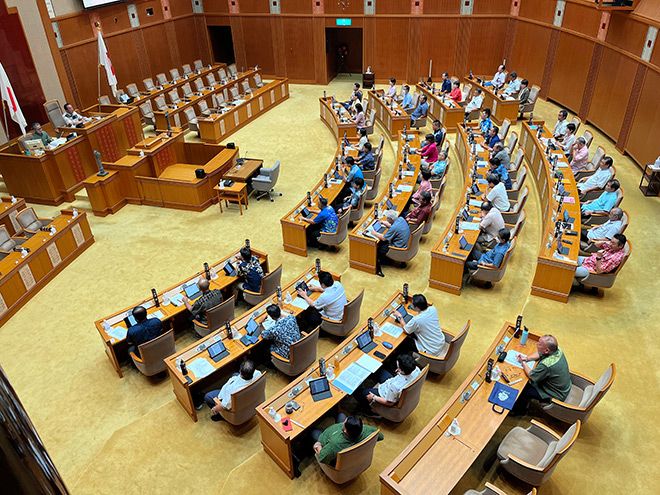
Okinawa insists on revisions of SOFA after rash of U.S. sex crimes
July 11, 2024








A peek through the music industry’s curtain at the producers who harnessed social media to help their idols go global.

A series based on diplomatic documents declassified by Japan’s Foreign Ministry

Here is a collection of first-hand accounts by “hibakusha” atomic bomb survivors.

Cooking experts, chefs and others involved in the field of food introduce their special recipes intertwined with their paths in life.

A series about Japanese-Americans and their memories of World War II



