By NEN SATOMI/ Staff Writer
October 2, 2025 at 07:00 JST
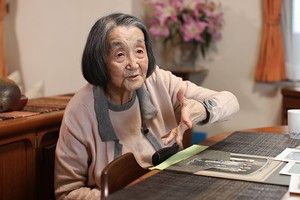
 Kazuo Omori and his wife, Hiroko, who have organized a Japanese essay contest for 37 years, show off entries for this year’s event on Sept. 9 in Tokyo’s Tachikawa. (Nen Satomi)


Over nearly four decades, Kazuo and Hiroko Omori have spread and nurtured the seeds of grassroots exchanges around the globe, through the magic of learning Japanese.
The couple are looking back on providing their own educational materials for language students worldwide, as they will mark the end of their 37-year-old Japanese essay contest this year.
The husband and wife, both 85, started the competition in the hope of “producing as many private ambassadors as we can.”
Through the years, the contest grew to include contestants worldwide.
On Sept. 9, the Omoris were seen working through a mountain of language learners’ essays piled high. They currently reside in a room at an elderly care facility in Tachikawa, western Tokyo.
This year's event, the 27th, received a record 10,578 entries from 97 countries and regions. With the help of an external Japanese language teacher, the Omoris spent upward of six months reviewing the compositions.
The theme for the latest contest was “What is your favorite Japanese word?”
The most popular proverb turned out to be “ichigo ichie” (cherishing one-time encounters).
Many essays explored not only the origins of their selected words but also the Japanese culture behind them.
“It seems that participants have gained a far deeper understanding of Japan,” Kazuo said.
The Omoris’ home doubles as their office, with a bookshelf lined with the couple’s co-authored titles.
One publication retraces their 30-year journey to walk alongside Japanese language students the world over during the Heisei Era (1989-2019), while another illustrates how prejudices against Japan gradually melted away.
The dozens of books, inclusive of an anthology of winning essays from each competition, highlight the long adventures of the Omoris.
The international contest started in 1989, after Kazuo and Hiroko became aware of the tough circumstances facing international students in Japan the previous year.
ASSISTANCE VIA MAGAZINE, COMPETITION
Kazuo was a journalist at The Asahi Shimbun around that time, covering stories linked to what currently is the Ministry of Education, Culture, Sports, Science and Technology.
He often met non-Japanese students through interviews who were struggling to pay their tuition and living expenses while working part-time jobs.
Kazuo was particularly touched by a Chinese student’s comment when the learner stated, “I am too busy to become well-versed in Japan, and it would be sad for me to have to go back home like this.”
Desperate to rescue young people from abroad out of a tight spot at any cost, Kazuo quickly decided to quit his job.
The following year, Kazuo and Hiroko launched the quarterly magazine Nippon (Japan) and distributed it to colleges and universities across Japan.
The Omoris then saw a letter delivered from an international student who requested, as the reader of the seasonal bulletin, that the duo “hold a competition to provide us a goal for studying Japanese.”
They solicited essays in the magazine’s second issue and were flooded with more than 500 entries. The students' enthusiasm was both encouraging and rewarding for the organizers.
As most participants were from China, the contest catered to students learning Japanese at Chinese colleges and universities over the course of some 20 years from 1993. In 2016, it expanded its scope globally.
By the 27th round this year, a total of 73,138 individuals from 102 countries and regions had entered the contest.
DILEMMA IN CHINESE STUDENTS’ WORKS
Compositions from Chinese students reflected their dilemma.
Chinese contestants frequently expressed a longing for Japan, such as a magazine reader who wanted the magazine to “portray the detailed experience of Japan since the Meiji Restoration” in the late 19th century.
Meanwhile, those from the Asian neighbor were at times worried about the anti-Japanese sentiments being expressed around them.
Japanese politicians' visits to the war-related Yasukuni Shrine in Tokyo, coupled with Beijing's anger at the historical content of textbooks used by Japanese students, have cast shadows over the bilateral ties.
These difficult times came even as language students in China remained determined to specialize in Japanese from a future-oriented standpoint.
In recent years, Kazuo stressed that essay writers from China seem increasingly confident in their nation’s “economic power” and frequently view Japan as an “equal partner.”
Hiroko said it is time for Tokyo and Beijing to go a step further.
“Japan and China, ideally, should not rely on any symbols for their improved ties, whereas Beijing’s panda diplomacy gets a lot of attention, in particular, over the issue,” she said.
The Omoris call foreign students who move to deepen their understanding of Japan through linguistics as “private ambassadors,” because Kazuo believes that they represent “a grassroots presence that underpins relations between countries.”
Driven by a desire to cultivate a mutual understanding, Kazuo and Hiroko have long devoted themselves to their activities.
But the Omoris said they recently decided to bring an end to their endeavor in view of their age and health.
Before they call it quits, the couple needed to read all submissions sent by email or regular mail. They similarly contacted the writers of 500 outstanding essays via email for assessing their Japanese language skills.
Once the winners were announced, the next task awaiting them is to ship out financial incentives and award certificates to victorious competitors.
“All these procedures in the project take an entire year,” explained Hiroko with a bitter smile. “It is a bit tiring.”
Kazuo agreed, saying, “I am sorry that we cannot continue this. However, it cannot be helped given our age. We have already finished everything left for us to do.”

Couple revered for Japanese language test to keep going ...
December 28, 2024
Educators fear rise in AI-created essays as tools for detection lag
July 3, 2024
Teenage friend of leprosy patients wins prize for life mission essay
January 1, 2022
Princess Kako displays sign language skills at speech contest
September 22, 2024







A peek through the music industry’s curtain at the producers who harnessed social media to help their idols go global.

A series based on diplomatic documents declassified by Japan’s Foreign Ministry

Here is a collection of first-hand accounts by “hibakusha” atomic bomb survivors.

Cooking experts, chefs and others involved in the field of food introduce their special recipes intertwined with their paths in life.

A series about Japanese-Americans and their memories of World War II



