By SATORU AIKAWA/ Staff Writer
September 29, 2025 at 07:00 JST
 A sneaker with a detached outsole in Hiroshima on Aug. 30 (Hiroya Ueyama)

HIROSHIMA--In late August, when the daily high reached 34.8 degrees, a “clip-clop” sound repeatedly emanated from a flapping outsole that had partially peeled off a shoe here.
Such sounds, which have increased in frequency amid this year’s record heat, are music to the ears of shoe repair shops.
“So many customers have come to us with detached outsoles that we could mistake ourselves for professional gluers,” an official at Kutsu no Byoin (shoe hospital) in Hiroshima, said.
The repair shop said orders have increased in recent years as soaring summer temperatures continue to wreak havoc on footwear.
Shop officials said they received up to five or six outsole repair requests in a single day this past summer.
From June through August this year, temperatures in Japan were the hottest on record, topping 40 degrees at many locations.
An outlet of the Mister Minit shoe repair chain in the Youme Town Hiroshima shopping complex also reported a surge in business.
“Requests for repairs of detached outsoles grow in number every summer, but this year saw about 10 percent more requests than in typical years,” an official said.
The requests cover a wide range of footwear, including sneakers, pumps and men’s shoes.
“Such problems increase particularly in summer because the adhesive that holds the main shoe body and the outsole together is vulnerable to heat,” said Motoyoshi Nagamine, an official in the outlet sales promotion division at Minit Asia Pacific Co., the chain’s operator.
Asphalt temperatures can exceed 50 degrees in summer, and this heat easily permeates footwear with thin outsoles, such as sneakers, sandals and pumps, Nagamine, 44, said.
He added that moisture can also weaken the adhesive, so shoe boxes should be ventilated.
The clip-clopping person with a loose outsole in late August said he had kept the shoes inside a shoe box for three months.
“You are advised to take your shoes out of your shoe box or ventilate it once in a while,” Nagamine said.
UNUSED SHOES ALSO DEGRADE
“Outsoles normally don’t peel off, but they might under unanticipated force or under reduced adhesive strength,” an official with Osaka-based sporting goods maker Mizuno Corp. explained.
Adhesive strength may drop because of two factors, the official said.
The first could be human error in the manufacturing stage.
Much handwork is needed in shoe adhesion processes, so uneven adhesive application, insufficient pressing and other irregularities may arise, the official said.
The other factor is the degradation of the adhesive over time.
“Shoes don’t degrade much under normal temperature and humidity conditions, but they degrade fast when exposed to direct sunlight for a long time or left abandoned in a trunk under the blazing sun,” the official said.
Wet shoes lose strength because moisture decomposes the adhesive, so humidity can also play a role, the official added.
The recent scorching summers have apparently led to unprecedented conditions for footwear, whose current technology may be insufficient to withstand the heat.
“We are gathering data on similar changes and continuing with improvements to stabilize our product quality,” the official said.
“Adhesion steadily degrades even in shoes that are kept unused,” the official added. “I want the public to know that the risk of outsole detachment only grows with time, even in shoes preserved in a box.”

Footwear infested with mold as ‘dirty’ as bathroom drain
December 21, 2023
Early pressure patterns causing record-setting heat in Japan
June 30, 2022
Industry urges air conditioner test run before summer scorcher
April 10, 2024
Knitted pumps provide relief, fashion for those with aching feet
February 5, 2023
Appraisers check for fake sneakers sneaking into resale market
June 13, 2023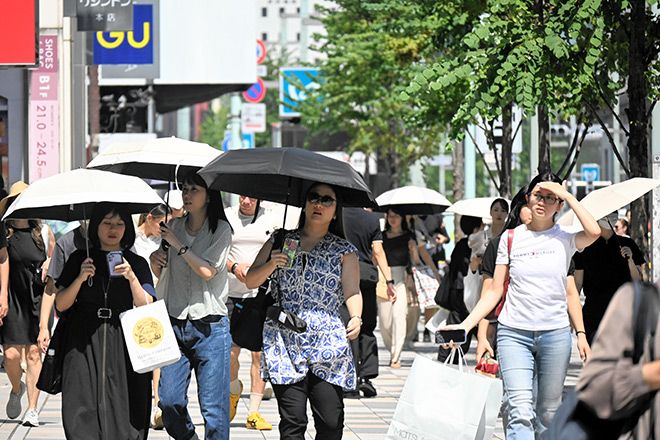
Japan suffers through its hottest summer on record
September 1, 2025







A peek through the music industry’s curtain at the producers who harnessed social media to help their idols go global.

A series based on diplomatic documents declassified by Japan’s Foreign Ministry

Here is a collection of first-hand accounts by “hibakusha” atomic bomb survivors.

Cooking experts, chefs and others involved in the field of food introduce their special recipes intertwined with their paths in life.

A series about Japanese-Americans and their memories of World War II



