THE ASAHI SHIMBUN
June 5, 2025 at 07:00 JST
 Takeshi Nakano in Tokyo’s Chiyoda Ward on April 16 (Photo by Yoshikatsu Nakajima)
U.S. President Donald Trump’s high tariffs levied on imports are tossing the world around and leading to irreversible global changes, according to Takeshi Nakano, an economics commentator.
He said the ramifications of Trump’s tariffs go much further than the immediate consequences of lost sales in the U.S. market.
In a recent interview with The Asahi Shimbun, Nakano, known for his books including “TPP Bokokuron” (The Trans-Pacific Partnership free trade arrangement would ruin the nation), said Trump is seeking a unilateral realignment of the international economic system, a trend that can no longer be stopped.
Excerpts of the interview follow:
***
Question: How do you see the Trump administration’s tariff policy?
Nakano: The important thing about the latest tariffs is that they are being imposed on (almost) all countries of the world. In particular, exorbitantly high tariff rates were set for China.
So, it’s no longer about bilateral trade friction between Japan and the United States.
Products from around the world, which are losing the U.S. market, will flow into other nations. That will strengthen deflationary pressure and could trigger scrambles for markets, trade wars and tariff wars among countries other than the United States.
Q: What do you think lies in the backdrop of the Trump tariffs?
A: The United States has continued to import vast amounts of products, one-sidedly, from the rest of the world and has suffered, as a consequence, from trade deficits and current account deficits.
Japan, which has relied on foreign demand, is one of the countries that have taken advantage of an international economic system that is dependent on the United States.
All this has engendered the problem of a global imbalance. And the United States is saying that it can no longer withstand that.
Japan should take an approach that is totally different from the traditional framework of bilateral talks. The country should increase its domestic demand by taking large-scale fiscal stimulus measures based on international cooperation and call on other countries to refrain from imposing retaliatory tariffs.
AIMING FOR WEAKER DOLLAR
Q: What is your take on nations’ talks with the United States?
A: The essential purposes of the Trump tariffs consist of weakening the dollar and tapping into tariff revenue to realize tax cuts in the United States.
If Japan were to eliminate its “nontariff barriers,” that would certainly please the United States, but it would not directly lead to lower (U.S.) tariff rates.
What Washington is engineering here is not a trade war but a currency war. Trump is planning to do something that would be tantamount to the “Nixon shock” of 1971 and the Plaza Accord of 1985.
Q: Do you think Trump’s policy emerged out of the blue?
A: No. A blanket surcharge of 10 percent was imposed on imports by President Richard Nixon during the Nixon shock. That is the same rate as the “baseline” part of Trump’s “reciprocal” tariffs.
Trump cited the U.S. International Emergency Economic Powers Act as the grounds for imposing additional tariffs. That law is successor to the 1917 Trading with the Enemy Act, which was used as the grounds for the import surcharge during the Nixon shock.
Trump is doing a repeat of that.
Q: Do you think this trend will remain?
A: Yes. A collapse of the global economic system appears inevitable even when Trump is no longer there.
The burden on the United States has reached its limits, and the trend for going “America First” did not change even under the administration of President Joe Biden.
This is an irreversible trend that will continue into the future.
Q: What will be the consequences of a merger between Trump and techno-libertarians (who seek libertarianism through advances in technology)?
A: The Biden administration sought to break up the tech industry and regulate cryptocurrencies in an effort to rectify disparities. That infuriated the techno-libertarians, who all at once came to support Trump.
Caps on political donations have been found unconstitutional and eliminated in the United States. That is allowing billionaires to do whatever they wish to do.
With the huge resources of the tech industry flowing into the Trump camp, the Democrats have no chance of winning any longer.
Q: What do you think will become of the United States?
A: Properly speaking, Washington should not only be raising tariffs but also be devising industrial policies to bolster the manufacturing industry and taking measures for fixing the disparities.
Trump, however, remains liberalistic when it comes to matters other than tariffs and cutting fiscal spending. The United States has become a nation that can no longer fix its own disparities.
Trump’s backers will realize, sooner or later, that they have been betrayed. When that happens, people in the United States will no longer have any idea who to trust.
That could plunge the country into a state of civil war.
***
Born in 1971 in Kanagawa Prefecture, Takeshi Nakano graduated from the University of Tokyo’s College of Arts and Sciences before joining the Ministry of International Trade and Industry, the predecessor to today’s economy ministry.
The expert in political and economic thought was also an associate professor with the Kyoto University graduate school.
Nakano has authored numerous books, including “TPP Bokokuron,” “Kiseki no Keizai Kyoshitsu” (The Miracle School of Economics), “Sekai wo Senso ni Michibiku Globalism” (Globalism leads the world to war) and “Jiyu Boeki no Wana” (Pitfalls of free trade).
(This article is based on an interview by Yoshikatsu Nakajima and Senior Staff Writer Daisuke Igarashi.)
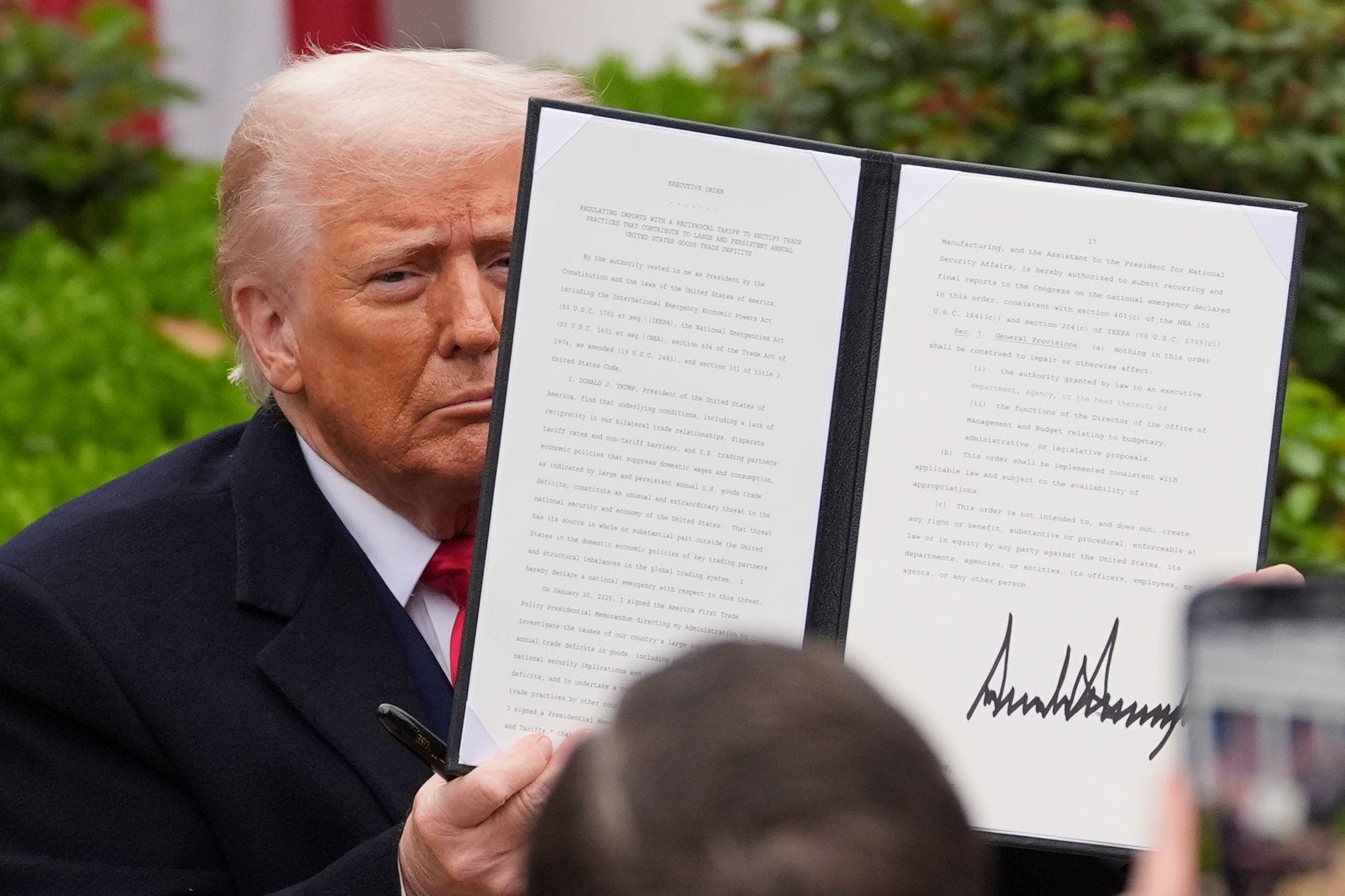
The world reacts with caution to US 'reciprocal' tariffs against dozens of nations
April 3, 2025
Trump agrees to pause tariffs on Canada and Mexico after they pledge to boost border enforcement
February 4, 2025
EDITORIAL: Trump’s tariff bluster threatens trade war and economic chaos
February 4, 2025










A peek through the music industry’s curtain at the producers who harnessed social media to help their idols go global.

A series based on diplomatic documents declassified by Japan’s Foreign Ministry

Here is a collection of first-hand accounts by “hibakusha” atomic bomb survivors.

Cooking experts, chefs and others involved in the field of food introduce their special recipes intertwined with their paths in life.

A series about Japanese-Americans and their memories of World War II



