THE ASAHI SHIMBUN
May 11, 2025 at 07:00 JST
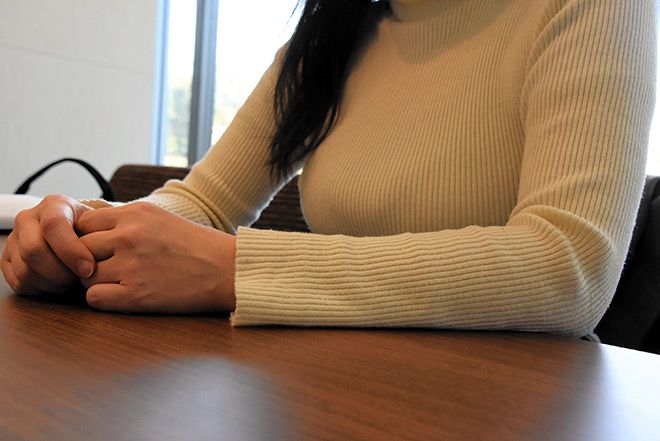 A woman in her 30s in Tokyo says she started seeing double after undergoing plastic surgery around the eyes. (Eriko Kai)
A woman’s attempt to regain her confidence and send a message to her unfaithful husband resulted in pain, possible permanent eyesight damage and thoughts of suicide.
She is one of a growing number of patients who have complained about the side-effects of plastic surgery, a burgeoning industry in Japan that remains loosely regulated.
The Tokyo woman found her surgeon, who claimed the operation was “perfect,” on social media.
“I shouldn’t have received the surgery in such a casual manner,” she said. “Looking back, I was stupid.”
FOUND ON INSTAGRAM
The woman in her 30s decided to undergo an aesthetic medical procedure to look beautiful after discovering that her husband was cheating on her.
Her self-esteem was further shattered because the mistress was at least 12 years older than her.
While gathering information about aesthetic procedures on social media, she came across a live-streaming event on Instagram and was impressed by a Tokyo-based cosmetic surgeon who answered people’s questions sincerely.
She visited his clinic in autumn 2022 to seek advice about a nose job. The woman said the doctor recommended that he also get plastic surgery around her eyes.
During the 30-minute session, the surgeon expressed confidence in his skills, saying his “mentor” was a leading figure in this type of procedure.
He also explained the risks of the operation, including possible blood congestion and swollenness, but he assured her that her eyesight would be unaffected, the woman said.
A staff member at the clinic said it would be difficult to make an appointment with the doctor because he was so popular, but he could squeeze her in if she signed up then and there.
She agreed on a contract for procedures for her nose and eyes for about 2 million yen ($14,000).
She also signed a letter of consent after receiving explanations about the surgery and possible complications.
SWOLLEN FACE, DOUBLE VISION
Two weeks later, she went under the knife. The surgery was completed in about two and a half hours.
But she experienced extreme dizziness and nausea after she woke up from the anesthesia.
After returning to her home by taxi, she found her face was swollen.
“I saw two images of everything,” she recalled. “It was like looking through a kaleidoscope.”
She tried to convince herself the double vision was just an immediate effect of the operation.
When she told the surgeon about her condition during a medical examination a week after the surgery, he said the swelling was putting pressure on her eyes, and that the problem was only temporary.
Several weeks passed, and the swelling of her face went down. But her sight did not return to normal.
She met with several eye doctors, and one of them found that a muscle controlling her right eyeball had been “severed.”
According to the doctor, the cut muscle created differences in the movements of each eye, causing her to see double.
She underwent surgery to reconnect the muscle. In a subsequent examination, she was told it would take three more months for the movement of the eye to improve.
She submitted a complaint with the cosmetic surgery clinic where she underwent the operation.
The clinic said it would report her case to the surgeon. But she received neither an apology nor further contact.
The Asahi Shimbun interviewed the surgeon via phone and in person in February. He claimed the procedure was 100-percent perfect.
“There was no way I made a mistake, and I handled it properly,” he said.
He said he had repeatedly urged the woman to come to the clinic for follow-up checks, but she fell out of touch.
The surgeon also said he received data from a doctor at another clinic where she was treated, showing there was nothing wrong with her.
“If she has any symptoms, she should come to see me. Unless she does so, I cannot examine her, ” he said. “She is making a fuss and has put me in a slightly awkward situation.”
His supposed “mentor” told The Asahi Shimbun that the Tokyo surgeon was nothing more than a colleague at the same university at one time.
“He may have come to see my surgeries, but I could never have trained him personally,” the leading surgeon said.
The Tokyo surgeon argued that he watched his “mentor” perform many surgeries and that the doctor gave guidance to him.
But he added there was bad blood between him and the mentor.
LINGERING EFFECTS
Two years have passed since the woman underwent the cosmetic surgery.
At times, she couldn’t do household chores or child-rearing duties. The idea of killing herself crossed her mind.
But those suicidal thoughts stopped after she took her two small children to a shrine on their first pilgrimage of the year, and they prayed for her eyes to get better.
Although her symptoms have improved slightly, she still sees double when she moves her eyes.
She cannot look straight ahead when descending stairs, so she must bend her neck downward to closely watch her steps.
RISING DEMAND, PROBLEMS
According to a survey conducted by the Japan Society of Aesthetic Plastic Surgery (JSAPS), about 3.27 million aesthetic medical procedures were performed in Japan in 2022, more than double the count of 1.6 million in 2017.
Japan ranked third in the world in the number of procedures in 2022, following the United States and Brazil, the International Society of Aesthetic Plastic Surgery (ISAPS) said.
In a survey conducted by human resources provider Recruit Co. in 2024 covering 13,200 people aged between 15 and 69 in Japan, more than half of women younger than 30 said they saw no problem with undergoing aesthetic medical procedures.
And 15.3 percent of all females surveyed said cosmetic surgery has become readily available, up by 1.6 percentage points from the previous year.
Problems related to such procedures are also rising.
The National Consumer Affairs Center of Japan and local consumer offices around the country held 5,507 consultations about aesthetic medical services in fiscal 2023, more than triple the 1,741 in fiscal 2018.
The number of consultations concerning operations that resulted in injuries or other impairments doubled from 394 to 796.
They include a patient who suffered burns that caused blisters after hair-removal treatment. Another patient was left with a facial paralysis after receiving a thread lift for the cheeks.
In response to such issues, the health ministry set up a panel of experts in June 2024.
In November, the panel recommended a policy requiring medical institutions that perform aesthetic procedures to report on the status of their safety measures.
The policy would also oblige the institutions to provide contact information and other details about their patients to local governments once a year in case they suffer from after-effects or other problems.
The panel asked related academic societies to compile guidelines that specify standard treatment procedures and incorporate measures to deal with problems.
(This article was written by Eriko Kai and Jun Miura.)

Teens opting for plastic surgery out of concerns over appearance
July 16, 2023
Ministry to look into aesthetic medicine market after complaints
June 12, 2024
Top court to rule again on forced sterilization to change gender
June 28, 2023
Stomach surgeons toil amid alarming staffing shortage
March 16, 2025








A peek through the music industry’s curtain at the producers who harnessed social media to help their idols go global.

A series based on diplomatic documents declassified by Japan’s Foreign Ministry

Here is a collection of first-hand accounts by “hibakusha” atomic bomb survivors.

Cooking experts, chefs and others involved in the field of food introduce their special recipes intertwined with their paths in life.

A series about Japanese-Americans and their memories of World War II



