By YOSHIKA UEMATSU/ Staff Writer
April 11, 2025 at 15:50 JST
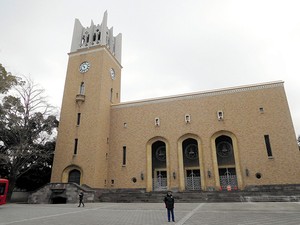
 Between classes at this school (Asahi Shimbun file photo)

The education ministry on April 10 tasked an expert advisory panel to look into establishing a new teaching system that can create individual curricula for children who are often absent from school.
The system would cover elementary and junior high school students who are absent for 30 days or more during one academic year, ministry officials said.
“We are establishing this system to focus on facilities overseen by education boards, similar to standard public schools,” an education ministry official said.
The problem of school absenteeism continues to grow in Japan.
However, regular schools are supposed to provide universal study content and assessments based on the education ministry’s guidelines. This unified setup leaves the schools with little room to help absentees who may fall behind in their studies.
Thousands of absentee students attend education support centers, which are mostly located within the children’s schools but outside their regular classrooms. Other support centers are operated outside the schools by municipal education boards and use retired teachers as instructors.
Under the ministry’s plan, instructors at education support centers will collaborate with regular school teachers to create an individualized study curriculum for each absentee student.
Class hours can be reduced if necessary, and the children can learn content normally taught at a lower grade, officials said.
The ministry is considering allowing grade reports from education support centers to be used for high school entrance exam applications and assessments.
Discussions will continue on how to secure adequate staff numbers to develop these study curricula and create grade reports, as well as how to ensure the quality of the children’s education.
The new system will not target students at private alternative schools, also known as “free schools.”
According to the ministry, 346,482 elementary and junior high school students were absent for 30 days or more during fiscal 2023, an increase of 15.9 percent from the previous year.
The absentee number has risen for 11 consecutive years.
In fiscal 2023, 30,365 students received education at support centers outside their regular schools in 1,743 locations around Japan.
Education support centers were also located within 12,712 regular schools as of July 2024, and tens of thousands of students used these places.
In addition, 58 designated schools have been set up around Japan as Manabi no Tayouka Gakkou (schools for diverse learning) specifically for students who cannot attend regular schools. Manabi no Tayouka Gakkou are permitted to create their own learning curricula.

Record 340,000 elementary and junior high schoolers absent
November 1, 2024
Foreign students have uneven access to Japanese classes
January 2, 2023
Absent students in Kumamoto can now attend school via robot
December 13, 2023
Many schools in Japan still not accessible for wheelchair users
December 11, 2020
Truant students failed by system turn to learning in ‘metaverse’
January 7, 2023















A peek through the music industry’s curtain at the producers who harnessed social media to help their idols go global.

A series based on diplomatic documents declassified by Japan’s Foreign Ministry

Here is a collection of first-hand accounts by “hibakusha” atomic bomb survivors.

Cooking experts, chefs and others involved in the field of food introduce their special recipes intertwined with their paths in life.

A series about Japanese-Americans and their memories of World War II



