By SHINO MATSUYAMA/ Staff Writer
February 18, 2025 at 12:26 JST
 Prime Minister Shigeru Ishiba, left, shakes hands with U.S. President Donald Trump at the White House in Washington on Feb. 7. (Kotaro Ebara)

Japan did not sign a joint statement issued by 79 countries and regions condemning U.S. President Donald Trump’s executive order to sanction staff members of the International Criminal Court (ICC).
The Japanese government, the largest contributor to the ICC among its 125 members, has consistently appealed for the “rule of law.” And Tomoko Akane, a Japanese citizen, has been ICC president since March 2024.
But Tokyo did not join the 79 members in the joint statement to avoid angering Trump and the U.S. side.
“The timing was too bad,” a senior official at the prime minister’s office said.
The executive order was issued on Feb. 6, the day before the summit in Washington between Prime Minister Shigeru Ishiba and Trump.
Trump signed the order in response to the ICC’s issuance of arrest warrants last November for Israeli Prime Minister Benjamin Netanyahu and others over alleged war crimes and other charges concerning the conflict in the Palestinian territory of Gaza.
Akane immediately issued a statement condemning Trump’s action as a serious attack on ICC member states and on the international order based on the rule of law.
Some within the Japanese government echoed Akane’s sentiment.
“The executive order is unacceptable,” a Foreign Ministry official said.
Another ministry official added, “We should step on the gas pedal in the direction of protecting the ICC.”
However, the Japanese government decided not to join the condemnation statement to avoid upsetting Trump and prompting him to put pressure on Japan or make Akane herself a target of sanctions.
A Foreign Ministry official said the majority view in the government was “to respond quietly and cautiously.”
Foreign Minister Takeshi Iwaya was asked why Japan did not join the joint statement at a news conference on Feb. 12.
“I would like to refrain from discussing the process of the negotiations because it is a diplomatic exchange,” Iwaya said.
He also stressed, “Japan has consistently supported the ICC in order to ensure the rule of law.”
Philipp Osten, a professor of international criminal law at Keio University, said Japan’s absence from the joint condemnation statement may be seen as tacit approval of the unjustified attacks against the ICC.
He said the decision not to join is a major contradiction for Japan, which has upheld the rule of law.
Osten said that while it is understandable that Japan is proceeding cautiously in its relations with the United States, it should be able to send a strong message of support for the ICC without joining the condemnation statement.

VOX POPULI: In cozying up to Trump, Ishiba erodes principle of the rule of law
February 11, 2025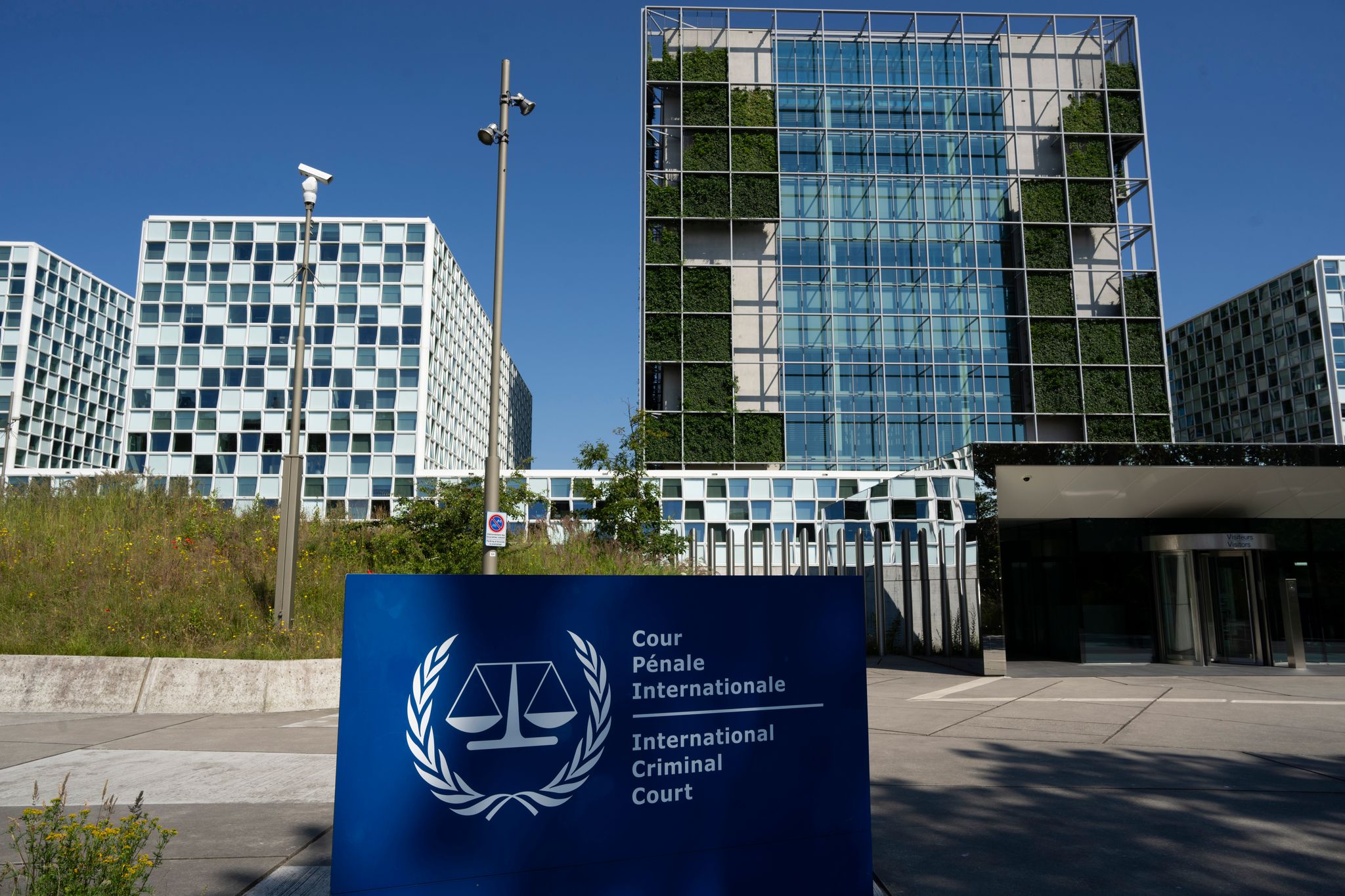
ICC condemns sanctions by Trump administration and pledges to continue its work
February 10, 2025
ICC’s existence threatened by U.S. sanctions, court head says
December 13, 2024
Amid turbulent times, ICC elects 1st Japanese president
March 12, 2024
VOX POPULI: Nations attacking the ICC are bullies that refuse rule of law
December 27, 2024
International Criminal Court’s chief lashes out at threats from Russia and U.S. senator
December 3, 2024










A peek through the music industry’s curtain at the producers who harnessed social media to help their idols go global.

A series based on diplomatic documents declassified by Japan’s Foreign Ministry

Here is a collection of first-hand accounts by “hibakusha” atomic bomb survivors.

Cooking experts, chefs and others involved in the field of food introduce their special recipes intertwined with their paths in life.

A series about Japanese-Americans and their memories of World War II



