By MISATO NAKAYAMA/ Staff Writer
December 20, 2024 at 15:43 JST
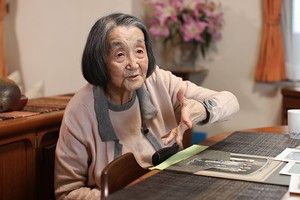
 Isamu Yamamoto, professor of labor economics at Keio University (Misato Nakayama)
A recent analysis found that the percentage of women working as regular employees in Japan tends to be lower in occupations where men work longer hours.
The study by The Asahi Shimbun indicates that the work style of regular employees, which is based on long working hours, is placing a burden on the child-rearing population.
“In workplaces where long working hours are the norm, many women choose non-regular employment because it is difficult to balance child care and work,” said Isamu Yamamoto, a professor of labor economics at Keio University, who supervised the analysis.
"Long working hours and rigid work styles are the most significant impediments to women’s advancement.”
WOMEN FORCED TO CHOOSE
Many women switch to non-regular jobs when they have children, indicating that they are forced to choose either staying in regular employment, which requires long working hours, or becoming a non-regular employee, which offers more control over working hours but less chance of promotion.
In the analysis, The Asahi Shimbun examined the relationship between the average weekly working hours of male regular employees and the percentage of female regular employees in 67 occupations as tabulated in the internal affairs ministry’s basic employment survey structure conducted in 2022.
The data shows that the percentage of female regular employees tended to be lower in occupations with longer working hours for male regular employees.
In the “general clerical work” category, which has the largest number of workers, the average weekly working hours of male regular employees were 45 hours or less, and the ratio of female regular employees was 48.8 percent.
On the other hand, the ratio of female regular employees in “sales work” category, where the average working hours of male regular employees exceed 46 hours, was 19.6 percent.
“Neither of these jobs have gender differences in the conditions required of men and women,” Yamamoto said. “Nonetheless, the tendency is for more women to work in areas where men have not been working for long periods of time.”
Among those occupations where the average working hours of male regular employees was 45 hours or less, the percentage of female regular employees exceeded 50 percent in “social welfare professionals” such as social workers, “nursing service workers” and “accounting clerks.”
Meanwhile, the percentage of female regular employees in “reporters and editors” roles, where the average working hours for male regular employees was 47 hours or more, dropped to 33 percent.
The percentage of female regular employees in the category of “doctors,” where the average working hours for males was 50 hours, was 24.9 percent, while the percentage of female regular workers in the category of “automobile drivers,” such as truck drivers, where male regular employees on average work the longest hours at 53 hours, was significantly lower than other occupations at 2.8 percent.
On the other hand, “teachers,” where the average working hours for male regular employees exceeded 50 hours, had an exceptional feature with a high female ratio of 49.8 percent.
Elementary school teachers, in particular, are viewed by some as a feminine job, and the large number of women employed in this field is believed to be one of the reasons.
According to the internal affairs ministry’s labor force survey conducted in 2023, the employment rate of women aged from 15 to 64 was 73.3 percent, which was high by international standards.
However, when looking at the percentage of non-regular employees, the rate was higher for women at 53.1 percent, compared to 22.5 percent for men.
The percentage of women in regular employment is characterized by an “L-shaped curve” that peaks in their late 20s and continues to decline.
In the ministry’s survey, it peaked at 59.1 percent in their late 20s and dropped to 27.7 percent in their late 50s.
Another study by Yamamoto also found that in addition to shorter working hours, companies with employment mobility, compensation commensurate with ability, and work-life balance policies have higher ratios of women in full-time and managerial positions.
JAPAN FALLING BEHIND
According to the labor ministry’s monthly labor survey, overtime hours have increased over the past 30 years for regular employees in Japan. Long working hours have not been eliminated.
On the other hand, a work style that does not rely on long working hours and increases productivity is spreading around the world.
According to the Japan Productivity Center, a public interest incorporated foundation, Japan's “labor productivity” per hour worked in 2023 ranked 29th among the 38 member countries of the Organization for Economic Cooperation and Development (OECD).
In comparison, Germany's annual working hours were the shortest among the member countries at 1,343 hours, and its labor productivity was nearly 70 percent higher than Japan's.
According to a survey conducted by the Japan Institute for Labor Policy and Training, an independent administrative institution, the percentage of workers who work 49 hours or more per week was 15.3 percent in Japan, compared to 5.3 percent in Germany, or about one-third.
Haruka Shibata, a professor of sociology at Kyoto University who studies long working hours, said, “During the period of rapid economic growth when the working-age population increased, the male work style, supported by housewives, may have been optimal under the mass production and mass consumption model.”
Shibata added, “However, today, with a shrinking population, productivity will not increase unless a greater variety of people work to create new things.”







A peek through the music industry’s curtain at the producers who harnessed social media to help their idols go global.

A series based on diplomatic documents declassified by Japan’s Foreign Ministry

Here is a collection of first-hand accounts by “hibakusha” atomic bomb survivors.

Cooking experts, chefs and others involved in the field of food introduce their special recipes intertwined with their paths in life.

A series about Japanese-Americans and their memories of World War II



