By KAYOKO SEKIGUCHI/ Staff Writer
July 31, 2024 at 18:05 JST
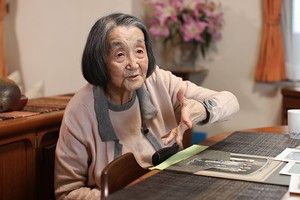
 Dacia Maraini shares her experiences of being interned at a camp in Aichi Prefecture at a gathering in Tokyo’s Shinjuku Ward on June 12. (Kayoko Sekiguchi)

A renowned Italian author visited Japan to recount her childhood experiences of being interned as an “enemy national” 80 years ago, in the hopes that her dark memories can encourage brighter futures.
“People become sadistic when they gain absolute power over others. This isn’t limited to the military,” said Dacia Maraini, 87, at a gathering in Tokyo on June 12.
During the Asia-Pacific War, Japan forcibly sent around 1,200 civilians from Allied countries and others to roughly 60 internment camps across the country.
This was done under the pretext of preventing espionage and “protecting their identities.” Fifty of these civilians died under the harsh conditions in the camps, according to the POW Research Network Japan.
Maraini came to Japan with her parents in 1938. Her father, Fosco, was a researcher of Ainu culture at then-Hokkaido Imperial University (today’s Hokkaido University).
Fosco was later assigned to then-Kyoto Imperial University as an Italian language teacher.
However, when Italy, which was an ally of Japan, surrendered to the Allies in 1943, the lives of Maraini’s family changed drastically.
Fosco and his wife refused to pledge allegiance to the puppet Republic of Salo, established by Nazi Germany in Northern Italy to oppose the Allies.
Therefore, Maraini and her family were deemed “enemy aliens” in Japan and interned in a camp in Aichi Prefecture for about two years.
The camp was rife with violence from the authorities.
The camp authorities dropped rotten oranges in front of starving children and beat internees with sticks even when they were so weakened by hunger that their gums bled.
The authorities frequently subjected internees to psychological torment.
Maraini recalled eagerly awaiting a letter from her grandmother in Italy, only to be told by the authorities that she must wait a week to receive it. When she went to pick it up a week later, they tore the letter to pieces in front of her.
“The authorities took pleasure in hurting people emotionally,” she said. “The camp was a breeding ground for absolute power.”
“Absolute power makes people sadistic. The authorities believed that any cruelty toward traitors to the homeland was justified,” she added.
After the war, Maraini returned to Italy and debuted as an author in the 1960s.
She has since created works that use a feminist and anti-fascist lens to examine human violence, addressing issues such as abortion and sexual violence.
Last year, Maraini compiled her experiences in the camp in a book titled “Vita mia” (My life).
She felt compelled to write the book amid the rising international tensions around the world.
“I am a witness who has lived through these experiences,” she said. “The future should be built on memory. Memory is the only means to oppose today’s wars.”
Her memories of Japan were harsh.
On the other hand, she recalled the kindness of a farmer who gave her a radish while she was forced to work in silkworm farms outside the camp.
“War does not change everyone,” Maraini said. “I believe we can control the negative destructive forces and transform them into something noble and constructive.”

Citizens complete encyclopedia on life at wartime POW camps
December 25, 2023
‘Nikkei’ painter’s memoir about wartime camps now in Japanese
December 10, 2022
U.S. Army honors Nisei combat unit that helped liberate Tuscany from Nazi-Fascist forces in WWII
July 18, 2024
Ex-journalist brings to life man killed in wartime internment camp
March 14, 2023
Utah senator blocks internment camp designation, draws ire
February 12, 2022







A peek through the music industry’s curtain at the producers who harnessed social media to help their idols go global.

A series based on diplomatic documents declassified by Japan’s Foreign Ministry

Here is a collection of first-hand accounts by “hibakusha” atomic bomb survivors.

Cooking experts, chefs and others involved in the field of food introduce their special recipes intertwined with their paths in life.

A series about Japanese-Americans and their memories of World War II



