THE ASAHI SHIMBUN
August 2, 2025 at 18:52 JST
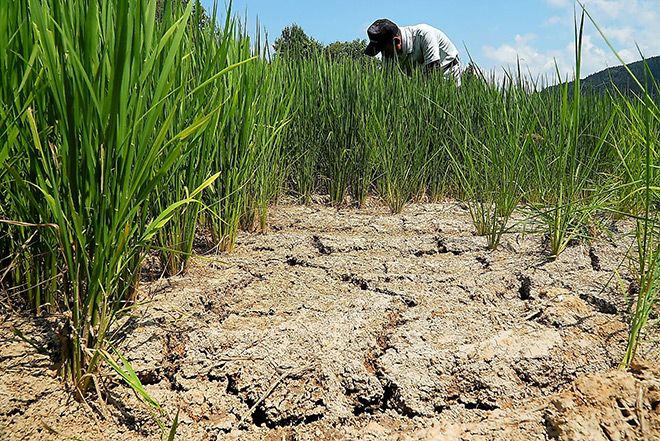 Cracks appear in this rice paddy in Joetsu, Niigata Prefecture. (Ryuta Sometaya)


The brutal summer heat, coupled with a lack of rainfall in key farming areas, dealt a serious threat to this year’s rice crop.
The prospect of another round of surging rice prices now seems all but inevitable.
It was the hottest July on record, according to the Japan Meteorological Agency on Aug. 1. It said average temperatures around Japan were 2.89 degrees higher than normal.
And in the Tohoku region, a leading producer of rice, July also saw record low levels of rainfall.
While rainfall across much of the nation was about half or less than in an average year, Yamagata city in the Tohoku region had only 8 millimeters of rain in July, which is 4 percent of an average year. Niigata city, in the center of another rice-growing region, only had 3.5 mm of rain, which was just 2 percent of an average year’s rainfall.
Rainfall in July is welcomed by farmers because that is when the rice ears start to appear. Without rain, the plants are unable to thrive.
The Tohoku region’s water situation is also dire in Miyagi Prefecture, where the Naruko dam is now officially dry. A dam for farmers in Hanamaki, in neighboring Iwate Prefecture, is operating at only 20 percent of capacity. Water from the Hanamaki dam was cut off to rice fields for five days in late July.
High temperatures and scant rainfall create ideal conditions for an outbreak of shield bugs that can devastate rice crops.
As of July 30, the farm ministry had issued 33 cautions to 27 prefectures about the increased prevalence of the bugs. That is a pace similar to last year when the largest number of cautions were issued over the past decade.
(This article was written by Ryuta Sometaya and Yasuo Tomatsu.)








A peek through the music industry’s curtain at the producers who harnessed social media to help their idols go global.

A series based on diplomatic documents declassified by Japan’s Foreign Ministry

Here is a collection of first-hand accounts by “hibakusha” atomic bomb survivors.

Cooking experts, chefs and others involved in the field of food introduce their special recipes intertwined with their paths in life.

A series about Japanese-Americans and their memories of World War II



