THE ASAHI SHIMBUN
June 27, 2025 at 13:50 JST
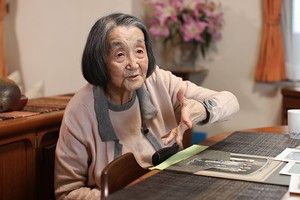
 Terumi Tanaka, who represents Nihon Hidankyo (the Japan Confederation of A- and H-Bomb Sufferers Organizations, speaks to high school students in Sapporo on May 24. (Asahi Shimbun file photo)
Hibakusha and local officials are outraged that U.S. President Donald Trump likened the recent U.S. attack on Iran’s nuclear facilities to the 1945 U.S. atomic bombings of Hiroshima and Nagasaki.
Terumi Tanaka, who represents Nihon Hidankyo (the Japan Confederation of A- and H-Bomb Sufferers Organizations), called Trump’s remarks “out of line.”
“Nothing has changed 80 years after the war,” Tanaka said, referring to how the U.S. flaunts its military power without looking at “what happened under the mushroom cloud.”
Trump made the remarks on June 25 while fielding questions from reporters during his meeting with NATO Secretary-General Mark Rutte at the North Atlantic Treaty Organization summit in the Hague, Netherlands.
Regarding the “cease-fire agreement” reached between Iran and Israel after an armed conflict over nuclear development, Trump touted the results of the U.S. bombing attack on Iranian nuclear facilities.
Trump stated his belief that the U.S. military intervention directly led to ending the war between Iran and Israel.
“That hit ended the war," he said. "I don’t want to use an example of Hiroshima. I don’t want to use an example of Nagasaki. But that was essentially the same thing. That ended that war. This ended (this) war.”
Officials of Hiroshima and Nagasaki immediately reacted to the remarks.
The Hiroshima city assembly on June 26 unanimously passed a resolution stating, “As the atomic-bombed city of Hiroshima, we must never overlook or tolerate statements that justify the dropping of the atomic bombs or situations that threaten civil liberties.”
The resolution also referred to the conflicts in Gaza and Ukraine, urging “a peaceful resolution of all armed conflicts from a humanitarian standpoint.”
Nagasaki Mayor Shiro Suzuki told reporters that he was not aware of the exact purpose of Trump’s remarks, but added, “If the remarks were to justify the dropping of the atomic bombs, it would be extremely regrettable as an atomic-bombed city.”
Hibakusha are angered that Trump’s comparison seems to glorify achieving peace through the use of force.
Near the end of World War II, U.S. President Harry S. Truman justified the dropping of the atomic bombs to save the lives of many American soldiers.
However, some 210,000 people died in Hiroshima and Nagasaki, and those who survived continue to suffer from atomic bomb disease.
The Norwegian Nobel Committee awarded the Nobel Peace Prize to Nihon Hidankyo in October 2024, citing the weakening of the “nuclear taboo.”
Amid Russia's invasion of Ukraine and Israel's invasion of Gaza, Tanaka worries that if the situations continue to escalate, the end result will be the use of nuclear weapons.
“This is why we have no choice but to abolish nuclear weapons,” he said emphatically.
(This article was compiled from reports written by Yosuke Watanabe, Jin Hirakawa, Hayashi Yanagawa, Takashi Ogawa, and correspondent Kayoko Geji.)

Nihon Hidankyo born out of sense hibakusha could not sit idly by
October 13, 2024
Foreign minister blasts remarks in U.S. legitimizing atomic bombings
May 11, 2024
Nagasaki marks 79th anniversary of A-bombing in somber service
August 9, 2024
Nagasaki mayor denies political motive behind snub to Israel
August 8, 2024







A peek through the music industry’s curtain at the producers who harnessed social media to help their idols go global.

A series based on diplomatic documents declassified by Japan’s Foreign Ministry

Here is a collection of first-hand accounts by “hibakusha” atomic bomb survivors.

Cooking experts, chefs and others involved in the field of food introduce their special recipes intertwined with their paths in life.

A series about Japanese-Americans and their memories of World War II



