THE ASAHI SHIMBUN
March 21, 2025 at 17:37 JST
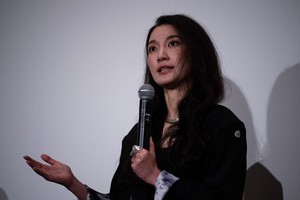
 South Korean Foreign Minister Cho Tae-yul (Provided by the South Korean Ministry of Foreign Affairs)
SEOUL—Cooperation between Japan and South Korea is “essential and not just an option,” according to South Korean Foreign Minister Cho Tae-yul.
Cho, who on March 22 will attend a meeting with his counterparts from Japan and China, responded in writing to questions from The Asahi Shimbun.
Noting that this year marks the 60th anniversary of normalizing diplomatic relations, Cho said about the fundamental relationship between Japan and South Korea, “Under the current severe nature of the international situation, the peoples of the two nations must firmly realize that cooperation is not an option but absolutely essential.”
Before President Yoon Suk-yeol was impeached and detained, he worked to improve bilateral ties, particularly through a foundation under South Korean government control to pay an amount of compensation to South Korean workers brought to Japan before and during World War II.
The South Korean Supreme Court in 2018 ordered Japanese companies to compensate those workers, but Tokyo had refused because it argued the 1965 bilateral agreement when relations were normalized had settled such issues.
The government foundation began payments in 2023 and although it has met with criticism within South Korea, Cho said “At present, it is almost the only solution possible.”
Cho said the “discrepancy” between the Japanese government position on compensation and the South Korean Supreme Court ruling meant finding a diplomatic solution was extremely difficult.
But he added that those directly concerned have supported the move, citing that 14 of the 15 former laborers whose rulings have been finalized have accepted compensation from the foundation.
The foundation was running low on funds. Cho said, “If there is a ‘sincere response’ from Japan, the sustainability of that solution would improve.”
But he also pointed to other issues related to history that stirred controversy, including the inclusion in the UNESCO World Heritage list of the Sado gold mines.
The South Korean government did not participate in a memorial ceremony organized by the government in Niigata Prefecture in November. The two governments had agreed to hold annual memorial ceremonies to honor all workers at the gold mines.
Cho said the organization of the November ceremony “clearly failed to meet the standards of the bilateral agreement that Seoul agreed to despite domestic criticism.”
He expressed hope that the two governments could work together to hold a more meaningful ceremony this year.
Cho also expressed the expectation that discussions among the three foreign ministers would establish a framework for dealing with the expected increasing tensions between China and the United States under U.S. President Donald Trump.
Cho said Japan and South Korea shared in the geopolitical concerns raised by the intensified strategic competition between the United States and China since the two nations were not only both allies of Washington, but maintained close economic ties with Beijing.
“To minimize the effects, South Korea and Japan have joint interests and from that perspective the framework of cooperation between South Korea, Japan and China would become a good tool,” Cho said.
He added that through dialogue and cooperation with China by South Korea and Japan, the two nations could lead China’s role in maintaining peace and stability in the region, which, in turn, would also meet the interests of the United States.
Cho also expressed optimism that the Trump administration would maintain its stance from the first term of emphasizing cooperation between Japan, the United States and South Korea.
Concerning the possibility that Trump might again seek direct talks with North Korean leader Kim Jong Un, Cho said, “U.S. officials have indicated they would cooperate closely with us, so I do not think there will be a so-called ‘Korea passing.’”
(This article was written by Akihiko Kaise and Narumi Ota.)

Seoul envoy: Yoon-Kishida summit can open new phase in ties
March 12, 2023
South Korea offers solution to dispute over wartime laborers
March 6, 2023
S. Korea notifies Japan of ‘normalization’ of GSOMIA pact
March 22, 2023
Hayashi attends inauguration ceremony in South Korea
May 10, 2022
EDITORIAL: Japan should join South Korea in strengthening bilateral ties
March 7, 2024










A peek through the music industry’s curtain at the producers who harnessed social media to help their idols go global.

A series based on diplomatic documents declassified by Japan’s Foreign Ministry

Here is a collection of first-hand accounts by “hibakusha” atomic bomb survivors.

Cooking experts, chefs and others involved in the field of food introduce their special recipes intertwined with their paths in life.

A series about Japanese-Americans and their memories of World War II



