By SAORI KURODA/ Staff Writer
December 14, 2024 at 08:00 JST
 A letter Kazumi Mukai received from an inmate in June (Saori Kuroda)

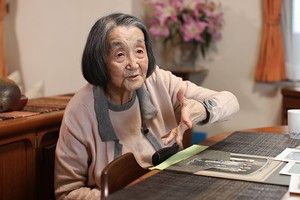
Professional translator Kazumi Mukai was taken aback after learning the identity of a person who wrote a letter to her in spring last year.
The letter, written in small and orderly letters, started: “Please forgive me for writing to you out of nowhere. I am an inmate serving my sentence.”
He wrote that he had been incarcerated for more than 20 years after being convicted of robbery and murder.
The inmate also said he had read her collection of essays in her book titled “Dokushokai to iu Kofuku” (The happiness gained from a book club), published by Iwanami Shoten in June 2022.
Upon reading the letter, Mukai realized that she had much in common with the convict, including a troubled past and an urge to kill.
She ended up forming a bond with him because both were saved by reading and the power of books.
In the seven-page letter, the inmate wrote about his thoughts about her book, explained the background of his earlier life, and described his newfound sense of atonement for the crime he committed.
He lamented that prisoners do not have adequate time to deepen their soul-searching and take responsibility for their offenses.
Inmates, he said, are too busy with the top priority--abiding by the strict order enforced at correctional facilities.
The letter writer said he had also struggled to come up with an answer on how to atone for his crime. But he gradually saw the light through reading.
He realized that his father’s abuse while he was a child played a big role that led to his own violent lifestyle.
He is sorry, he added, that he had not picked up reading earlier.
DESPISED MOTHER
Mukai, who began her professional career as a translator of English books into Japanese about 30 years ago, never imagined that an inmate would read her book.
But she could relate to him because she also grew up in a shattered family.
Her parents rarely talked with each other, and when they did, they always quarreled.
Mukai also clashed with her mother. In fact, she hated her mother so much that she often thought about killing her.
This dysfunctional setup led in part to Mukai’s inability to form relationships with others when growing up. The only way to escape from her painful realty was to read books.
In her room, she immersed herself in the world of fiction, where she came across various protagonists. Mukai believes that reading enabled her to look at herself objectively.
After reaching adulthood, she joined a book club and still attends sessions regularly. Mukai recounted in an essay how her life was profoundly influenced by books and the club.
At the book club, participants are asked to read the same title and share their thoughts at the next gathering.
“It can be said that books and those sessions of my club saved my soul and kept me from committing murder,” Mukai wrote.
After reading the inmate’s letter, she thought she might have ended up in the same place as him if she had not discovered the power of books.
Mukai wanted him to read as many books as possible to make up for “lost time.” She suggested a two-person book club in her reply to his letter.
“I would like you to share your thoughts with me about books that I will send to you,” she said. “Let us hold a book club via letters.”
Their correspondence began, and they exchange letters twice or so a month.
Among the first books she sent were her favorites: “The Remains of the Day” and “The Sea and Poison.”
The former is a novel by Nobel Prize-winning Kazuo Ishiguro, in which a British butler recounts his own life and realizes he had misplaced his devotion and loyalty to a nobleman employer during World War II.
The latter book, written by Shusaku Endo, describes the lives of doctors involved in vivisections of U.S. prisoners of war at a university during the closing days of the war.
“I realized that I have still been bound by the shadow of my father,” the inmate wrote back.
In another, he said, “I am hoping to live a meaningful life with the help of books and not to run away from making amends (to the victim and the victim’s family).”
He was particularly struck by a book written by a victim of child abuse that Mukai had sent apparently because he had many things in common with the author.
His thoughts about the book were written on 13 pages of a notebook.
Mukai has sent him more than 70 books so far and received about 50 letters from him.
The inmate is now a “member” of her book club.
When the club meets, she reads what he wrote about the assigned book on his behalf.
Mukai said she is not sure that a book can completely transform a person but hopes that reading will help him deepen his understanding and lead to his redemption.
She added that reading his letters is a great pleasure because they are exceptionally well written.
BOOK CLUB FOR PRISONORS
Mukai planned to create a book club at his prison, but her wish was denied by the Justice Ministry.
The ministry, however, approved of such a club at the Tachikawa detention center on the outskirts of Tokyo.
Inmates serving short terms have held monthly gatherings of the book club since December last year.
Mukai said she was often amazed by their poignant insight backed by their personal experiences.
Her correspondence with the letter-writing inmate provided a glimpse into the daily lives of incarcerated people, such as being stuck in small cells without heating or air conditioning.
The inmate said he cannot write on some winter days because his hand gets too cold.
Mukai said she previously would not care if prisons had air conditioning or heating. In fact, she said she might have thought that inmates were undeserving of such luxuries.
But she now thinks differently because of her correspondence with the inmate.
“I realized for the first time in my life that inmates are individuals just like us,” she said in a reply to his letter.

Hakamada writes, ‘God, I’m innocent,’ at the start of ordeal
May 14, 2024
Man holds prison talks with inmate who killed wife, daughter in 2019
May 30, 2024
Rare recording captures final hours of a death row inmate
September 24, 2022
Hakamada found religion, but then felt under attack by ‘the devil’
May 17, 2024
Hakamada’s hopes rise after release of fellow boxer Carter
May 16, 2024
Final letters of Sri Lankan who died in detention published in book
December 14, 2021









A peek through the music industry’s curtain at the producers who harnessed social media to help their idols go global.

A series based on diplomatic documents declassified by Japan’s Foreign Ministry

Here is a collection of first-hand accounts by “hibakusha” atomic bomb survivors.

Cooking experts, chefs and others involved in the field of food introduce their special recipes intertwined with their paths in life.

A series about Japanese-Americans and their memories of World War II



