THE ASAHI SHIMBUN
October 25, 2024 at 17:30 JST
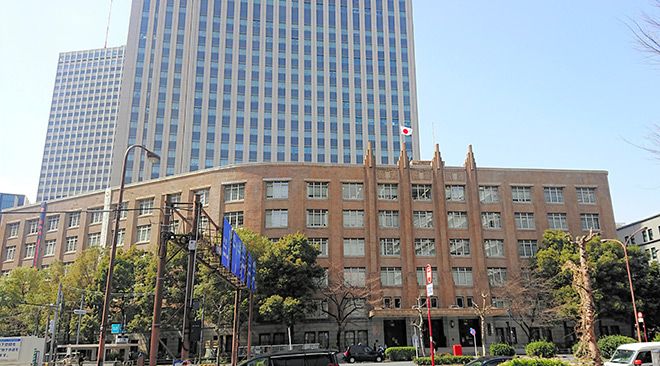 The education ministry's building (Asahi Shimbun file photo)
A record 59 percent of private universities in Japan failed to meet their enrollment quotas this spring due to the country's declining birthrate.
As the student numbers continue declining, government penalties for the shortfall are further compounding private universities' difficulties.
A drop in student enrollment leads to reduced tuition revenue, a university's primary source of income. A worsened financial situation may potentially affect the quality of education for students.
In response, the education ministry has tightened penalties for universities that fail to meet enrollment quotas in recent years.
Many private universities have chosen to reduce their enrollment capacities to avoid these penalties.
However, cutting quotas still means a potential reduction in revenue from students.
Universities are now weighing which option would minimize financial damage―facing penalties or reducing enrollment quotas.
A joint survey conducted by The Asahi Shimbun and the Kawaijuku Educational Institution this summer showed 26 percent, or 122, of the 474 private universities surveyed reported decreasing their enrollment quotas compared to the year 2000 or their founding year.
Additionally, 9 percent, or 44, of the 474 surveyed universities indicated plans to reduce their enrollment quotas within the next five to 10 years, while 20 percent, or 96 schools, said they are considering doing so.
Small private universities with enrollment capacities under 1,000 students were more likely to consider reducing quotas. Nearly 90 percent, or 38 of the 44 such universities surveyed, were planning to do so.
This was particularly noticeable in the Kinki region, except for Kyoto and Osaka, as well as the Shikoku and Kyushu regions.
In March last year, a private women’s university in the Kansai region made a tough call during a key decision-making council meeting.
The university has been working on management improvements to provide an education that meets the needs of the times. This includes revamping departments and faculties.
However, student enrollment has remained at around 70 percent capacity across all academic levels in recent years. Some departments are struggling to fill even 50 percent of their freshmen slots.
Faced with reducing enrollment quotas or seeking ways to boost numbers, the council unanimously decided to cut admission quotas.
More than 10 internal meetings throughout the year preceded the decision, during which some questioned whether recovery was achievable by the university's efforts alone.
However, not taking immediate action would mean facing the increasing risk of stricter government penalties for under-enrollment.
The women’s university has reduced its enrollment quotas by around 25 percent over the past decade—not just due to the challenges of attracting students in a declining population, but also to avoid government penalties.
Starting in the 2024 academic year, the education ministry decided to exclude universities that have failed to meet 80 percent of their enrollment capacity for three consecutive years from a government support program.
This program provides grants to students from low-income households.
Although universities where more than 90 percent of graduates find employment may receive a temporary exemption, those with undergraduate departments falling below 50 percent of their enrollment capacity will not qualify for this exemption.
At the women’s university, around 15 percent of students rely on the government support and ineligibility may lead to a sharp decline in enrollment.
“Being removed from the list is equivalent to a death sentence for private universities,” the university president said.
Its decision to reduce quotas was made at the last minute to remain eligible for the support program.
“As a small university, we can provide more personalized attention to each student, which helps some students truly thrive,” the president said. “We would like the government to reconsider its policies.”
Meanwhile, another private women’s university in the Tokyo metropolitan area announced on its official website that it no longer qualifies for the government program because it failed to meet the required conditions.
The university warns prospective students that they will not be eligible for government support, even if they enroll.
The announcement comes after the university already reduced enrollment quotas by more than 50 percent compared to 2000. It is now considering merging with another university.
(This article was written by Ryuichi Hisanaga and Fumio Masutani.)

Enrollment quotas not met at 53.3% of private universities
August 31, 2023
Sciences-oriented universities set quotas for more female students
January 22, 2024
EDITORIAL: College student quota shortfalls threatening the nation’s future
September 18, 2023
Online university enrolling up to 5,000 students will start in 2025
June 2, 2023
EDITORIAL: Low birthrate a crisis also for Japan’s universities
July 29, 2024












A peek through the music industry’s curtain at the producers who harnessed social media to help their idols go global.

A series based on diplomatic documents declassified by Japan’s Foreign Ministry

Here is a collection of first-hand accounts by “hibakusha” atomic bomb survivors.

Cooking experts, chefs and others involved in the field of food introduce their special recipes intertwined with their paths in life.

A series about Japanese-Americans and their memories of World War II



