By TOMOYA ISHIKAWA/ Staff Writer
September 1, 2024 at 08:00 JST
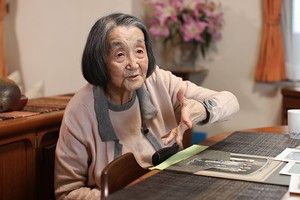
 Takumi Sato, professor of media history and popular culture at Sophia University (Tomoya Ishikawa)
Every August, Japanese media outlets offer specials on World War II and accounts of survivors’ wartime experiences.
These features center around Aug. 15, the date when Emperor Hirohito announced Japan’s surrender in the war.
But Takumi Sato, professor of media history at Sophia University, argues that war-related features should run in September. He said the global standard for the official end of the war is Sept. 2, 1945, when Japan signed the instrument of surrender.
Japan’s observance of the war’s end in August, he said, is the result of insular thinking. And numerous stories told in the past are based on memories manipulated by news media that had failed to perform rigorous fact checks. The stories also emphasize a narrative of victimhood and lack perspective of Japan as an aggressor.
Sato maintained that Japanese media should rethink their traditional coverage and shed more light on anniversaries of crucial events in September to steer the country toward a path to start dialogue and form meaningful ties with other countries.
Excerpts of his interview follow:
***
Question: You have long argued against what you call “August journalism,” when Japanese media publish avalanches of war-related stories. You said this shows that Japan has forgotten that the war--and Japan’s surrender--were affairs involving other countries. Can you elaborate on your argument?
Answer: There is no world war that ended on Aug. 15. Japan conveyed to the allied powers its decision to accept the Potsdam Declaration, which demanded Japan’s unconditional surrender, on Aug. 14. But Japanese soldiers were still fighting on many frontlines on Aug. 15.
Ending hostilities is a matter that involves warring countries. Japanese representatives signed the instrument of surrender aboard the USS Missouri off Tokyo Bay on Sept. 2, 1945, to officially end World War II. China and Russia commemorate Sept. 3 as the victory day over Japan.
Aug. 15, 1945, is simply the day when Emperor Hirohito, posthumously known as Emperor Showa, announced Japan’s surrender in a radio address to his subjects, not to Japan’s enemies.
Selecting that day to honor the war’s end represents extremely insular thinking by Japan.
We should remind ourselves that Soviet troops invaded the Chishima islands, north of the main island of Hokkaido, and Manchuria even after Aug. 15, 1945.
Remnants of defeated Japanese troops were also fighting a guerilla war on Okinawa, where radio reception had been made impossible following the destruction of broadcasting facilities on the island.
Japanese soldiers in various battlegrounds in other parts of Asia surrendered on Sept. 2 and later.
Marking Aug. 15 as the day the conflict ended marginalizes Japanese civilians in Okinawa and elsewhere in Asia, as well as Japanese troops left behind on the southern battlefields, from the collective memory of the war.
MANIPULATED MEMORIES
Q: You have also argued that remembering Aug. 15 as the anniversary of the war’s end is a product of August journalism. Can you explain August journalism?
A: Newspapers began offering special coverage of the war’s legacy in August 1955, when the nation marked the 10th anniversary of the war’s end, not in the immediate aftermath of World War II.
They ran photos of citizens who were described as lowering their heads in shock or breaking down in tears in front of a radio broadcasting the emperor’s address.
But the authenticity of some of these enduring images is questionable. It was unclear when they were shot and under what circumstances. Some pictures were even staged.
Stories supposedly documenting Aug. 15, 1945, including a crowd kneeling in front of the Imperial Palace, were written as if the reporters witnessed the event. But many of these stories were prepared beforehand.
Aug. 15, 1945, unfolded under the scorching sun across Japan, according to a common narrative of that day. It was not the case, however. It was cloudy in northeastern Japan and rain fell in part of Hokkaido.
Other historical events have been represented by a narrative not based on actual circumstances.
Aug. 6, 1945, is the day Hiroshima was leveled by the world’s first atomic bomb. This specific date is the starting point of today’s grass-roots anti-nuclear and peace movement.
But the catastrophic events in Hiroshima and Nagasaki were thrust into Japan’s public consciousness only after the country regained independence in 1952, as well as press freedom.
The tragedy of crew members of the Daigo Fukuryu Maru (Lucky Dragon No. 5) in 1954 stunned the nation. (The tuna fishing boat was operating near the Bikini Atoll in the Pacific when the United States tested a thermonuclear hydrogen device that was 1,000 times more powerful than the bomb that destroyed Hiroshima.)
I, as a native of Hiroshima, recall that discrimination against hibakusha existed for many years after they were exposed to radiation, forcing the survivors to remain silent about their horrific experiences.
The calamities of Hiroshima and Nagasaki were brought closer to the center of national narratives against atomic and hydrogen bombs only after the fishing ship incident heightened people’s fear of rain and tuna contaminated by radioactive fallout.
You may be dumbfounded to know that scrutiny of media coverage of the war’s legacy, which typically dominates the first half of August, shows that many stories are based on collective memories that were manipulated.
Facts need to be verified before they are reported, but this very basic journalism practice seems absent when it comes to war-related stories from many years ago.
Dubious “memories” of war constructed by news outlets have been burned into the collective memories of the Japanese population as historical facts through repeated direct and indirect citations. They are now legend, so to speak.
The “Aug. 15 legend” conveys the impression that Japan has a clean break from its prewar days. August journalism has functioned to cover up the continuity of prewar and postwar eras.
Q: You have proposed a shift of war-related coverage to September from August. Why do you call for this?
A: Japan’s longstanding position to observe the end of World War II has made it difficult to engage in dialogue with neighboring nations over the understanding of the conflict.
Japan has repeatedly reaffirmed its commitment to the war-renouncing Constitution, a symbol of postwar Japan.
But other countries do not share Japan’s perspective of its own history: discontinuation between “bad prewar Japan” and “good postwar Japan” after Aug. 15, 1945.
Even if the emperor and prime minister express remorse over Japan’s wartime past and wish for world peace on every Aug. 15, news reports on Cabinet members’ visits to Yasukuni Shrine, which is widely regarded overseas as a symbol of a militarist past, on the same day will have other countries question Japan’s sincerity.
By shifting August journalism to September, we can discuss a host of pivotal historical events in Japanese classrooms in a new school term after summer vacation.
September has many anniversaries: Sept. 2, 1945, the official end of World War II; Sept. 8, 1951, the signing of the San Francisco Peace Treaty, under which Japan regained its independence, and the signing of the 1951 Japan-U.S. Security Treaty; and Sept. 18, 1931, when the staged Manchurian Incident, used by the Japanese military as a pretext for aggression in East Asia, occurred.
September journalism may well start from Aug. 29, the anniversary of Japan’s annexation of the Korean Peninsula in 1910.
Many Japanese used to remember that day for some time after the war ended, but it is completely forgotten today.
I advocate designating two days to commemorate the war’s end. One is Aug. 15, to pay tribute to the war dead. The other is Sept. 2, to pray for peace, squarely face up to Japan’s wartime aggression and responsibility, and hold dialogue with other countries over historical issues.
Q: Eighty-five percent of the Japanese population were born after the war. How should we grapple with the challenge of passing on memories of the war?
A: The passage of 80 years makes it impossible for war survivors to rebut factual errors even when they are exposed. “Memories of war” will be restructured in the future, with an emphasis not on facts but on the impact of social and political representation of the war.
We are already witnessing major powers bent on using the historical legacy to their political advantage.
China had long given importance to Aug. 15, when many Japanese politicians visit Yasukuni Shrine, because the country can play the “history card” to assail Japan’s past militarism.
But in 2014, after China’s gross domestic product overtook Japan’s, Beijing designated by law Sept. 3 as the day of victory in the war of resistance against Japanese aggression.
Russia, in 2023, renamed its Sept. 3 World War II victory day as the Day of Victory over Militaristic Japan and the end of World War II, an apparent move designed to keep Japan in check due to Tokyo’s support of Ukraine.
As long as Japan maintains its current setup to remember the war in August, it cannot confront other countries’ attempt to use the legacy of the war to advance their interests.
Diplomacy is a process that encourages opponents to engage in dialogue to form future-oriented relations. We need to explore ways to sit down and talk with former enemies based on the recognition that disagreements do exist over historical perceptions.
News outlets should play a significant role in that aspect.
***
Born in 1960, Takumi Sato is a professor of media history and popular culture at Sophia University and professor emeritus at Kyoto University. Among the books he authored are “King no Jidai” (The era of king), “Genron Tosei” (Control of speech) and “Aug. 15 no Shinwa” (Aug. 15 legend).







A peek through the music industry’s curtain at the producers who harnessed social media to help their idols go global.

A series based on diplomatic documents declassified by Japan’s Foreign Ministry

Here is a collection of first-hand accounts by “hibakusha” atomic bomb survivors.

Cooking experts, chefs and others involved in the field of food introduce their special recipes intertwined with their paths in life.

A series about Japanese-Americans and their memories of World War II



