THE ASAHI SHIMBUN
January 11, 2024 at 19:01 JST
 Takao Horikoshi, a Metropolitan Police Department lieutenant, who led the rescue operation that saved a woman in her 90s from a collapsed house in Suzu, Ishikawa Prefecture, recounts the experience in Tachikawa, western Tokyo, on Jan. 9. (Hiraku Higa)


As rescue efforts continue in Ishikawa Prefecture for victims of a powerful New Year's Day earthquake, the death toll rose to 213 as of the morning of Jan. 11, prefectural officials confirmed.
Amid the devastation, the rescue of a woman in her 90s buried after 124 hours provided relief and renewed motivation to rescue workers searching for survivors in collapsed houses.
Some of the team members who pulled the woman from the ruins of a two-story wooden house on Jan. 6 have returned to their prefectures and workplaces and reflected on the experience.
A special rescue team from the disaster countermeasures division of the Metropolitan Police Department arrived in Suzu in the prefecture around noon on Jan. 5, as part of the wide emergency rescue effort.
They began working in cooperation with members of police and fire departments dispatched from other prefectures to search for victims.
A Fukuoka prefectural police riot squad team comprised of about 80 members arrived in the disaster-stricken area the same day.
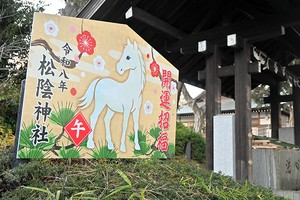
It was around noon on Jan. 6 when they learned a woman had possibly been trapped in a collapsed house in Suzu, and they hurried to the site in the Shoin-machi area in the city.
Within a few hours, they heard the voice of a rescue member calling over the radio, “Found her!”
A woman in her 90s was lying on her back inside a collapsed house. Her body was warm and she had a pulse.
Takao Horikoshi, 45, a Metropolitan Police Department lieutenant, who directed the scene, said as the first floor of the house had collapsed, they entered from the second floor.
Sakutaro Maki, a 23-year-old Fukuoka police officer, and others entered the room through the window.
After they removed the tatami mats on the second floor, they saw the woman with her foot caught between the beam and a tatami.
It had already been five days since the earthquake struck. Maki recalled her hands were cold.
When rescuers called out to her, “Are you OK?” “Your family is waiting for you,” and “Hang on,” she blinked and nodded. Gradually, the woman was able to say “ah” and “oooh,” too, Maki said.
She was in an extremely weakened state, but the emergency team and doctors gave her an oxygen mask and an intravenous drip, and warmed her upper body with a “yutanpo” hot-water bottle.
Police officers removed the overturned timbers from the second floor with saws and crowbars. The work was interrupted four times by aftershocks.
The elderly woman was rescued at around 8:20 p.m. on Jan. 6. The temperature at the time of the rescue was lower than 10 degrees, and it was raining and cold.
But Maki recalled the shirt he was wearing under his uniform was covered in sweat.
“It was a combination of favorable conditions,” Horikoshi said of the rescue, citing that the woman was covered with a futon when she was found. “We were relieved that she was rescued safely.”
Mototaka Inaba, a 44-year-old doctor who belongs to the nonprofit Peace Winds Japan and was part of the rescue team, echoed the sentiment.
He and other team members supplied her with fluids and nutrients through an intravenous drip at the scene, and continued holding the woman’s hand and calling out to her.
They were also careful not to let her develop crush syndrome, which can cause kidney failure and shock symptoms, when her body was released from the prolonged pressure, Inaba said.
The woman was taken to a nearby hospital. At the time of her transport, she had no significant injuries other than to her left leg, and she was able to say her name, albeit weakly.
The following morning, she had recovered enough to have a conversation.
There have been past cases where people have been rescued beyond the 72-hour window when the survival rate is considered to decrease, but it is still rare.
Inaba said, “She may have managed to take some form of water, such as by rainwater in her mouth.”
Horikoshi was also deployed to the sites of the massive earthquakes in Turkey and Syria that occurred in February 2023, which killed more than 50,000 people.
In southern Turkey, Horikoshi witnessed the rescue of a 6-year-old girl more than 120 hours after the quake.
Based on the experience, Horikoshi told the team members, “There are definitely people waiting for help. Don’t give up.”
Maki, who worked in an earthquake-stricken area for the first time, said after returning to Fukuoka, “Witnessing the survivor's life force hanging on so desperately, I was filled with emotion and felt passionate about the need to rescue them.”
(This article was compiled from stories written by Miku Ito, Yota Kosaki and Hiraku Higa.)

Quake-hit city described as ‘catastrophic,’ waiting for rescue
January 2, 2024

Woman in her 80s rescued from rubble 3 days after Noto quake
January 5, 2024

126 dead in Ishikawa, cut-off hamlets praying for help, supplies
January 6, 2024
Quake survivors weep as loved ones remain trapped in rubble
January 4, 2024

Woman in her 90s rescued 5 days after deadly Japan quake
January 7, 2024
Ishikawa homes damaged in May quake leveled in latest disaster
January 3, 2024








A peek through the music industry’s curtain at the producers who harnessed social media to help their idols go global.

A series based on diplomatic documents declassified by Japan’s Foreign Ministry

Here is a collection of first-hand accounts by “hibakusha” atomic bomb survivors.

Cooking experts, chefs and others involved in the field of food introduce their special recipes intertwined with their paths in life.

A series about Japanese-Americans and their memories of World War II



