THE ASAHI SHIMBUN
October 28, 2022 at 17:38 JST
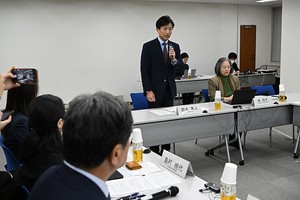
 Prime Minister Fumiko Kishida, left, speaks at a meeting of the Digital Extraordinary Administrative Advisory Committee at the prime minister’s office in Tokyo on Oct. 27. Taro Kono, minister of the Digital Agency, sits next to him. (Koichi Ueda)
The government decided on Oct. 27 to abolish around 99 percent of analog regulations requiring a human touch at a meeting of a government panel as it seeks to move toward digital reforms.
The government hopes abolishing analog regulations will lead to economic growth, with accompanying benefits such as the more widespread use of teleworking, less time needed to finish tasks and enhanced safety.
The panel is called the Digital Extraordinary Administrative Advisory Committee.
The government also decided to move the target date for completing the abolition forward by one year to June 2024.
It will prepare a new road map to amend relevant laws by the end of this year.
Analog regulations are rules provided in laws or ordinances that require human involvement, such as confirmation using a person’s eyes, face-to-face procedures, or a permanent presence of human personnel at a certain site.
Such regulations are regarded as preventing society’s digitization.
The committee has been in discussions with government's ministries and agencies to replace these outdated rules with requirements using digital technology.
Government officials had found 9,125 clauses in laws and ordinances that contain analog regulations.
During the Oct. 27 meeting, it was decided that the government will revise around 99 percent of them, or 9,029 clauses, in cooperation with relevant ministries and agencies.
For example, the government envisages using drones or underwater robots to inspect rivers or dams instead of human eyes.
Another idea is using artificial intelligence to discover the extent of damages caused by natural disasters.
In its efforts to support digitization, the government will prepare a “technology map,” a list of digital technologies that can replace antiquated methods specified in the analog regulations.
It will also prepare a guideline for local authorities to use to check and review bylaws or other local rules.
“In order for the public to really feel the effects of the digital reform, it is essential that local public bodies check and review their analog regulations and digitize administrative services,” Prime Minister Fumiko Kishida stressed at the meeting.
The Kishida administration launched the Digital Extraordinary Administrative Advisory Committee and established its office within the Digital Agency in November last year.
(This article was written by Junki Watanabe and Taro Kotegawa.)







A peek through the music industry’s curtain at the producers who harnessed social media to help their idols go global.

A series based on diplomatic documents declassified by Japan’s Foreign Ministry

Here is a collection of first-hand accounts by “hibakusha” atomic bomb survivors.

Cooking experts, chefs and others involved in the field of food introduce their special recipes intertwined with their paths in life.

A series about Japanese-Americans and their memories of World War II



