By YUKO MATSUURA/ Staff Writer
April 3, 2021 at 07:00 JST
Yukiko Arai's avowed mission as head of the Argentine office of the United Nations' International Labor Organization (ILO) is to be a game changer.
To that end, she sometimes dons folk costumes to win greater acceptance by locals.
Arai, 47, the first Asian director of an ILO branch in Latin America, also is proficient in five languages.
Her immediate task is to tackle the employment crisis plaguing the Latin American country.
With so many parents losing their jobs due to the novel coronavirus pandemic, more children than ever before are being forced to work to help make ends meet for impoverished families.
“I am committed to trying to create a better society, not simply having the situation go back to the way it formerly was,” said Arai.
As a college student, Arai recalled she was deeply affected by the sheer joy children seemed to be having while studying when she visited an elementary school in a slum quarter in Peru.
“My passion and mission for work started there,” she said.
After doing courses in international economics and studies on Latin America at a U.S. graduate school, Arai held posts in the World Bank and elsewhere before joining the ILO. She specializes in occupational problems and child labor linked to the supply networks of multinational corporations.
Among more than 100 nations she has visited, some areas still bear vivid traces of military conflict.
In Liberia, western Africa, Arai proposed that not only the government, employers and laborers but also multinational business operators join the political process to discuss reconstruction work following the civil war.
Even though her colleagues within the ILO were dubious about her suggestion, Arai finally got her way.
“I want to be a game changer to make a shift in the way society currently operates,” said Arai.
Arai gives herself encouragement through cooking and eating Japanese food at home. She dreams of dancing the tango in Argentina, sticking to her belief that “tomorrow always goes better than today.”








A peek through the music industry’s curtain at the producers who harnessed social media to help their idols go global.

A series based on diplomatic documents declassified by Japan’s Foreign Ministry

Here is a collection of first-hand accounts by “hibakusha” atomic bomb survivors.

Cooking experts, chefs and others involved in the field of food introduce their special recipes intertwined with their paths in life.

A series about Japanese-Americans and their memories of World War II

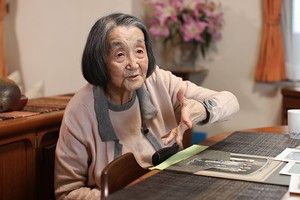
 Yukiko Arai (Photo by Yuko Matsuura)


