By EMI IWATA/ Correspondent
November 25, 2025 at 17:44 JST
 Tokyo’s Tsukiji district is crowded with foreign tourists in September. (Asahi Shimbun file photo)
Chinese censors are apparently scrubbing citizens’ online views that diverge from Beijing’s official line concerning Prime Minister Sanae Takaichi’s remarks about Japan responding to possible Chinese military action against Taiwan.
One person forced to cancel a reservation at a ryokan in Kyoto said a recent post about an exchange with the inn on Xiaohongshu, China’s Instagram-like platform, has been deleted.
“My flight was canceled, and I can no longer travel to Japan,” the person’s message to the inn, written in Japanese, read. “I am extremely disappointed because I was truly looking forward to it. I sincerely apologize.”
A representative of the ryokan responded in Chinese: “We are sorry you cannot come on the trip you were looking forward to. Please do visit us next time when the cherry blossoms are in full bloom.”
The Chinese government urged citizens to refrain from traveling to Japan on Nov. 14, a week after Takaichi’s remarks in the Diet. Chinese airlines subsequently canceled flights to Japan one after another.
It appears the flight booked by the poster was among those canceled.
“A sudden wave of sadness washed over me,” the person wrote on Xiaohongshu, reflecting on the exchange with the ryokan.
“Must people hate each other because of concepts such as ethnicity, nationality and politics?” the individual continued.
The post, which was visible on Nov. 21, vanished from the platform a few hours later.
Another Xiaohongshu user uploaded a post on Nov. 18 titled, “As an individual, you have the right to travel anywhere,” along with hashtags including “Japan Travel.”
The post, which is no longer accessible, included language apparently directed at China’s call for travel restraint: “Everyone, please keep your own thoughts and judgment, and do not blindly follow the crowd or wear yourself down.”
Other posts have also disappeared.
Japanese singer-songwriter Kokia was scheduled to perform in Beijing on Nov. 19, but her concert was canceled at the last minute on the grounds of “equipment failure.”
Videos on social media showed fans at the venue voicing dissatisfaction with the organizers, but most of the clips have since been removed.
On Chinese social media, posts expressing criticism of the government are extremely rare. And when they do appear, they are often deleted.
In addition to monitoring by authorities, platform operators enforce rules prohibiting content that “damages national honor or interests” or “attacks or slanders party and state leaders.” They also ban posts that “incite crime” and “stir ethnic hatred or discrimination.”
The posts by the traveler forced to abandon the trip to Kyoto and other citizens may have been deemed “inappropriate” and removed.
The Chinese government has rolled out de facto countermeasures over Takaichi’s remarks, with an emphasis that the entire nation is behind Beijing.
“The 1.4 billion Chinese people will never tolerate this,” Vice Foreign Minister Sun Weidong has warned.
Mao Ning, a Foreign Ministry spokesperson, has also said the Japanese leader’s remarks “provoked the anger and condemnation of the Chinese people.”
State media have echoed the authorities’ criticisms.
“Anyone who touches the red line will never be forgiven by the more than 1.4 billion Chinese people and the entire Chinese nation,” the People’s Daily wrote.
China Central Television reported that more than 540,000 airline tickets for flights to Japan were canceled due to the impact of Takaichi’s remarks.
From this official standpoint, citizens’ voices asserting individual freedom or complaining about event cancellations amount to unwanted “noise” that must be eliminated.
Chinese authorities appear wary of ideas diverging from government policy spreading via social media.

U.S. TikTok users flock to Chinese app Xiaohongshu in protest with TikTok ban looming
January 15, 2025
Japan sends envoy to China to prevent friction from worsening
November 17, 2025
Air China to reduce flights to Japan amid political tensions
November 21, 2025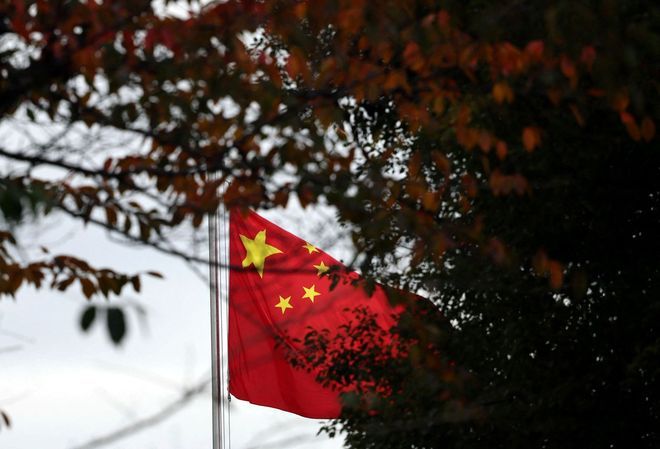
Tokyo’s envoy flies to Beijing, but no signs of breakthrough in diplomatic crisis
November 19, 2025
China summons ambassador to protest remarks by Takaichi
November 14, 2025
Japan protests Chinese envoy’s beheading post tied to Takaichi
November 10, 2025







A peek through the music industry’s curtain at the producers who harnessed social media to help their idols go global.

A series based on diplomatic documents declassified by Japan’s Foreign Ministry

Here is a collection of first-hand accounts by “hibakusha” atomic bomb survivors.

Cooking experts, chefs and others involved in the field of food introduce their special recipes intertwined with their paths in life.

A series about Japanese-Americans and their memories of World War II



